Planning a bathroom remodel in Fairfax County this year? Expect to pay significantly more than the national average—and 2026 brings additional cost pressures that every Northern Virginia homeowner needs to understand. A 25% tariff on imported cabinets and vanities has been in effect since October 2025, skilled labor costs are rising 4.5–6%, and Fairfax County permit fees went up again in mid-2025, so a realistic 2026 budget looks different from a 2024 one.
In 2026, a mid-range bathroom remodel in Fairfax County runs $17,000 to $35,000, done to code by a licensed crew. Luxury renovations start around $70,000, and high-end spa retreats push past $115,000. This guide breaks down what actually drives those numbers and where you can trim without cutting corners, whether you’re refreshing a dated guest bath in Reston or building a spa-like primary suite in Great Falls.
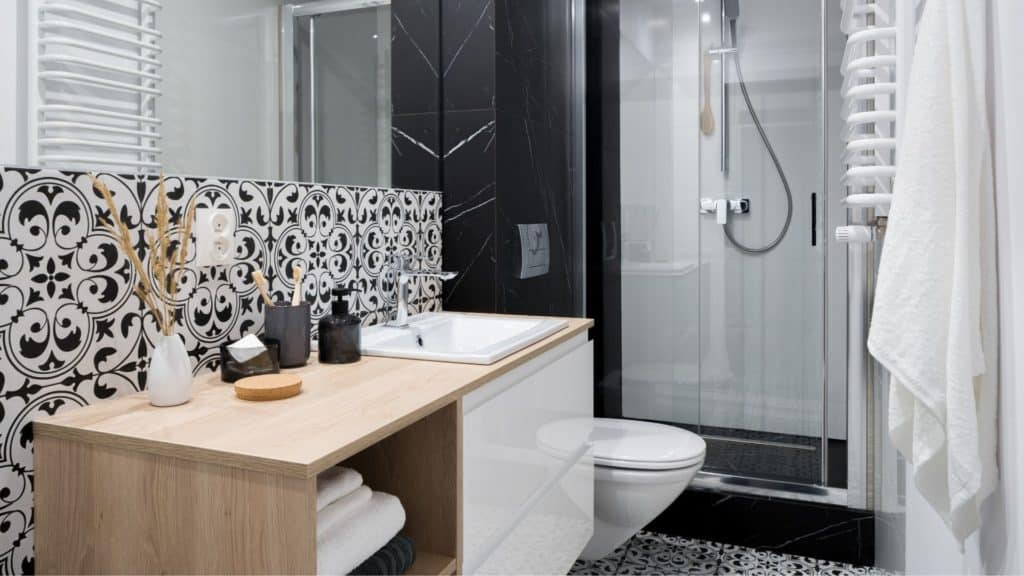
2026 Pricing Guide for Bathroom Remodeling Cost in Fairfax County
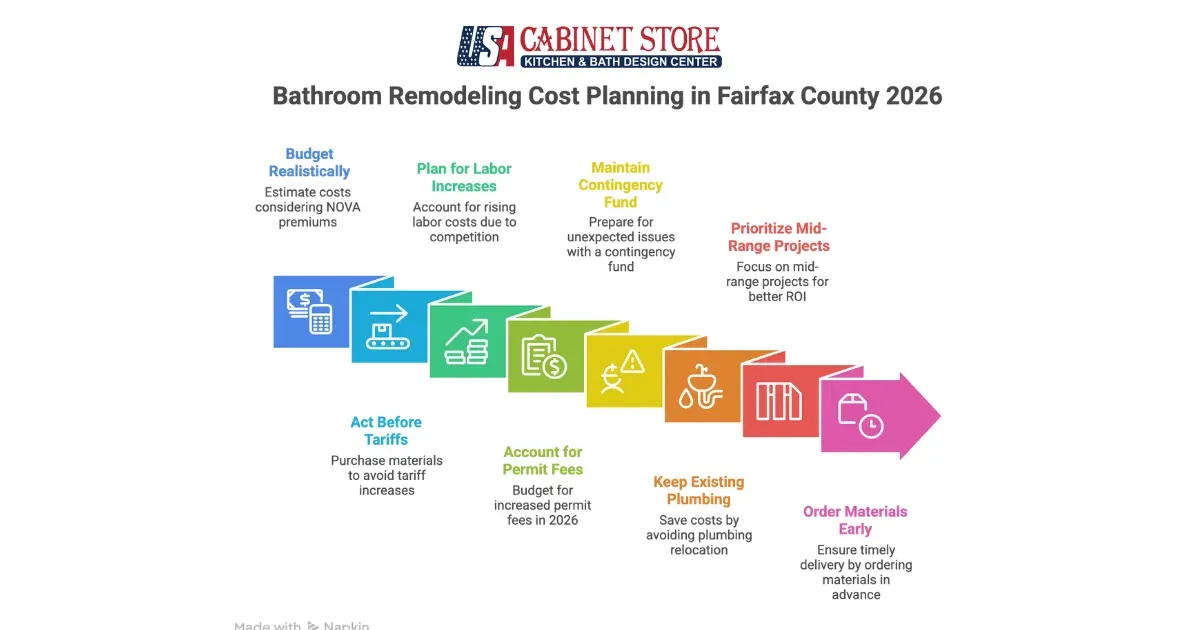
✓ Budget realistically for NOVA premiums. Mid-range bathroom remodels cost $17,000–$35,000 in Fairfax County—luxury projects exceed $70,000.
✓ Know the tariff facts. The 25% tariff on imported cabinets and vanities is already in effect; the jump to 50% was delayed to January 1, 2027. Domestically built vanities avoid it entirely.
✓ Plan for 4.5–6% labor cost increases. Competition from data center construction is driving skilled trade wages above inflation.
✓ Account for 12.5% permit fee increases. Budget $350–$600 for full bathroom renovation permits in 2026.
✓ Maintain a 15–20% contingency fund. Hidden conditions are the norm in Fairfax County’s aging housing stock.
✓ Keep the existing plumbing footprint. This single decision can save $1,500–$9,000 by avoiding drain relocation and stack work.
✓ Prioritize mid-range projects for ROI. 70–80% cost recovery beats upscale projects’ 42–55% return.
✓ Order materials before construction starts. Custom vanities and glass enclosures have 2–6 week lead times.
2026 Fairfax County Bathroom Remodel Costs at a Glance
Before diving into the details, here’s what Fairfax County homeowners should budget for bathroom remodels in 2026:
| Project Scope | 2026 Cost Range | Typical Timeline | Best For |
|---|---|---|---|
| Cosmetic Refresh | $5,000–$12,000 | 1–2 weeks | Pre-sale prep, powder rooms, DIY-friendly updates |
| Mid-Range Standard | $17,000–$35,000 | 3–5 weeks | Guest baths, kids’ baths, value-focused updates |
| Full Master Suite | $35,000–$65,000 | 5–7 weeks | Primary bath renovation, aging-in-place updates |
| Luxury Spa Retreat | $70,000–$115,000+ | 8–12 weeks | High-end homes, structural changes, wellness features |
These projections account for 2026’s unique cost factors: January’s cabinet tariffs, chronic skilled labor shortages intensified by data center construction competition, and Fairfax County’s elevated regulatory environment.
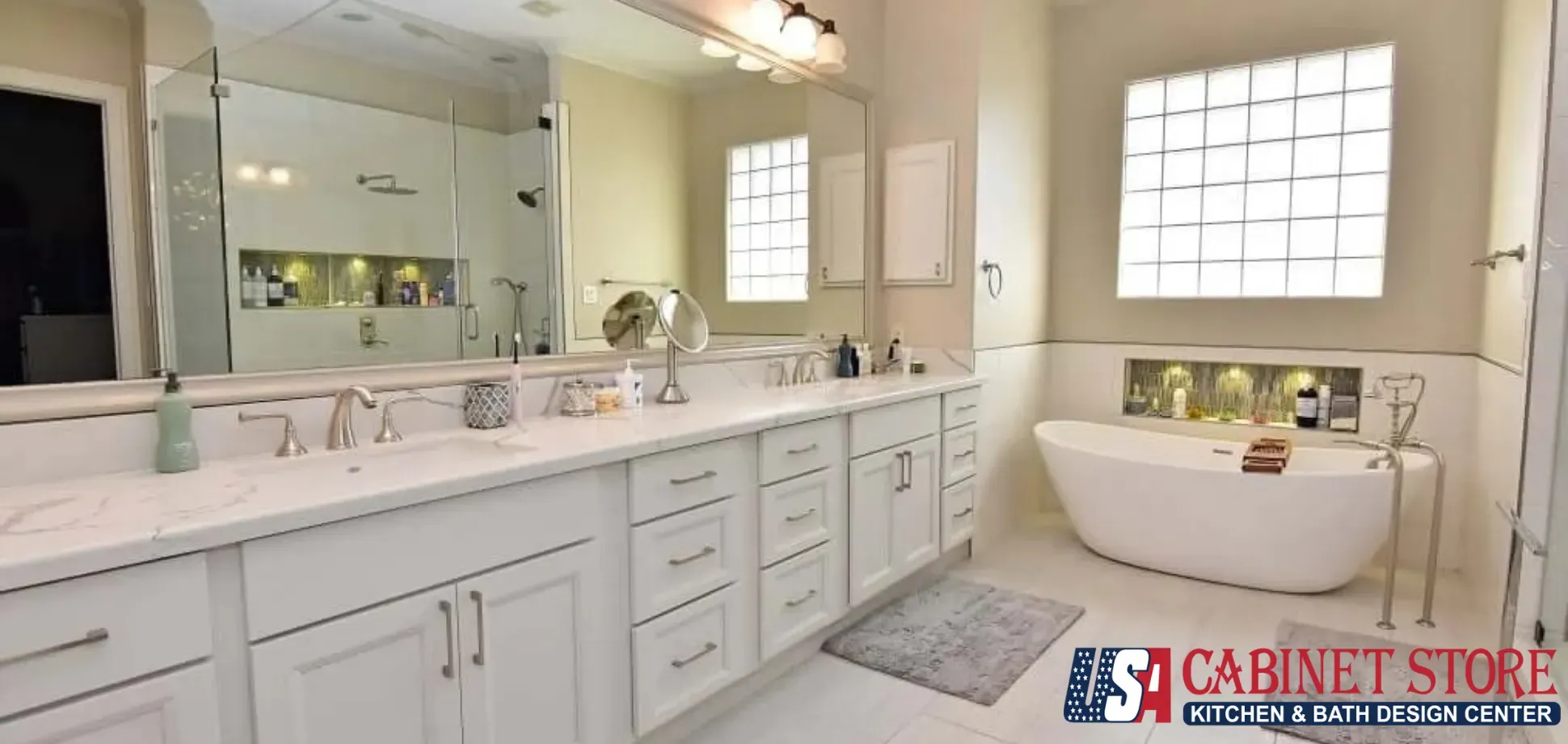
What’s Driving 2026 Cost Increases?
The trajectory of remodeling costs for 2026 is shaped by several converging economic forces. While material price volatility has largely stabilized following post-pandemic disruptions, structural changes in the local labor market and county-level fee schedules are permanently raising the cost floor for every project.
The 2026 Cost Forecasting Matrix
Industry data from the Joint Center for Housing Studies, National Kitchen & Bath Association, and local trade sources project the following cost adjustments for 2026:
| Cost Component | Projected 2026 Change | Primary Drivers |
|---|---|---|
| Skilled Labor (Plumbing/Electrical) | +4.5% – 6.0% | Severe workforce shortage; data center competition; NoVA cost of living |
| Cabinetry & Vanities (Custom) | +4.0% – 5.5% | 25% tariff in effect since Oct 2025 (50% increase delayed to 2027); hardwood supply constraints |
| Tile & Stone | +3.0% – 4.5% | Shipping costs; import duties on European/Asian products |
| Rough Materials (Lumber/Drywall) | +2.0% – 3.0% | Stabilized supply chains; moderate new construction demand |
| Fairfax County Permit Fees | +12.5% | Board of Supervisors fee adjustment (effective July 1, 2025) |
| Overall Project Cost | +3.5% – 5.0% | Weighted average, heavily skewed by labor intensity |
What the 2026 Cabinet and Vanity Tariffs Actually Mean for Your Budget
Here is the short version, because the headlines have been confusing. A 25% federal tariff on imported kitchen cabinets and bathroom vanities has been in place since October 14, 2025. The much larger jump to 50% that was set for January 1, 2026 did not happen. On December 31, 2025, the federal government delayed it by a full year, to January 1, 2027.
If you priced a vanity in early 2025 and again now, the difference you are seeing already includes the 25% tariff. There is no second price jump waiting for you in 2026. That removes the “buy this week or pay 20% more next month” pressure that drove a lot of late-2025 advice.
The date worth watching is January 1, 2027. That is when the rate is currently scheduled to double to 50%. It could be delayed again, changed, or caught up in trade negotiations, and no one can promise which way it goes. If your project runs into late 2026, locking your vanity selection and price before that date is a reasonable hedge rather than a sales gimmick.
There is also a cleaner way around the whole question. Domestically built cabinets and vanities are not subject to the import tariff at all. Our Fairfax and Chantilly showrooms carry both imported and American-made lines, so you can compare them side by side and choose on price, lead time, and finish instead of on tariff guesswork.
Current tariff status by material
| Material | Current rate (2026) | What changes next |
|---|---|---|
| Imported cabinets and vanities | 25% | Scheduled to rise to 50% on Jan 1, 2027 (delayed from 2026) |
| Copper (pipe, wire, fittings) | 50% | In effect since Aug 1, 2025 |
| Steel and aluminum (frames, fixtures) | 50% | In effect since mid-2025 |
| Imported ceramic tile (China) | Anti-dumping duties plus a 15% surcharge | Continued after the 2026 review |
Where your vanity is made matters too. Imports from Vietnam and Indonesia carry the 25% rate. Cabinets from the EU and Japan sit at 15%, and the UK at 10%. Chinese-made cabinets can stack additional duties that push the effective rate past 70%, which is why country of origin is a fair question to put to any supplier before you sign.
A note for the detail-minded: a February 2026 Supreme Court ruling struck down a separate group of tariffs, but it does not touch the cabinet and vanity tariffs above. Those sit under a different law (Section 232) and remain in force.
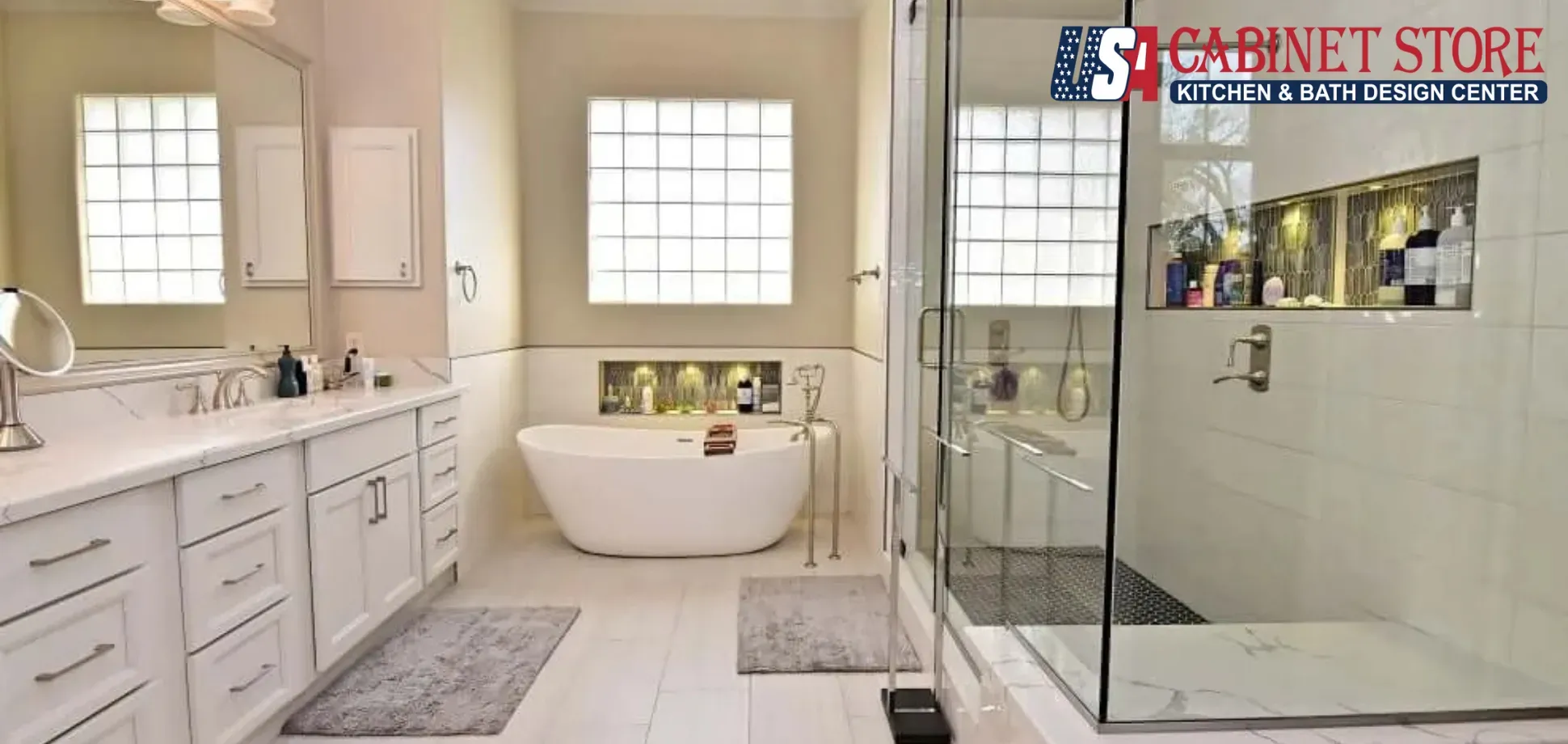
The Northern Virginia Labor Premium: Why NOVA Costs More
The most significant and immutable cost driver in Fairfax County remains labor. The region suffers from a chronic, structural shortage of licensed tradespeople—specifically plumbers and electricians—essential for bathroom renovations.
Data Center Competition Drives Up Wages
The explosive growth of the data center industry in neighboring Loudoun County and parts of Fairfax absorbs a massive percentage of the skilled commercial trade workforce. Residential remodeling firms must compete for talent against commercial giants, driving up hourly wages and subcontractor rates across the board.
2026 Labor Rates in Fairfax County
| Trade | Hourly Rate | Notes |
|---|---|---|
| Licensed Plumber | $75–$150+ | Master plumbers and emergency services command higher premiums |
| Licensed Electrician | $60–$100+ | Commercial rates exceed $100/hour |
| Tile Installer | $10–$25/sq ft | Large-format and intricate patterns at premium end |
| General Contractor | 20–30% markup | On subcontractor labor for management, insurance, warranty |
Task-Based Plumbing Costs
Many plumbing firms use “flat rate” pricing for transparency:
- Rough-in (new supply/drain lines for 3-piece bath): $3,000–$6,500
- Fixture setting (trim-out): $200–$400 per fixture
- Toilet installation (labor only, fixture pre-purchased): $200–$400
- Plumbing stack relocation: $3,000–$9,000 (major cost inflection point)
Critical insight: Moving the main soil stack—the large vertical waste pipe—is one of the most expensive decisions in a remodel. In many 1970s–1980s Fairfax homes, the stack location dictates the layout. Relocating it requires floor/ceiling demolition across multiple stories and can add $9,000 to your budget.
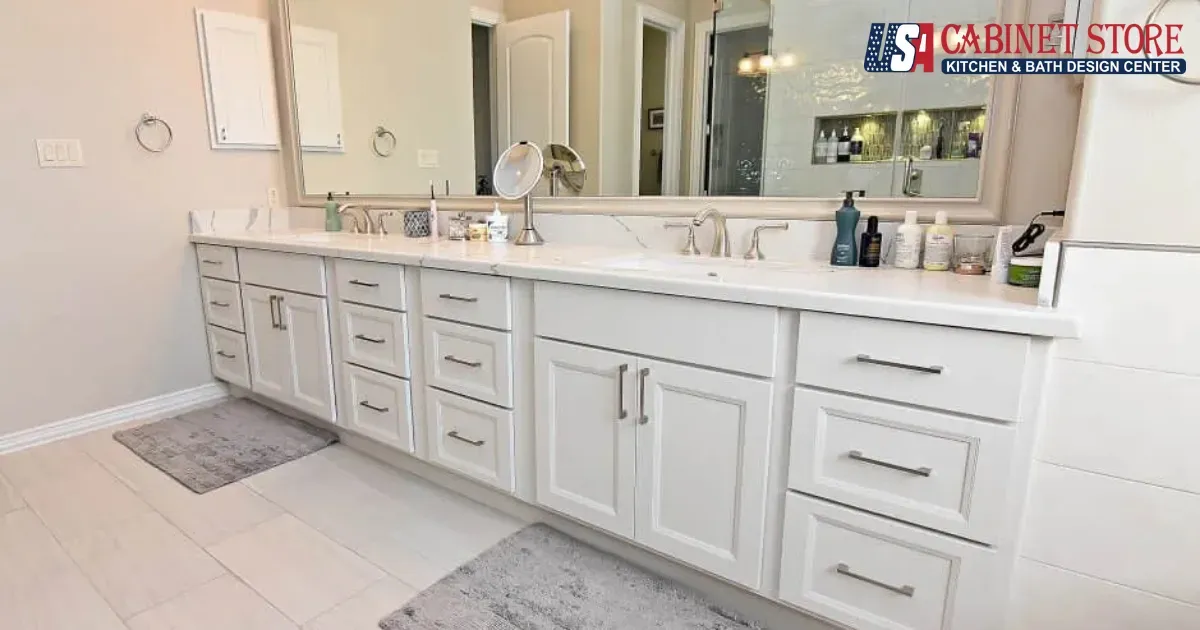
Fairfax County Permit Requirements and 2026 Fees
A fundamental error in many renovation budgets is underestimating regulatory costs. The Fairfax County Department of Land Development Services (LDS) enforces the Virginia Uniform Statewide Building Code with rigor that surpasses many neighboring jurisdictions.
2025–2026 Fee Schedule Changes
The Fairfax County Board of Supervisors approved fee adjustments to align revenue with rising operational costs:
| Fee Type | Change | Effective Date |
|---|---|---|
| Building Permit Fees | +12.5% | July 1, 2025 |
| Zoning Application Fees | +17.5% | Completing multi-year adjustment |
| Technology Surcharge | 7% → 10% | July 1, 2025 |
A further increase of about 5% takes effect July 1, 2026 (FY2027), per the Board of Supervisors’ March 2026 action.
Calculating Your Permit Costs
Fairfax County uses a square-footage-based calculation for residential alterations:
- Base fee: $135.00 minimum (the actual calculated fee depends on scope and will be higher)
- Rate for Type VB construction (standard wood-framed residential): ~$0.143/sq ft
- Typical full bathroom renovation (building + plumbing + electrical): $350–$600
Important distinctions:
- Building Permit: Covers structural/architectural scope (framing, drywall, safety)
- Plumbing Permit: Required for any fixture installation, removal, or relocation
- Electrical Permit: Required for new wiring, outlets, switches, lighting
- Mechanical Permit: Triggered if ductwork is modified or new exhaust fan requires exterior venting
What Doesn’t Require a Permit
- Cosmetic updates (paint, wallpaper)
- Like-for-like fixture replacement in same location
- Hardware and accessory changes
- Mirror and lighting fixture swaps using existing electrical boxes
The Fast Track Program
Fairfax County offers a Fast Track Program for non-complex residential projects, reducing permitting from weeks to days. Eligibility requires interior alterations that don’t involve complex structural engineering or building envelope changes. Plans must be “construction-ready” and clearly labeled according to county conventions.
Detailed Cost Breakdown by Project Tier
Tier 1: Cosmetic Refresh — $5,000–$12,000
A surface-level update ideal for pre-sale preparation or refreshing a powder room without major construction.
What’s included:
- Fresh paint (walls and ceiling): $300–$600
- New faucet and showerhead: $150–$500
- Lighting fixture replacement: $150–$400
- Mirror upgrade: $100–$400
- Hardware refresh (towel bars, TP holder): $75–$200
- Re-caulking and grout refresh: $150–$300
- Basic vanity swap (same location): $800–$1,500
Timeline: 1–2 weeks | ROI: 55–70%
Tier 2: Powder Room (Half Bath) — $8,000–$18,000
The powder room often commands the highest cost per square foot in the house. The small footprint (typically 20–30 sq ft) emboldens homeowners to use premium materials that would be cost-prohibitive in larger spaces.
What’s included:
- Pedestal or console sink vanity: $600–$2,000
- New toilet: $400–$800 installed
- Upgraded flooring (accent tile or luxury vinyl): $500–$1,500
- Decorative lighting: $200–$600
- Statement wallpaper or accent tile: $400–$1,500
- Mirror and accessories: $200–$500
Cost driver insight: Tradespeople often charge “trip minimums” or half-day rates. A plumber may charge $500 to set a sink and toilet regardless of whether it takes 2 hours or 4—keeping labor costs high relative to materials.
Timeline: 1–2 weeks | ROI: 60–75%
Tier 3: Guest/Hallway Bath (Standard Full Bath) — $18,000–$35,000
The standard 5’x8′ bathroom found in thousands of townhomes and colonial-style homes across Fairfax, Vienna, and Reston.
Entry-Level Scope ($18,000–$22,000):
- Retain existing layout (tub, toilet, sink in place)
- Acrylic tub surround or prefabricated fiberglass unit
- Stock vanity (30–36 inch)
- Vinyl plank or basic ceramic tile flooring
- Updated fixtures and lighting
Mid-Range Scope ($23,000–$35,000):
- “Gut” renovation within existing footprint
- Tiled shower pan or enameled cast iron tub
- Semi-custom vanity with quartz top
- Porcelain tile on floor and shower walls
- Upgraded fixtures (Moen, Delta, Kohler mid-tier)
- New lighting and ventilation
Strategic insight: Retaining the plumbing footprint is the single most effective cost-saving measure. Moving a toilet flange or drain line instantly adds $1,500–$2,500 due to subfloor demolition and venting modifications.
Timeline: 3–5 weeks | ROI: 70–80%
Tier 4: Master Bathroom Suite — $35,000–$65,000
The master bath serves as a primary driver of home value. In 2026, the expectation for a master bath in Fairfax is a “retreat” aesthetic, moving away from builder-grade utility.
What’s included:
- Double vanity (60–72 inches) with stone tops: $3,500–$8,000
- Walk-in shower conversion with frameless glass: $6,000–$15,000
- Freestanding soaking tub (if space permits): $2,000–$6,000
- Complete tile package (floor, shower walls, accents): $4,000–$10,000
- Layered lighting plan (recessed, vanity sconces, shower): $800–$2,000
- Upgraded ventilation: $400–$800
- Plumbing updates within footprint: $2,000–$4,500
- Electrical updates (GFCI, dedicated circuits): $1,000–$2,500
Cost dynamics: The shift to a walk-in shower is a major cost center requiring membrane waterproofing, a mud bed or pre-sloped pan, and extensive tiling. The frameless glass enclosure alone ranges from $1,200–$2,500 for custom setups.
Timeline: 5–7 weeks | ROI: 65–75%
Tier 5: Luxury Spa Retreat — $70,000–$115,000+
This tier involves architectural intervention and is common in high-value neighborhoods like Great Falls, McLean, and Oakton.
What’s included:
- Structural changes (moving walls, expanding footprint): $8,000–$20,000
- Complete plumbing reconfiguration: $6,000–$12,000
- Custom cabinetry: $5,000–$15,000
- Natural stone slabs (marble, quartzite): $4,000–$12,000
- Steam shower system: $4,000–$15,000
- Radiant floor heating: $1,500–$4,000
- Designer plumbing fixtures (Rohl, Kallista, Waterworks): $3,000–$10,000
- Smart toilet with bidet: $1,500–$5,000
- Complex shower systems (body sprays, rain heads, thermostatic valves): $2,000–$5,000
- Custom lighting design: $1,500–$3,500
- Premium glass enclosure: $2,500–$4,500
Fairfax specificity: Projects in this tier often trigger “Universal Design” considerations (curbless showers, wider clearances), requiring structural modification to floor joists to recess the shower pan—adding engineering and carpentry costs.
Timeline: 8–12 weeks | ROI: 40–42%

Material Costs: What You’ll Pay in 2026
Vanities and Cabinetry
| Type | Price Range | Notes |
|---|---|---|
| Stock/Prefab | $800–$2,600 | Standard widths (24″, 30″, 36″, 48″, 60″); trending toward floating wall-mounted styles in white oak |
| Semi-Custom | $2,800–$5,500 | Maximizes storage in odd-shaped layouts; in-drawer electrical outlets becoming standard |
| Custom | $5,000–$8,000+ | Full customization; faces tariff and hardwood lumber pressures |
2026 Trend: Wood-faced vanities have overtaken painted finishes for the first time, at 62% versus 53%, according to NKBA’s 2026 bath data. White oak and floating wall-mounted styles lead.
(The “51% white oak” figure is real but it is NKBA’s kitchen-cabinet number, not vanities. The 62%/53% split is the bath report.)
Countertops
| Material | Cost/Sq Ft (Installed) | Best For |
|---|---|---|
| Laminate | $20–$40 | Budget projects |
| Solid Surface (Corian) | $45–$100 | Seamless appearance |
| Quartz | $60–$150 | Durability, consistency, stain resistance |
| Granite | $55–$120 | Natural stone at moderate price |
| Quartzite | $100–$200+ | Harder than granite, mimics marble veining |
| Marble | $80–$200+ | Luxury aesthetic (requires maintenance) |
Tile and Flooring
| Type | Cost/Sq Ft (Installed) | Notes |
|---|---|---|
| Ceramic | $8–$25 | Most affordable; digital printing now mimics natural stone |
| Porcelain | $10–$35 | Superior water resistance |
| Large Format (24×48+) | $15–$45 | Fewer grout lines; requires two-person handling and precision leveling |
| Natural Stone | $15–$50+ | Marble, travertine; hidden maintenance costs (sealing) |
| Luxury Vinyl Plank | $6–$15 | Waterproof; realistic wood/stone looks |
Glass Enclosures
| Type | Price Range | Notes |
|---|---|---|
| Framed | $400–$1,000 | Budget-friendly option |
| Semi-Frameless | $800–$1,800 | Balance of aesthetics and cost |
| Frameless Custom | $1,200–$3,500+ | 3/8″ to 1/2″ glass; matte black and brushed gold hardware trending |
Lead time alert: Custom glass fabrication carries a 2–4 week lead time from point of measurement (which happens after tile installation)—a critical scheduling dependency.
Advanced Systems and Wellness Technology
The 2026 bathroom is conceptualized as a “wellness retreat,” integrating technology that enhances comfort and daily experience.
Steam Showers — $4,000–$15,000+
Steam showers are increasingly requested in luxury master baths but represent one of the most complex residential installations.
- Steam generator: $1,500–$3,000
- Construction requirements: Hermetically sealed enclosure, vapor-proofed walls and ceiling, sloped ceiling (prevents condensation dripping), full-height glass with transoms
- Critical warning: A standard tiled shower cannot be converted to steam—it must be built for steam from the framing stage. Retrofitting is virtually impossible without a total gut.
Radiant Floor Heating — $600–$4,600 ($8–$20/sq ft)
Electric radiant mats installed under tile provide significant comfort in Northern Virginia’s climate.
- Technology: Schluter-Ditra-Heat or similar systems
- Requirements: Dedicated thermostat, often a dedicated electrical circuit
- Value proposition: Relatively inexpensive to operate despite installation cost
Smart Bathroom Technology
- Smart toilets/bidets (Toto Neorest, Kohler Veil): $1,200–$5,000+ (requires dedicated electrical outlet)
- Digital shower systems (preset temperature/flow): $1,000–$3,000 (requires access panels for valve blocks)
- Lighted mirrors: $300–$1,200
- Heated towel bars: $200–$800
Hidden Costs That Blow Budgets
Budget overruns rarely come from tile costing $2 more per foot—they come from what lies behind the walls.
Plumbing Stack Relocation — $3,000–$9,000
Moving a toilet or resizing a layout often necessitates relocating the main soil stack. In multi-story homes, this requires opening walls on floors below (often the kitchen or dining room) and potentially bulkheading new pipe runs.
Electrical Panel Upgrades — $2,500–$5,000
Older Fairfax homes (100-amp or 150-amp service) may require a “heavy-up” or panel replacement to accommodate new circuits for steam generators, in-floor heating, and high-draw devices.
Ventilation Upgrades — $500–$1,000
Code requires exhaust fans to vent to the exterior, not into the attic. Many older Fairfax homes have non-compliant fans dumping moisture into insulation, causing mold. Remediation involves running new insulated ductwork to a roof cap or sidewall vent.
Waterproofing Systems — $500–$1,500
Modern standards require integrated waterproofing membranes (Schluter-Kerdi, Wedi) or liquid membranes (RedGard)—critical insurance against leaks that add to material budgets but prevent far costlier damage.
Subfloor and Structural Surprises
In Fairfax County’s older housing stock (median home built around 1983, with roughly a quarter built before 1970), expect to encounter:
- Rotted subfloors from decades of moisture exposure
- Galvanized plumbing pipes requiring replacement
- Non-grounded electrical wiring
- Asbestos in flooring or wall materials (pre-1980 homes)
Mandatory recommendation: Budget a 15–20% contingency fund. Do not budget to the limit of your financing.
ROI Analysis: What You’ll Recover at Resale
Investment in bathroom remodeling must be weighed against resale value—particularly in the transient DC Metro market where government and corporate relocations drive turnover.
Cost vs. Value Data (2025–2026)
| Project Type | Typical Cost | Cost Recovery | ROI |
|---|---|---|---|
| Mid-Range Remodel | $17,000–$35,000 | $12,000–$28,000 | 68–80% |
| Upscale Remodel | $70,000–$115,000 | $30,000–$63,000 | 40–42% |
Strategic insight: Mid-range remodels offer optimal financial return. High-end customization (steam showers, imported stone) is rarely fully recouped at resale—these expenditures should be viewed as “consumption” (personal enjoyment) rather than “investment.”
The “Saleability” Factor
While direct ROI percentages seem low for upscale projects, the opportunity cost matters. In competitive Fairfax neighborhoods like Vienna or McLean, a dated master bath can be a “deal killer.” Buyers in the $800K–$1.5M range expect turnkey master suites. An $80,000 remodel might only add $33,000 to appraised value, but it may be the deciding factor between a full-price sale and a stagnant listing requiring price cuts.
Highest-ROI Improvements
Based on local market data and realtor feedback:
- Updated vanity with quality countertop — Signals renovation quality immediately
- Walk-in shower conversion — Replaces dated tub-shower combos; broad buyer appeal
- Modern tile in warm neutrals — Large-format porcelain; timeless aesthetic
- Quality fixtures in current finishes — Matte black, brushed nickel, brushed gold
- Proper lighting — Layered vanity, ambient, and shower lighting
- Code-compliant ventilation — Prevents costly moisture damage
Where to Spend and Where to Save on a Fairfax County Bathroom
Two bathrooms can cost the same and feel completely different five years later. The gap usually comes down to where the money went. The same short list of choices is the one homeowners thank themselves for, and the same handful is where they wish they had pulled back. Here is how we steer Fairfax County clients.
Worth paying for
Enough outlets at the vanity. Too few outlets is the most common after-the-fact complaint. Plan for at least one outlet per sink, plus one inside a drawer or cabinet for chargers and styling tools. Adding them during the build costs little. Adding them later means opening the wall again.
Blocking behind the drywall. Wood blocking behind towel bars, the toilet-paper holder, and anywhere a grab bar might go someday is cheap while the wall is open and miserable to retrofit. It is the difference between a fixture that holds and one that pulls out of the drywall.
A shower niche. A recessed niche keeps bottles off the floor and the tub edge. Skipping it to save a small tiling cost is one of the most repeated regrets we hear.
Heated floors. In our climate, electric radiant heat under the tile is the upgrade people most often wish they had added. At roughly $8 to $20 per square foot, it is modest against the total and inexpensive to run.
Drawers, not doors, on the vanity. Drawers put everything within reach. A single-door cabinet with one shelf wastes the back half of the space.
Frameless glass and proper lighting. Frameless glass reads as custom and skips the dated framed-door look. Layered lighting (vanity, ceiling, and shower) plus a correctly sized exhaust fan vented to the outside protect both the look and the walls behind it.
Safe places to pull back
Keep the plumbing where it is. This is the biggest lever in the whole budget. Leaving the toilet, sink, and shower drains in their existing spots can save $1,500 to $9,000 by avoiding subfloor demolition and stack work. Move fixtures only when the layout genuinely needs it.
Stock or semi-custom over full custom. For standard widths, a well-built stock or semi-custom vanity with a quartz top gives you most of the look for a fraction of custom cabinetry pricing. Save the custom budget for odd-shaped layouts that actually need it.
Luxury vinyl plank in secondary baths. In a guest or kids’ bath, quality LVP is waterproof, warm underfoot, and far cheaper than stone. Save the marble and quartzite for the primary suite, where it earns its place.
A good designer will tell you which of these applies to your specific bathroom, not just hand you a price list. That is what our free design consultation is for: a layout that spends where it counts and saves where it does not.
Strategic Project Execution for 2026
Timeline Management
| Phase | Duration | Notes |
|---|---|---|
| Design & Permitting | 4–8 weeks | Fast Track can accelerate; plans must be construction-ready |
| Material Procurement | 2–6 weeks | Custom cabinets and glass are long-lead items |
| Small Bath Construction | 3–5 weeks | — |
| Master Bath Construction | 6–10 weeks | — |
Critical advice: Do not commence work until critical finish materials are on-site to avoid costly downtime.
Contractor Selection
Select contractors familiar with Fairfax County’s specific code nuances. A contractor from a rural jurisdiction may not be accustomed to strict inspection sequencing.
Verification checklist:
- Valid Virginia Class A, B, or C license (verify via DPOR website)
- General Liability and Workers’ Compensation insurance
- Fixed-price contract with clearly defined allowances (avoid “cost plus” for standard remodels)
Frequently Asked Questions: Bathroom Remodeling Cost in Fairfax County
Straight answers to what Northern Virginia homeowners ask most before starting a 2026 bathroom remodel.
Cost and budget
How much does a bathroom remodel cost in Fairfax County in 2026?
Most Fairfax County bathroom remodels fall between $5,000 and $12,000 for a cosmetic refresh and $17,000 to $35,000 for a mid-range full remodel. Master suites typically run $35,000 to $65,000, and luxury spa baths start around $70,000 and climb past $115,000. These ranges include labor, materials, and permits at 2026 Northern Virginia rates.
Why is a Fairfax County bathroom remodel more expensive than the national average?
Northern Virginia runs roughly 25 to 35 percent above the national average, mostly because of labor. Licensed plumbers and electricians are in short supply here, and data center construction in Loudoun and Fairfax pulls skilled trades toward higher-paying commercial work. The region’s older housing stock and stricter permitting add to the gap.
How much should I budget for unexpected or hidden costs?
Set aside 15 to 20 percent of your budget for surprises. In Fairfax County’s older homes, opening a wall often reveals rotted subfloor, outdated wiring, or galvanized pipe that has to be replaced to pass inspection. A contingency is the difference between a manageable change order and a stalled project.
What hidden costs do homeowners most often forget?
The ones that catch people off guard are usually behind the walls or outside the obvious line items: code-required electrical upgrades, exhaust fans that must vent outside, waterproofing membranes, and disposal or dumpster fees. A few are easy to forget entirely, like interconnected smoke detectors triggered at inspection and a possible property tax bump once the work is permitted.
Will a bathroom remodel increase my property taxes?
It can. Major permitted improvements, especially in kitchens and baths, can raise your home’s assessed value, and assessors receive copies of permit applications. The increase is usually modest relative to the value the remodel adds, but it is worth planning for rather than being surprised by.
How can I save money on my bathroom remodel?
The biggest lever is keeping your plumbing in place, which can save $1,500 to $9,000 by avoiding drain relocation and stack work. Choosing a stock or semi-custom vanity over full custom, using luxury vinyl plank in secondary baths, and using the county’s Fast Track permitting program all help. The older advice to buy before the January 2026 tariff no longer applies, since that increase was delayed.
What’s the most expensive part of a bathroom remodel?
Labor is the largest share, usually 40 to 50 percent of the total. The single most expensive decision is relocating the main plumbing stack, which runs $3,000 to $9,000 because it means opening floors and ceilings across more than one level. Custom tile work and frameless glass are the next big line items.
Tariffs and timing
How do 2026 tariffs affect bathroom remodeling costs?
A 25 percent federal tariff on imported cabinets and bathroom vanities has been in place since October 2025, so current pricing already reflects it. The increase to 50 percent that was scheduled for January 2026 was delayed to January 1, 2027, and it could change again. Domestically built vanities are not subject to the import tariff at all.
When is the best time to start a bathroom remodel?
There is no tariff deadline forcing your hand in 2026, since the increase was pushed to 2027. Plan your start around your own timeline and lead times instead: allow 4 to 8 weeks for design and permitting and 2 to 6 weeks for materials, then book construction. Late winter and early spring tend to have better contractor availability before the summer rush.
Permits
Do I need a permit for a bathroom remodel in Fairfax County?
Yes, if your project involves plumbing changes, electrical work, or structural modifications. Cosmetic updates like paint, hardware, and like-for-like fixture swaps in the same spot do not. Fairfax County’s minimum permit fee starts at $135, and any project over $1,000 must be done by a Virginia-licensed contractor.
Does replacing just a vanity or toilet require a permit?
Swapping a vanity, faucet, or toilet in the same location, with no change to the plumbing rough-in, generally does not need a permit. Once you move a drain, add a fixture, or change wiring, a plumbing or electrical permit is required. When in doubt, your contractor should pull it, since unpermitted work can surface and cost you at resale.
Value and resale
What’s the ROI on bathroom remodeling in Northern Virginia?
A mid-range bathroom remodel recovers roughly 68 to 80 percent of its cost at resale in the DC region, depending on how it is measured. Upscale remodels recover far less, around 40 to 42 percent, so high-end finishes are better treated as something you enjoy than as an investment. Bathrooms score high for homeowner satisfaction, though they are not the single highest-satisfaction project.
What bathroom features do Fairfax County buyers want most?
Updated vanities with quartz or solid-surface tops, walk-in showers in place of dated tub-shower combos, and large-format tile in warm neutrals lead the list. Buyers also notice current fixture finishes like matte black, brushed nickel, and brushed gold, along with good layered lighting and quiet, properly vented exhaust fans.
Where to spend and what to choose
Where should I splurge and where should I save?
Spend on the things that are hard to change later: enough outlets at the vanity, wood blocking behind towel bars and future grab bars, a shower niche, heated floors, and drawers instead of doors. Save by keeping your plumbing where it is, choosing stock or semi-custom vanities for standard sizes, and using luxury vinyl plank in guest and kids’ baths.
Do I have to move my plumbing during a bathroom remodel?
Only if your layout truly needs it. Keeping the toilet, sink, and shower drains in their current spots is the single biggest cost saver in a remodel, worth \$1,500 to \$9,000, because it avoids subfloor demolition and venting changes. Moving a single drain can add $1,500 to $2,500 on its own.
Are heated bathroom floors worth it in Northern Virginia?
For most homeowners, yes. Electric radiant heat under the tile costs about $8 to $20 per square foot, which is modest against the total, and it is inexpensive to run. It is also one of the upgrades people most often regret leaving out.
Should I choose a stock, semi-custom, or custom vanity?
Stock and prefab vanities run about $800 to $2,600 and cover standard widths well. Semi-custom ($2,800 to $5,500) makes sense for odd layouts or extra storage, and full custom ($5,000 and up) is worth it only when the space genuinely demands it. For a standard vanity, a well-built stock or semi-custom unit with a quartz top gives you most of the look for far less.
How many electrical outlets should a bathroom vanity have?
Plan for at least one outlet per sink, plus one inside a drawer or cabinet for chargers and styling tools. Code requires GFCI protection near water. Adding outlets during the remodel costs little, while adding them afterward means opening the wall again, which is why too few outlets is such a common regret.
What’s the most popular bathroom vanity style in 2026?
Wood-grain vanities have overtaken painted finishes for the first time, with wood-faced styles at 62 percent versus 53 percent for painted in NKBA’s 2026 data. White oak and floating wall-mounted designs are the most requested. Painted vanities remain popular, especially in deeper, warmer tones.
Are steam showers worth the cost?
Steam showers run $4,000 to $15,000 or more and offer high user satisfaction but low resale return. They have to be built for steam from the framing stage, with a sealed, vapor-proofed enclosure, so a standard shower cannot be converted later. Treat one as a lifestyle choice rather than a financial one.
Choosing a contractor
Do I need a licensed contractor for a bathroom remodel in Fairfax County?
Yes. Virginia requires a contractor licensed by the Department of Professional and Occupational Regulation (DPOR) for any project over \$1,000, which covers essentially every full bathroom remodel. You can verify a license on the DPOR website, and you should also confirm general liability and workers’ compensation coverage.
What should be included in a bathroom remodel quote?
A solid quote spells out scope, named allowances for tile, fixtures, and the vanity, a payment schedule tied to milestones, and a clear line between what is included and what is not. Be cautious of one-line bids with no detail, and prefer a fixed-price contract over cost-plus for a standard remodel. Vague bids are where most budget surprises start.
How do I avoid a contractor abandoning my project?
Tie a meaningful share of the final payment, ideally 15 percent or more, to a completed punch list, so the crew has a reason to finish. Choose a company with in-house crews and a named project manager rather than a chain of subcontractors, check references and reviews, and avoid large up-front deposits. A contractor who resists a milestone-based schedule is a warning sign.
Timeline and logistics
How long does a bathroom remodel take in Fairfax County?
Cosmetic updates take 1 to 2 weeks, mid-range full remodels 3 to 5 weeks, master suites 5 to 7 weeks, and luxury projects 8 to 12 weeks. Add 4 to 8 weeks for design and permitting and 2 to 6 weeks for materials before construction starts. Custom vanities and glass are the usual long-lead items.
How long will I be without a usable bathroom?
Plan to lose the bathroom for the full construction window, roughly 3 to 5 weeks for a mid-range remodel and longer for a master suite. If it is your only bathroom, ask your contractor about sequencing to shorten the gap, and arrange a backup before demo day. Ordering all materials before work starts prevents mid-project stalls that stretch that window.
Related projects
How much does it cost to convert a tub to a walk-in shower in Fairfax County?
In Fairfax County, converting a bathtub into a walk-in shower typically costs between $6,000 and $15,000, depending on the size of the shower, tile selection, frameless glass options, plumbing modifications, and accessibility upgrades. Projects that require relocating the drain or installing custom tile and premium fixtures tend to fall at the higher end of the range. This upgrade remains one of the most desirable bathroom improvements because it modernizes the space, improves accessibility, and can enhance resale appeal. For a detailed cost breakdown, see our Shower Remodeling Cost Guide.
Ready to Start Your Fairfax County Bathroom Remodel?
Understanding costs is the first step toward a successful renovation. The next step? Seeing your options in person and getting expert guidance tailored to Fairfax County’s unique market.
At USA Cabinet Store, we help Northern Virginia homeowners navigate bathroom remodeling with:
✓ Extensive vanity selection — Stock, semi-custom, and custom options at competitive prices
✓ Pre-tariff pricing available — Lock in 2025 rates before January 1, 2026
✓ Free design consultation — Our experts help you optimize layout and material selections
✓ Local market expertise — We understand Fairfax County’s codes, permits, and homeowner expectations
✓ Quality brands without designer markup — Premium construction at value pricing
✓ UCS Kitchen Design integration — Professional 3D visualization and custom layout planning
Visit Our Showrooms Today
USA Cabinet Store – Fairfax
2832 Dorr Ave, Suite E
Fairfax, VA 22031
Mon–Fri: 9AM–6PM | Sat: 10AM–5PM | Sun: Closed
USA Cabinet Store – Chantilly
3857 B Dulles South Court, Suite B
Chantilly, VA 20151
Mon–Fri: 9AM–6PM | Sat: 10AM–5PM | Sun: Closed
UCS Kitchen Design
8150 Leesburg Pike #170
Vienna, VA 22182
(703) 745-5662
info@ucskitchen.com
Mon–Sat: 10AM–6PM | Sun: Closed
Ready to Get Started?
Schedule Your Free Design Consultation in Fairfax→
Schedule Your Free Design Consultation in Chantilly→
Schedule Your Free Design Consultation in Tyson’s Corner→
Download Our Free Resource
Get our comprehensive worksheet to help you allocate your budget, track expenses, and avoid the 10 most common mistakes.
Northern Virginia Bathroom Remodeling Budget Planner
You can fill out the budget planner below and see the optimal pricing.
 Updated for 2026 Market Rates
Northern Virginia Remodeling Budget Planner
Provided by USA Cabinet Store
Project Configuration
Define your dream space and your live cost projection appears at the bottom.
© USA Cabinet Store. All Rights Reserved.
Visit our official website: usacabinetstore.com
NOVA 2026 Pricing Index v3.0
USA Cabinet Store proudly serves homeowners throughout Northern Virginia, including Arlington, Alexandria, Fairfax, Falls Church, McLean, Vienna, Reston, Herndon, and surrounding communities.
Sources
Cost projections synthesized from:
- Joint Center for Housing Studies, Harvard University – Remodeling Activity Projections (2025)
- National Kitchen & Bath Association – 2026 Market Outlook and Design Trends Report
- Remodeling Magazine Cost vs. Value Report – South Atlantic/DC Region (2025)
- Fairfax County Land Development Services – Fee Schedule Amendments (July 2025)
- NAR/NARI 2025 Remodeling Impact Report
- Local contractor surveys and trade pricing data (Northern Virginia, 2025)
- Angi/HomeAdvisor regional cost databases (2025)
Last updated: December 2025. Actual project costs vary based on specific scope, site conditions, material selections, and market fluctuations.
This blog post is intended for informational purposes. Costs, timelines, and ROI figures represent typical ranges and may vary based on specific project requirements, material selections, and market conditions. Consult with USA Cabinet Store for detailed estimates tailored to your specific remodeling project.