
Most Sanford homeowners spend between $5,709 and $15,372 on a bathroom remodel, with the metro average landing around $10,510. But Sanford is the one Orlando suburb where that range tells only half the story. This is the Seminole County seat, the Historic Waterfront City on Lake Monroe, and it is really two towns wearing one name. A 1910 bungalow three blocks off First Street and a 2007 home in Celery Lakes can carry the exact same finish budget and still cost thousands apart, because of what is hidden behind the tile. The median home here runs around $343,000, well below Oviedo or Winter Park, so your dollar stretches further and a smart bathroom remodel returns more.
Two things trip up almost every Sanford homeowner, and the search results ignore both. First, the Seminole County building office sits right downtown on First Street, so people assume they file their permit with the county. If your home is inside city limits, you actually permit through the City of Sanford. Second, owners in the historic district panic about the preservation board, when an interior bathroom remodel needs no historic approval at all.
This guide is what our design team at USA Cabinet Store tells the Sanford families who drive fifteen minutes to our Winter Springs showroom. What it really costs. Which Sanford you live in. How the permitting actually works. And where your money goes furthest in a value market. For the full metro picture, our complete Orlando bathroom remodeling guide covers the region, and this page zooms all the way into Sanford.
What Bathroom Remodeling Costs in Sanford, FL (2026)?
Here is the honest version. Sanford uses the same Orlando metro cost ranges as the rest of Seminole County, because the labor pool, the suppliers, and the Florida Building Code are the same. What changes is where your project lands inside those ranges. And in Sanford, that depends almost entirely on which of the two Sanfords your home belongs to.
Sanford cost tiers
These are the 2026 ranges our designers quote across the Orlando metro, matched to our Orlando bathroom remodel cost breakdown so the numbers stay consistent citywide.
A cosmetic refresh keeps every fixture where it is. New vanity, new toilet, new light fixtures, fresh paint, maybe a re-glazed tub. A partial remodel swaps the major surfaces and fixtures without moving plumbing. A full remodel takes the room to the studs. A primary suite adds size, a double vanity, and usually a separate walk-in shower and tub. Spa territory is heated floors, frameless glass, custom cabinetry, and a freestanding soaker.
Why Sanford is the value play in the Orlando metro?
Sanford’s median home value sits around $343,000, with a typical list price near $400,000. Compare that to Oviedo near $492,000 or Winter Park’s premium estate market. The median household income here is about $69,000, and the housing mix leans toward first-time buyers, young families, and investors. That matters for your remodel in two ways.
It means the value is real. A $20,000 bathroom on a $343,000 home moves the needle on resale more than the same bathroom on a million-dollar house. The return on investment math, which we break down later, works harder in Sanford than anywhere else in the cluster.
And it means you should be ruthless about transparency. Value markets attract cash-deal contractors who skip permits and quote low. We will come back to why that is a trap.
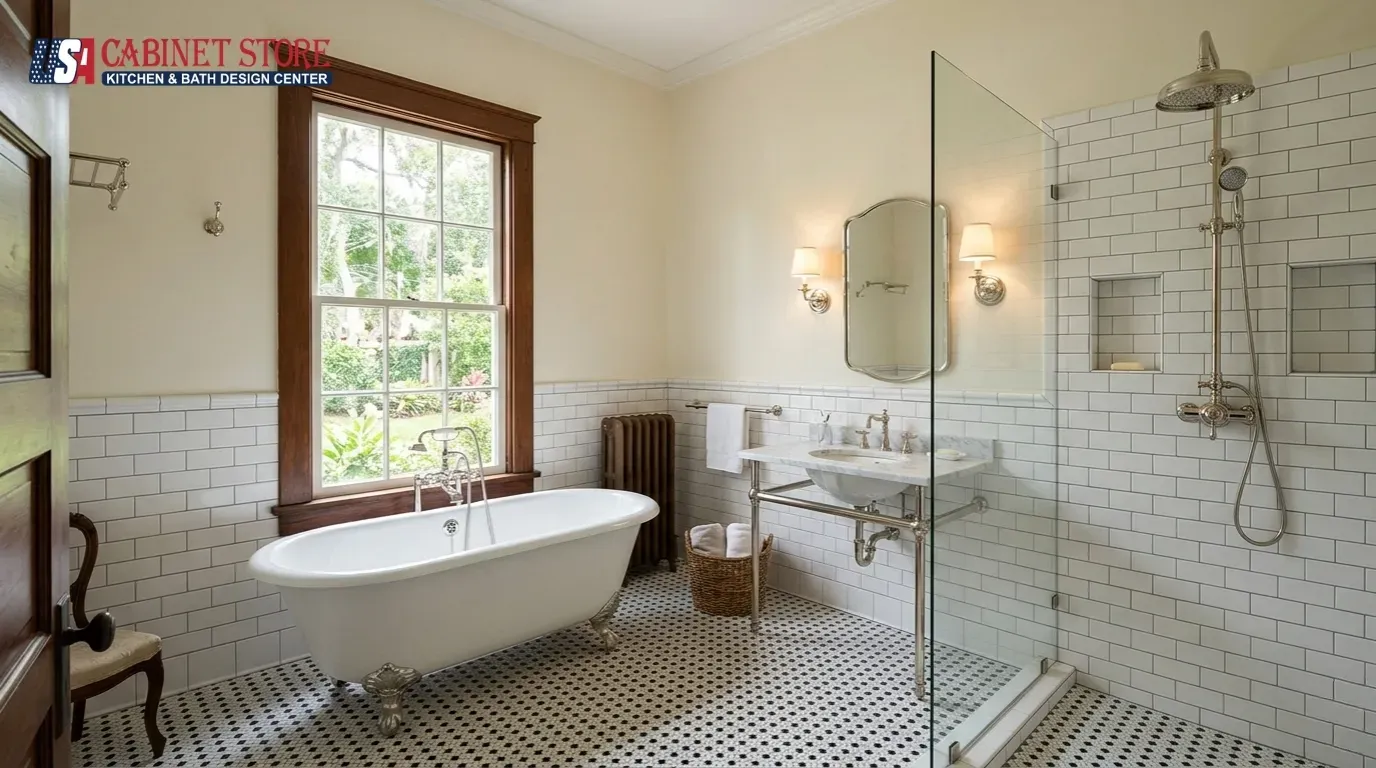
The split: why a Historic District bath costs more than a Celery Lakes bath
This is the part nobody explains. Two homeowners, both want a full remodel, both pick the same quartz and the same Fabuwood vanity. One lives in a 2007 Celery Lakes home. One lives in a 1912 bungalow in the Sanford Residential Historic District. Same finish list, and the bungalow can run thousands more.
The finishes are not the variable. What is behind the walls is the variable. The newer home has CPVC supply lines, grounded wiring, a slab foundation, and drywall. The historic home can have cast-iron drains that crack when touched, galvanized supply pipe choked with rust, knob-and-tube remnants, lath-and-plaster that turns demo into a mess, and a raised pier foundation instead of a slab. None of that shows up in a finish quote. All of it shows up in the final invoice if you do not plan for it.
So the same tier range applies to both homes. The newer home lands at the low-to-mid end with a 10 percent contingency. The historic home lands at the upper end and needs a 15 to 20 percent contingency. We will map this out fully in the next section, because it is the single most important thing to understand before you spend a dollar in Sanford.
Cost by bathroom type
A 54-square-foot bathroom can carry a startling quote, and Reddit is full of homeowners who saw one and assumed they were being gouged. Usually they were not. A small bathroom packs every trade into a tight space, which raises the cost per square foot. The fix is not a cheaper contractor. It is a line-item estimate that shows you exactly what each piece costs, so the number stops looking like a guess.
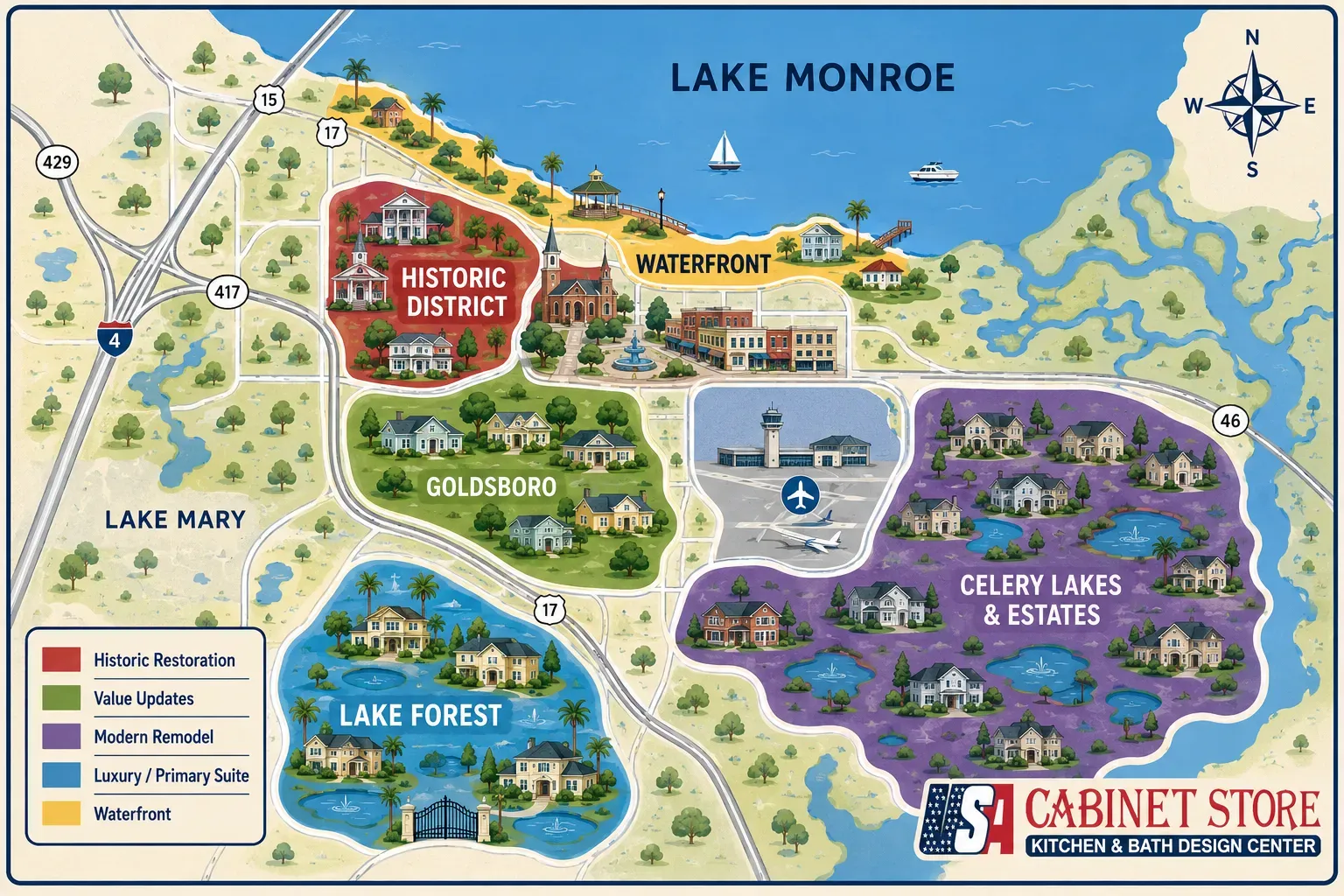
The Two Sanfords: Historic District vs. Newer Subdivisions
If you remember one thing from this guide, make it this. Before you fall in love with tile, find out which Sanford your house lives in. It changes your budget more than any finish you will pick.
The Historic District: cast iron, galvanized, lath, and a 15 to 20 percent contingency
The Sanford Residential Historic District holds 432 contributing buildings, roughly bounded by Sanford Avenue, 14th Street, Elm Avenue, and 3rd Street. These are 1880s to 1920s Craftsman bungalows, frame-vernacular cottages, and Mediterranean Revival homes. They have character that a 2007 subdivision will never have. They also have a hundred years of plumbing and wiring behind the plaster.
Open the wall on one of these homes and you might find cast-iron waste lines that have been corroding since the Coolidge administration, galvanized steel supply pipe with an inside diameter half of what it started as, and the occasional knob-and-tube wiring run that a previous owner never finished replacing. The walls are usually lath-and-plaster, which is heavier, messier, and slower to demo than drywall. Many of these homes sit on raised pier or crawlspace foundations rather than slab.
A Reddit homeowner who bought an older “forever home” summed up the fear perfectly: it became “nothing but one expensive surprise after another.” That is the historic-home reality, and the way you defeat it is not optimism. It is a 15 to 20 percent contingency budgeted before you start, so the surprises are already paid for.
Newer Sanford: CPVC, slab, drywall, and a 10 percent contingency
Now drive out to Celery Lakes, built around 2003 to 2007, or Celery Estates, finished around 2011, or Celery Key, or the gated Lake Forest community near the Lake Mary and Heathrow edge. These homes were built under modern code. CPVC or PEX supply lines. PVC drains. Grounded wiring already close to today’s standard. Drywall, not plaster. Slab-on-grade foundations.
Remodel one of these and the surprises mostly disappear. The budget goes where you want it, into the finishes and the design, not into fixing things you could not see. A 10 percent contingency is plenty for post-2000 Sanford stock. These projects also hold their schedule, because demo day rarely uncovers a problem that stops the job.
How to tell which Sanford your home is
You do not need a contractor to figure this out. Three quick checks.
- Year built. Pull it from the Seminole County Property Appraiser. Pre-1940 usually means historic-district construction methods. Post-1995 usually means modern systems.
- Foundation. A raised floor you can feel give slightly, or a crawlspace access door, points to older construction. A dead-flat, hard floor on the ground level is a slab.
- The pipes you can see. Look under a sink or at the water heater. Shiny tan or white plastic is CPVC or PEX, which is modern. Dull gray threaded metal is galvanized, which is old.
If you live inside the historic district boundary, you almost certainly own the older-systems version, and you should budget the higher contingency. If you live in any of the Celery neighborhoods, Lake Forest, or anything built after the mid-1990s, you are in predictable territory.
The rare upside of an old Sanford bungalow
Old stock is not all bad news. Those raised pier and crawlspace foundations give a plumber something a slab home never offers, which is access from below. Moving a drain line in a slab home means renting a jackhammer and cutting concrete, which runs $500 to $1,500 per fixture and as much as $2,500 to $3,500 to relocate a toilet. In a raised historic bungalow, a plumber can often reach the same lines from the crawlspace, which can make a layout change cheaper than it would be next door in Celery Lakes. So the old home costs you more on surprises and can save you on plumbing moves. Plan for both.
Not sure which Sanford you’re in?
Send us your address and a few photos under the sink, and our designers will tell you which contingency to budget before we ever talk finishes. Book your free consultation or visit our Winter Springs showroom, about fifteen minutes from Historic Downtown Sanford.

Permits in Sanford (It’s the City, Not the County, Even Though the County Office Is Downtown)
This is the mistake that costs Sanford homeowners the most time, and it is completely avoidable.
The county-seat confusion
Sanford is the county seat of Seminole County. The Seminole County Building Division has its office at 1101 East First Street, right in downtown Sanford. So when a homeowner needs a permit, the natural assumption is to call the county. For most Sanford addresses, that is the wrong office.
If your home is inside Sanford city limits, you permit through the City of Sanford Building Division, not Seminole County. The county building you can see from First Street handles unincorporated Seminole County, the areas outside any city. Only homes on the unincorporated edges near Sanford file with the county. Everyone inside the city files with the city. Getting this backward sends your paperwork to the wrong desk and can cost you a week or more before anyone tells you.
This is exactly the kind of local detail the thin contractor pages and national cost aggregators never mention. It is also why working with a remodeler who pulls Sanford permits every month saves you the headache entirely.
How Sanford permitting works
The City of Sanford runs everything through its Citizenserve online portal. You apply, pay fees, check status, download forms, and schedule inspections there. The Building Division enforces the Florida Building Code, state statutes, and city ordinances, and issues the certificate of occupancy at the end. You can reach the Building Division at (407) 688-5150.
Fees depend on the scope and valuation of your job, and the city updates them, so we will not print a number that goes stale. Pull the current building and trade-permit fees in the Citizenserve portal, or let your contractor handle it as part of the project. As a rough metro reference, combined building and trade permit fees on a standard bathroom often run a few hundred dollars, not thousands. The permit is rarely the expensive part. It is the part that protects you.
When you need a permit
You need a permit in Sanford when the work touches the systems, not just the surface. That includes:
- Moving a tub, sink, or toilet
- Replacing tile or a tub surround
- Any new plumbing, electrical, or structural work
- Changing the layout or removing a wall
You generally do not need a permit for cosmetic-only work like painting, swapping a faucet for the same model in the same spot, or replacing a vanity in the exact same footprint without touching the plumbing.
Reddit homeowners ask this constantly, and with some resentment. One put it bluntly: “Why do I need to get a permit for a bathroom remodel? It’s not inconveniencing anyone except myself.” Here is the real answer. The permit forces an inspection. The inspection confirms the new GFCI protection, the dedicated 20-amp circuit, the proper waterproofing, and the exhaust fan that vents outside instead of into your attic. When you sell, a permitted, inspected remodel is an asset, and unpermitted work is a problem you have to disclose or hide. The permit is not bureaucracy for its own sake. It is your proof the job was done right.
Notice of Commencement and DBPR licensing
Two Florida rules apply on top of the city permit. Any project over $5,000 requires a recorded Notice of Commencement under Florida Statute 713, which protects you in the construction-lien process. And any contractor doing work over $1,000 must hold a state license through the Department of Business and Professional Regulation, which you can verify at myfloridalicense.com. We come back to why that license check matters when we talk about hiring.
Remodeling a Historic-District Bathroom in Sanford (The COA Myth)
Here is the relief valve for everyone who owns a home in the historic district and has been dreading the preservation board.
The Certificate of Appropriateness covers the exterior only
Sanford regulates four local historic districts: the Downtown Commercial Historic District, the Sanford Residential Historic District, the Sanford Avenue Historic District, and the Georgetown Residential Historic District. Properties in these districts need a Certificate of Appropriateness, a COA, from the Historic Preservation Board before certain work begins.
The key word is exterior. The COA governs exterior work, repairs, new construction, site work, and demolition. It exists to protect how the neighborhood looks from the street. An interior bathroom remodel does not change how your home looks from the street, so it does not require a COA. New vanity, new tile, new shower, moved plumbing, all of it interior, all of it needs a building permit, none of it needs historic-board approval.
That is the truth no competitor page tells you, and it removes the biggest source of historic-district anxiety. You still pull a standard City of Sanford building permit through Citizenserve. You just do not add a preservation-board step for interior work.
The four districts and the Historic Preservation Board
The Historic Preservation Board meets on the third Wednesday of each month at 5:30 p.m., and COA applications go through the same Citizenserve portal as building permits. If you ever do need a COA, the meeting schedule matters because it sets your timeline. For an interior bathroom, you can skip that calendar entirely.
When a bath project does touch the COA
There is one way an interior remodel pulls in the COA, and it is worth knowing so you are not surprised. If your bathroom work also changes the exterior, you trigger the COA for that exterior piece. The common examples:
- Adding or enlarging an exterior window for the bathroom
- Cutting a new exterior penetration for an exhaust vent on a street-facing wall
- Adding an exterior door
If your remodel stays entirely inside the existing walls and uses existing openings, you stay clear of the COA. If you want more natural light or a new vent location on a visible wall, plan for the board’s third-Wednesday schedule and design something the board will approve.
Designing a period-sympathetic bathroom that still meets the 2023 Florida Building Code
The best historic-district bathrooms honor the house and still pass a modern inspection. You can have both. Think hexagon mosaic floor tile, a console or furniture-style vanity, a clawfoot or slipper tub, subway tile, and period-correct fixture finishes like polished nickel or unlacquered brass. Then put modern guts behind them: WaterSense-rated valves, a code exhaust fan, GFCI protection, and waterproofing membrane under the tile.
One caution from real homeowners. A Reddit owner who remodeled the primary bath in their century home wrote that they were “second guessing some of my design choices,” because the tile read more peachy and the vanity darker in the room than on the sample. Historic homes have unusual light, often less of it. Always look at large samples in the actual room, at the actual time of day you use the bathroom, before you commit. This is exactly what a 3D design review and full-size samples are for, and it is built into how we work. The National Kitchen and Bath Association clearance standards we design to also keep a period layout functional, not just pretty.
Designing for Florida Humidity (and Lakefront Moisture) in a Sanford Bathroom
Sanford sits on Lake Monroe where the St. Johns River widens, and indoor humidity across Central Florida runs 60 to 70 percent for much of the year. That moisture is the quiet enemy of a bathroom, and it should drive your material choices more than any trend.
Porcelain over natural stone
Porcelain tile is the workhorse for a reason. It absorbs almost no water, it shrugs off humidity, and large-format porcelain that looks like marble gives you the veining without the maintenance. Real marble in a humid Sanford bathroom is a maintenance trap. It is porous, it stains, and it needs resealing on a schedule most homeowners never keep. Save the marble look for porcelain and spend the difference on something that does not fight the climate.
Mold-resistant board, waterproofing, and exhaust that vents outside
Behind the tile, use cement board or a mold-resistant backer, never standard drywall in a wet area. Add a waterproofing membrane like Schluter or a liquid membrane like RedGard so water never reaches the framing. And make sure the exhaust fan vents to the outside, not into the attic, which the Florida Building Code requires and which prevents the slow mold problem that ruins ceilings and framing. In a near-river city like Sanford, ventilation is not optional.
Plywood vanity boxes vs. particleboard
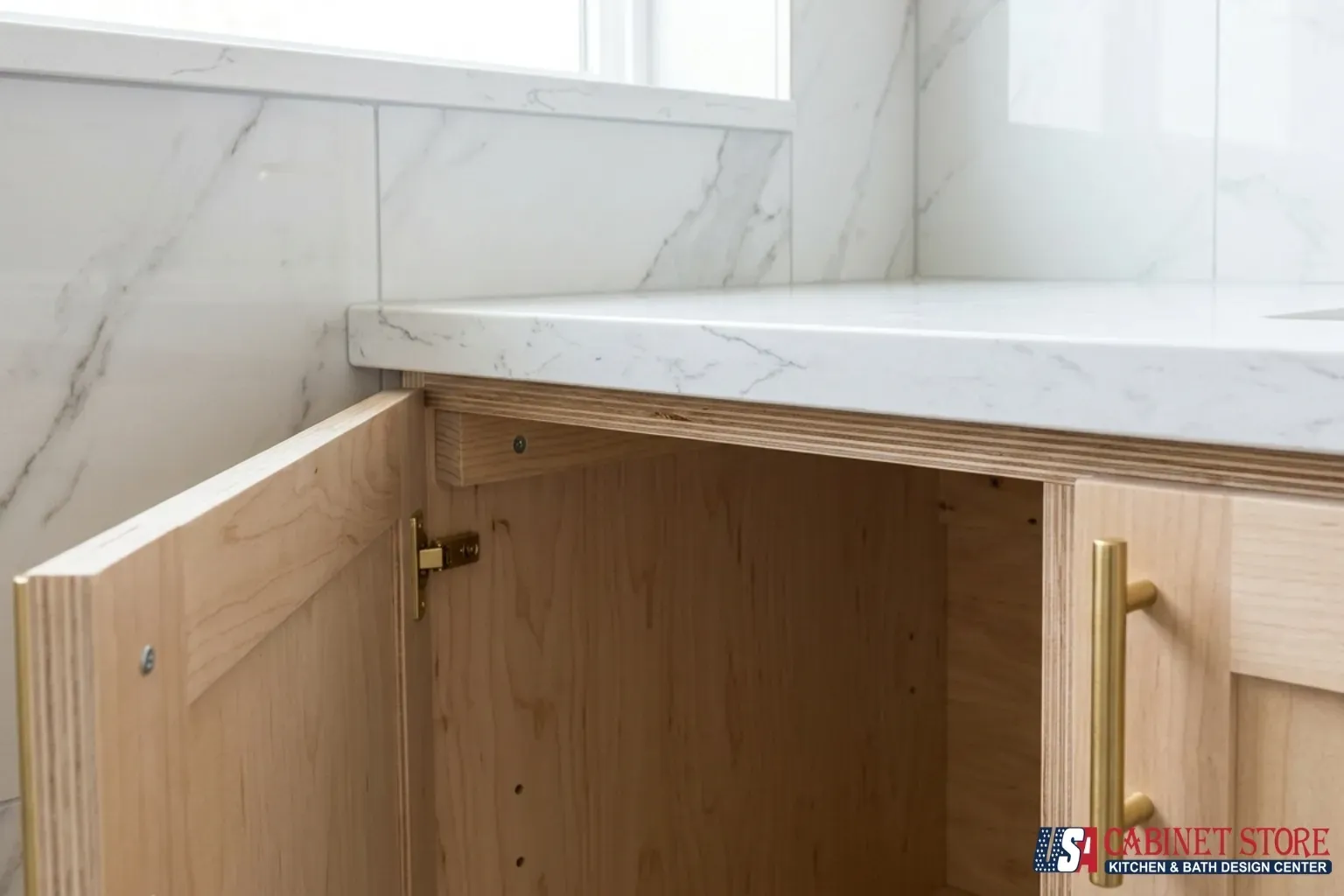
This is where cabinet quality shows up. A particleboard vanity box swells and crumbles the first time it meets standing water or sustained humidity. We build with three-quarter-inch plywood cabinet boxes for exactly this climate, because plywood holds fasteners, resists moisture, and lasts. Our Fabuwood, Showplace, Ultracraft, Mantra, and Wolf lines all give you that construction with soft-close hardware and finishes that hold up in a Florida bathroom. Budget humidity into your material math, because the right materials cost 10 to 20 percent more up front and save you a second remodel later.
WaterSense fixtures
EPA WaterSense toilets, faucets, and showerheads cut water use without cutting performance, and in a value market they pay off twice. Lower utility bills every month, and a 65 to 75 percent return on the upgrade at resale. For a Sanford homeowner watching the budget, that is an easy yes.
Want materials chosen for Sanford’s climate, not a showroom in a dry state? Our designers spec every project for Central Florida humidity. Book a free consultation and see the difference plywood boxes and proper waterproofing make.

The Bathroom Upgrades That Pay Off in Sanford
Return on investment is where Sanford’s value-market status turns into an advantage. Here is what actually pays back.
ROI by bathroom type
| Upgrade | Typical ROI |
|---|---|
| Tub-to-walk-in-shower conversion | 75–85% |
| New vanity & sink (with quartz top) | 60–75% |
| Tile flooring upgrade | 50–65% |
| Updated lighting & ventilation | 40–55% |
| WaterSense fixtures (+ utility savings) | 25–40% |
Smaller, simpler projects return a higher percentage. That is true everywhere, and it is good news for a value-market buyer who does not need to gold-plate a primary suite to see a return.
The five upgrades that consistently return
- Tub-to-walk-in-shower conversion, 75 to 85 percent. The strongest single move in most Sanford homes, and it modernizes a dated bathroom instantly. See our walk-in shower ideas for layouts that work in older footprints.
- New vanity with a quartz top, 70 to 80 percent. Quartz is nonporous, perfect for humidity, and it reads as an upgrade buyers notice. Our guide to choosing a vanity covers the styles that fit both historic and newer Sanford homes.
- Lighting, 70 to 80 percent. Layered lighting, a backlit mirror, and good color temperature transform how a bathroom feels for a small spend.
- Tile, 65 to 75 percent. Floor and shower tile that looks current does heavy lifting on perceived value.
- WaterSense fixtures, 65 to 75 percent plus the monthly utility savings.
If a spa experience is on your list, a steam shower installation is the upgrade that turns an ordinary primary bath into a destination.
Value-market math
Here is why ROI hits harder in Sanford. Return on investment is a percentage of your home’s value, and improvements move a lower-priced home’s appraisal proportionally more. A clean, modern, permitted bathroom on a $343,000 Sanford home can shift a buyer’s decision in a way the same bathroom cannot on a million-dollar Winter Park estate, where buyers expect it as a baseline. In a value market, a good bathroom is a differentiator, not an expectation. That is leverage.
Aging-in-place and the investor angle
A lot of Sanford remodels are rentals or long-hold investments, and a lot are forever homes for buyers who plan to age in place. Both want the same things. A curbless walk-in shower that is safe and accessible. Durable, low-maintenance surfaces. A neutral palette that does not date. Blocking in the walls for future grab bars, which costs almost nothing during a remodel and is expensive to add later. Design for the long hold and you cover the rental tenant, the aging owner, and the eventual buyer all at once.
Bathroom Remodeling by Sanford Neighborhood
Same city, very different remodels. Here is how we think about the main areas.
The Historic District and downtown First Street blocks
Old stock, real character, and the highest surprise risk in the cluster. Budget the 15 to 20 percent contingency, design period-sympathetic, and remember the interior work needs a permit but no COA. These are the homes where the right contractor earns the fee, because experience with cast iron, galvanized pipe, and plaster is what keeps the project on track. The walkable downtown, the Sanford RiverWalk, and the Lake Monroe waterfront are why people pay to be here, so the remodel should respect the home’s era.
Celery Lakes, Celery Estates, and Celery Key
The 2000s value subdivisions, named for Sanford’s celery-farming history. Modern systems, slab foundations, predictable budgets, 10 percent contingency. These remodels run clean and hold their schedules. The cost driver here is choice, not surprise, which means you can put the budget into the finishes you actually want.
Lake Forest and the Markham Woods and Heathrow edge
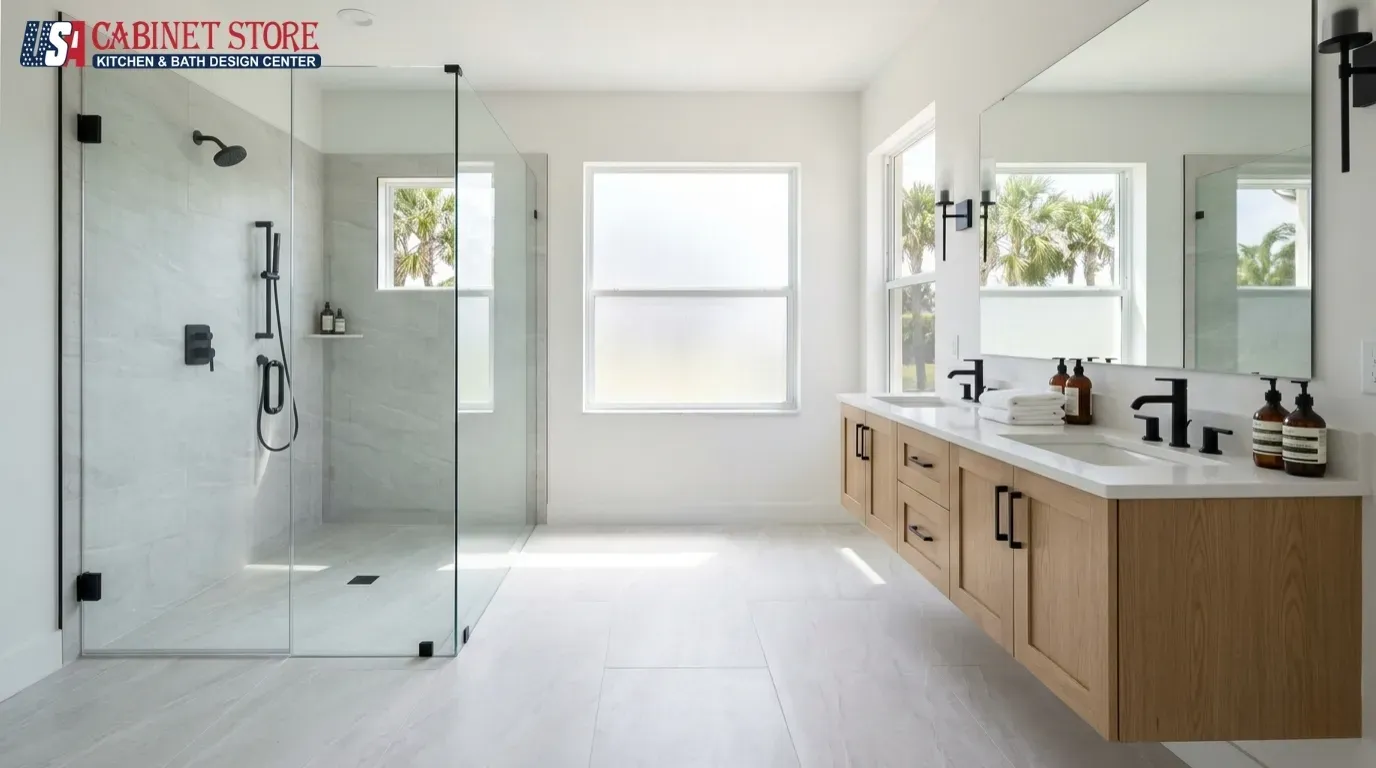
Sanford’s upscale pocket. Lake Forest is a gated community near the Lake Mary line with a clubhouse, pool, and tennis, and the homes carry larger primary baths that justify a fuller remodel. This is where Sanford budgets reach toward the spa tier, with double vanities, separate shower and tub, and frameless glass. Newer construction means the predictability of the Celery neighborhoods with more room to spend.
Goldsboro and the older near-downtown streets
Goldsboro is one of Florida’s oldest incorporated Black communities and a meaningful part of Sanford’s history. The housing here is modest historic stock, and the remodels are often sensitive value restorations, bringing dated bathrooms up to modern function and code while respecting the home. The same older-systems contingency applies, and the same value-market ROI logic makes a careful remodel pay off.
How Long a Sanford Bathroom Remodel Takes?
Timelines depend on scope and, in Sanford, on which of the two housing stocks you own.
Realistic timelines by scope
- Cosmetic refresh: 1 to 3 weeks
- Partial remodel: 3 to 5 weeks
- Full remodel: 6 to 10 weeks
- Primary suite: 8 to 12 weeks
- Spa-level: 10 to 14+ weeks
Those windows include design, ordering, and the permit. If you have a single bathroom, plan for the household disruption honestly. One Reddit homeowner was told they would have to move out for a month for a small-bath remodel. That is not always necessary, but a one-bathroom home does mean some uncomfortable days, and a good contractor will sequence the work to minimize them.
The Sanford permit-review window
Build the City of Sanford permit review into your calendar. A straightforward bathroom permit through Citizenserve moves quickly, but it is not instant, and it is one more reason to file with the correct office the first time. Filing with the county by mistake when you are inside city limits resets your clock.
Why newer homes keep schedules and historic homes need slack?
A Celery Lakes remodel rarely surprises anyone, so the schedule you are quoted is usually the schedule you get. A historic-district remodel can pause when demo uncovers a cracked cast-iron stack or rotted subfloor. That is not a contractor failing. It is the nature of a century-old home, and the 15 to 20 percent contingency exists to absorb both the cost and the days.
How to Hire a Bathroom Remodeler in Sanford?
A value market attracts more low bids and more corner-cutting than a premium one, so the hiring step matters more here, not less.
The DBPR license check and the Sanford permit pull
Start with the license. Any contractor doing more than $1,000 of work in Florida must hold a DBPR license, and you can verify it in two minutes at myfloridalicense.com. Then confirm they pull the City of Sanford permit, in your name or theirs, through Citizenserve. A licensed contractor who permits the work is the floor, not the ceiling, of who you should consider.
Why a value market attracts unlicensed crews?
The cash-deal, no-permit contractor always quotes less, because they are skipping the license, the insurance, the permit, and the inspection. Reddit homeowners run into this constantly. One described being quoted without a permit, then hearing the price jump once a permit was required, and asked, reasonably, “It’s the same work, why does it cost more?” The honest answer is that the low quote was never the real price. It was the price of an unprotected, uninspected job that becomes your liability the moment something leaks or the buyer’s inspector finds unpermitted work.
Red flags
- “We don’t need a permit for this.” You almost certainly do.
- “Just file it with the county.” Wrong office if you are inside Sanford city limits, and a sign they do not work here often.
- A contractor who warns that permitting will cause “delays and work stoppages” as a reason to skip it. One homeowner heard exactly that. Inspections protect you, and a contractor who fears them is telling you something.
- A 50 percent deposit up front.
- A verbal-only estimate with no line items.
What USA Cabinet Store includes
We quote line by line, so you see where every dollar goes, which is the direct answer to the sticker-shock that makes homeowners feel gouged. We build with Fabuwood, Showplace, Ultracraft, Mantra, and Wolf cabinetry on three-quarter-inch plywood boxes. We design in 3D with full-size samples, so you are not second-guessing a color after install. And you get a single point of contact from design through final inspection. We pull Sanford permits, we know the difference between the historic district and Celery Lakes, and we have been doing this since 2011. Our bathroom remodeling services cover every scope on this page.
If you are comparing nearby cities, our Winter Park historic-home bathroom guide and our Oviedo bathroom remodel guide show how the same team approaches very different Seminole County markets.
Frequently Asked Questions: Bathroom Remodeling in Sanford
How much does a bathroom remodel cost in Sanford in 2026?
Most Sanford homeowners spend between $5,709 and $15,372, with the metro average around $10,510. A cosmetic refresh starts near $3,000, a full remodel runs $15,000 to $35,000, and a primary suite reaches $25,000 to $50,000 or more. Where you land depends heavily on whether you own newer-construction Sanford or a historic-district home, which carries a higher contingency.
Do I file my Sanford bathroom permit with the city or with Seminole County?
If your home is inside Sanford city limits, you file with the City of Sanford Building Division through the Citizenserve portal, not Seminole County, even though the county building sits downtown on First Street. Only unincorporated addresses near Sanford file with the county. When in doubt, the City of Sanford Building Division at (407) 688-5150 can confirm.
Do I need historic approval to remodel a bathroom in Sanford?
No, not for interior work. A Certificate of Appropriateness from the Historic Preservation Board is required only for exterior changes. An interior bathroom remodel needs a standard City of Sanford building permit but no COA. You would only trigger the COA if you also change the exterior, like adding a window or an exterior vent on a visible wall.
Why do older Sanford homes cost more to remodel than newer ones?
Because of what is behind the walls. Historic-district homes from the 1880s to 1920s often have cast-iron drains, galvanized supply pipe, lath-and-plaster, and pier foundations, which add labor and surprises. Newer homes in Celery Lakes, Celery Estates, and Lake Forest have modern plumbing, slab foundations, and drywall, so they remodel more predictably. Budget a 15 to 20 percent contingency for historic homes and 10 percent for newer ones.
How long does a bathroom remodel take in Sanford?
A cosmetic refresh takes 1 to 3 weeks, a full remodel 6 to 10 weeks, and a primary suite 8 to 12 weeks. Add time for the City of Sanford permit review. Newer homes tend to hold their schedule, while historic-district homes need slack for surprises found during demolition.
How much does a small bathroom remodel cost in Sanford?
A small bathroom or powder room typically runs $3,000 to $8,000, and a small full bath $8,000 to $18,000. Small bathrooms can carry a high cost per square foot because every trade works in a tight space, so ask for a line-item estimate rather than a single number.
What’s the ROI on a bathroom remodel in Sanford?
Half baths return 75 to 85 percent, full family baths 65 to 75 percent, and primary suites 55 to 65 percent. The best individual upgrades are a tub-to-walk-in-shower conversion and a new vanity with a quartz top. ROI works especially hard in Sanford because returns are a percentage of a lower home value, so a quality bathroom differentiates your home more than it would in a premium market.
Do I need a licensed contractor for a bathroom remodel in Sanford?
Yes for almost any real remodel. Florida requires a DBPR-licensed contractor for work over $1,000, and you can verify a license at myfloridalicense.com. A licensed contractor who pulls the City of Sanford permit protects you with inspections, insurance, and a clean record for resale. Be cautious of any low cash quote that skips the permit.
Start Your Sanford Bathroom Remodel With USA Cabinet Store
Bathroom remodeling in Sanford comes down to knowing which Sanford you live in, filing your permit with the right office, and spending where the value market rewards you. Whether you own a 1912 bungalow in the historic district or a 2007 home in Celery Lakes, our design team will tell you the real cost, the right contingency, and exactly where your money goes, line by line.
USA Cabinet Store has been remodeling Central Florida bathrooms since 2011, and our Winter Springs showroom is about fifteen minutes from Historic Downtown Sanford by way of SR-417. We are one of 14 showrooms across 8 states, and we were honored with the NKBA Innovative Showroom Award at KBIS 2026.
Book your free design consultation and get a line-item estimate built for your Sanford home and neighborhood. Schedule your complimentary consultation or visit our Winter Springs showroom at 5812 Red Bug Lake Rd, Winter Springs, FL 32708, (407) 335-4404.
USA Cabinet Store. Bathroom and kitchen remodeling done right, with transparent pricing and cabinetry built for Florida living.