
Small bathrooms are a fact of life in Annapolis — whether you own a historic row house near Church Circle, a Victorian in Murray Hill, a mid-century cape in West Annapolis, or a condo near Annapolis Towne Centre. Tight 5×7 footprints, sloping floors from centuries of settling, and plumbing tucked into former closets make these spaces challenging to renovate. Add Annapolis’s high humidity from the Chesapeake Bay, and you need more than a cosmetic refresh — you need a remodel designed for how homes here actually work.
At USA Cabinet Store Annapolis, we specialize in small bathroom remodeling for compact spaces between 35 and 50 square feet. Our designers use smart layouts, custom cabinetry, and space-saving fixtures like floating vanities and wall-mounted toilets to make cramped bathrooms feel brighter, more open, and easier to use every day. We handle design, materials, City of Annapolis permits, and installation — all in-house.
Visit our showroom at 508 Chinquapin Round Rd, Suite A, Annapolis, MD 21401, or schedule a free VR 3D design consultation to see how your small bathroom can be transformed.
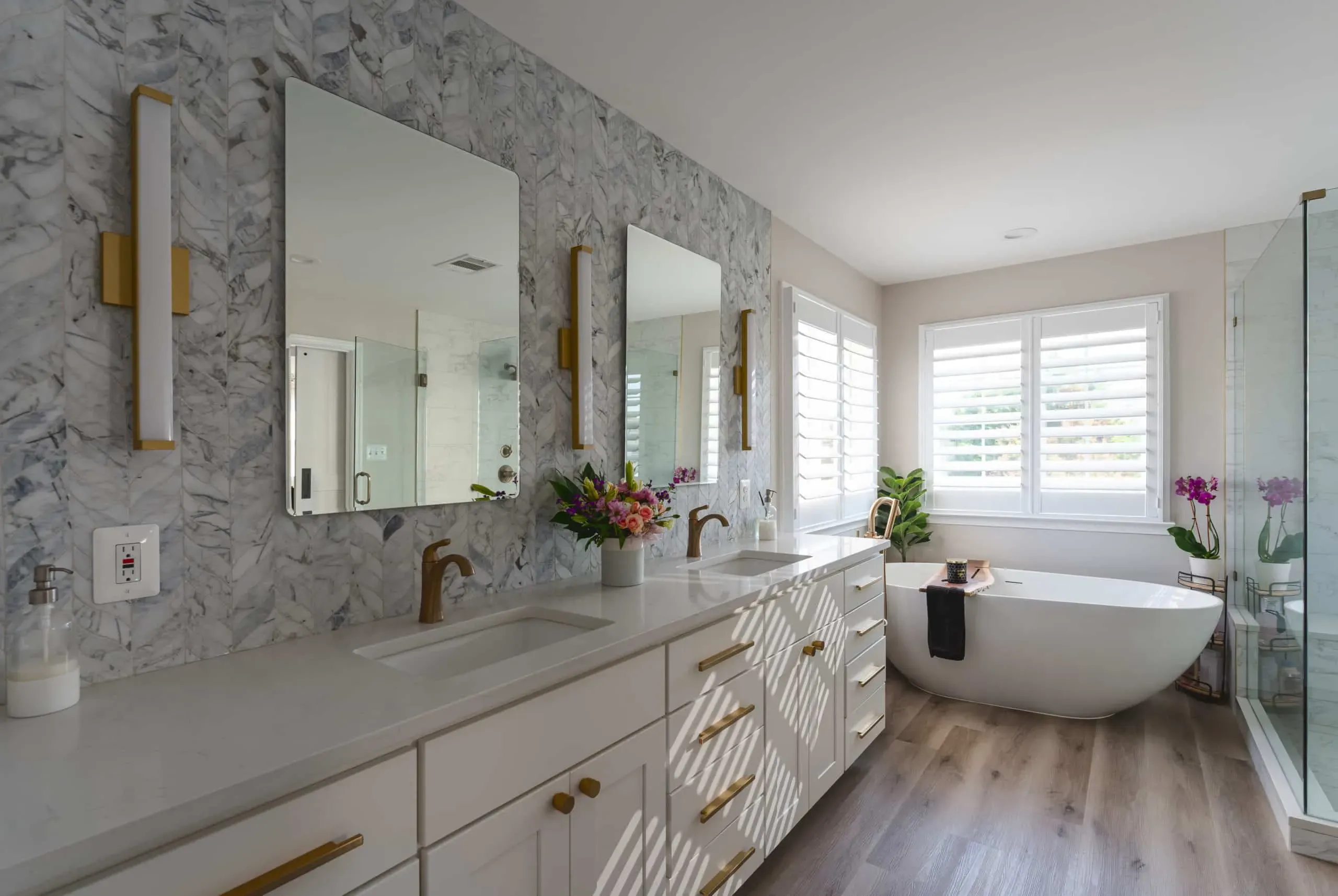
10 Key Takeaways for Your Small Bathroom Remodel in Annapolis, MD
Before you start your project, remember these essential insights:
1. Budget Realistically
Small bathroom remodels typically cost $6,000–$15,000. Always add a 15% contingency fund for unexpected issues. The investment pays off with 60–86% ROI at resale.
2. Plan for 1–3 Weeks of Work
A standard small bathroom remodel takes 1–3 weeks from demolition to completion. Arrange alternate bathroom access and finalize all design decisions before work begins to avoid delays.
3. Prioritize Visual Space
Use large format tiles, glass shower enclosures, and floating vanities to make your bathroom feel larger. Light colors and natural light amplify the spacious feeling.
4. Storage is Critical
Don’t underestimate storage needs. Custom cabinetry, floating shelves, and recessed medicine cabinets maximize every inch while keeping the space open and organized.
5. Lighting Makes or Breaks the Design
Combine ambient, task, and accent lighting for a functional and inviting space. Invest $400–$800 in quality lighting—it’s worth every penny.
6. Never Skip Waterproofing
Proper waterproofing ($200–$500) prevents expensive water damage repairs ($2,000–$5,000+) down the road. Use waterproof membranes, sealed grout, and quality caulking.
7. Ventilation is Non-Negotiable
Install a properly sized exhaust fan to prevent mold, mildew, and moisture damage. Good ventilation protects your investment and your family’s health.
8. Choose the Right Contractor
Select a licensed, insured contractor with bathroom-specific experience, written warranties, and excellent references. The right contractor makes all the difference.
9. Balance Beauty and Function
Beautiful design means nothing if the bathroom doesn’t work for your daily routine. Plan fixture placement carefully and ensure adequate counter and storage space.
10. ROI Goes Beyond Resale Value
Your bathroom remodel delivers immediate quality-of-life improvements: daily comfort, reduced stress, energy savings, and pride in your home. Financial ROI is just one benefit.
How Much Does a Small Bathroom Remodel Cost in Annapolis? (2026 Pricing)
Budget is the #1 concern for homeowners considering a bathroom remodel — and in Annapolis, you need to plan for costs above the national average. The “Annapolis Premium” reflects the realities of working in a congested historic city: parking permits for contractor vehicles, difficult access in narrow row houses, high humidity requiring superior waterproofing, and the cost of skilled labor in the Washington-Baltimore corridor.
2026 Cost Overview for Annapolis
In 2026, the national average bathroom remodel costs $16,500, representing a 4–6% increase from 2025 due to skilled labor shortages and material inflation. Annapolis homeowners should expect to pay 10–25% above national averages depending on location and project complexity.
| Project Scope | Annapolis Cost Range (2026) | What’s Included | Typical ROI |
|---|---|---|---|
| Budget Refresh | $6,000 – $14,000 | Paint, new vanity, toilet, fixtures, LVT flooring. Existing layout preserved. | 65–75% |
| Mid-Range Remodel | $20,000 – $35,000 | Gut to studs, new tub or tiled shower, ceramic tile, semi-custom vanity, updated lighting and ventilation. |
73–80% |
| Upscale / Luxury | $40,000 – $70,000+ | Structural modifications, high-end fixtures (Rohl, Bain Ultra), natural stone, custom cabinetry, radiant floor heating. |
45–55% |
| Universal Design | $28,000 – $50,000 | Curbless shower, widened doorways, grab bars, comfort-height toilet, aging-in-place features. |
60–65% |
Cost Per Square Foot in 2026
For a typical Annapolis small bathroom (35–50 square feet), expect to pay:
| Remodel Level | Cost Per Square Foot | 40 Sq Ft Example |
|---|---|---|
| Budget | $150 – $200 | $6,000 – $8,000 |
| Mid-Range | $280 – $400 | $11,200 – $16,000 |
| High-End | $450 – $600 | $18,000 – $24,000 |
| Luxury / Custom | $700 – $1,000+ | $28,000 – $40,000+ |
Note: Historic District projects and waterfront homes often fall at the higher end due to HPC requirements, flood-zone compliance, and structural complexities.
Budget Breakdown: Where Your Money Goes
Understanding how your budget is allocated helps you make smarter decisions:
| Category | Percentage | Typical Annapolis Cost |
|---|---|---|
| Labor | 40–60% | $8,000 – $21,000 |
| Materials | 30–45% | $6,000 – $15,750 |
| Permits & Fees | 3–5% | $600 – $1,750 |
| Contingency | 10–15% | $2,000 – $5,250 |
2026 Labor Costs in the Annapolis Market
Skilled trade shortages continue to drive labor costs up in 2026. In the Washington-Baltimore corridor, expect:
| Trade | 2026 Hourly Rate | Notes |
|---|---|---|
| Licensed Plumber | $95 – $185 / hour | Up 8–10% from 2025; highest-demand trade |
| Electrician | $70 – $155 / hour | Up 6–8% from 2025 |
| Tile Installer | $14 – $24 / sq ft | Premium pricing for intricate layouts or natural stone |
| General Contractor | 15–25% of project | Or billed at $65 – $125 / hour |
Pro tip: Booking your project 2–3 months in advance may secure better rates and faster schedules than last-minute requests.
What Drives Costs Higher in Annapolis?
Several factors unique to Annapolis can push your project above the average:
Historic District Requirements
- HPC approval for exterior vent caps and window changes adds 2–4 weeks and $300–$800 in fees
- Documentation of existing conditions may be required before demolition
Structural Surprises in Older Homes
- Undersized floor joists (common in pre-1950 homes) may need sistering: $800–$2,500
- Cast iron waste stacks requiring replacement: $1,500–$4,000
- Lead bends at toilet connections: $400–$800 to replace
- Knob-and-tube or aluminum wiring upgrades: $1,000–$3,000
Maritime Humidity & Waterproofing
- High-CFM exhaust fan with proper ducting: $350–$800
- Full-floor waterproofing membrane (Schluter-Kerdi or Wedi): $400–$900
- Moisture-resistant drywall and mold-resistant paint: $200–$400
Access & Logistics
- Downtown parking permits for contractor vehicles: $50–$150/week
- Narrow row house access (materials carried through living spaces): 5–15% labor premium
- Party-wall construction limiting expansion options
Money-Saving Strategies Without Compromising Quality
- Keep the existing layout — Moving plumbing adds $2,500–$5,000+ to any project. If your fixtures work where they are, leave them there.
- Choose porcelain over natural stone — Porcelain tiles that mimic marble (Calacatta look-alikes) cost $8–$15/sq ft vs. $25–$50/sq ft for real marble, with better durability in humid Annapolis bathrooms.
- Opt for semi-custom cabinetry — Brands like Merillat and Brighton from local suppliers (Reico, Cabinet Discounters) offer custom-like quality at 40–60% less than full custom.
- Prioritize high-impact items — Invest in excellent lighting ($400–$800) and a quality vanity; save on accessories you can upgrade later.
- Bundle permits — Having one contractor pull all trade permits (plumbing, electrical, building) is more efficient than managing multiple subcontractors.
- Plan thoroughly before demolition — Change orders mid-project are budget killers. Finalize every selection before the first hammer swings.
Sample Budget: Mid-Range 5×7 Bathroom Remodel in Annapolis (2026)
Here’s what a typical $28,000 mid-range remodel might include:
| Item | Cost |
|---|---|
| Demolition & disposal | $800 – $1,200 |
| Plumbing (new fixtures, valve replacement) | $2,500 – $4,000 |
| Electrical (new fan, lighting, GFCI outlets) | $1,200 – $2,000 |
| Waterproofing & subfloor prep | $600 – $1,000 |
| Ceramic / porcelain tile (floor + shower walls) | $3,500 – $5,500 |
| Semi-custom vanity with quartz top | $2,000 – $3,500 |
| Toilet (comfort height, elongated) | $400 – $700 |
| Shower fixtures (valve, head, trim) | $600 – $1,200 |
| Frameless glass shower door | $1,200 – $1,800 |
| Lighting (recessed + vanity sconces) | $500 – $900 |
| Exhaust fan (high-CFM, ducted) | $350 – $600 |
| Paint & finishing | $400 – $700 |
| Permits & inspections | $400 – $800 |
| Contingency (10%) | $2,800 |
| Total | $17,250 – $27,700 |
Return on Investment in the Annapolis Market
The South Atlantic region (which includes Maryland) consistently outperforms the national average for bathroom remodel ROI. According to 2025–2026 Cost vs. Value data:
| Remodel Type | National ROI | South Atlantic ROI |
|---|---|---|
| Mid-Range Bathroom | 70–74% | 73–80% |
| Upscale Bathroom | 45–50% | 48–55% |
| Universal Design | 60–65% | 62–68% |
What this means: A $28,000 mid-range remodel in Annapolis could add $20,400–$22,400 to your home’s resale value. But the real return is daily — a functional, beautiful bathroom you’ll use every morning.
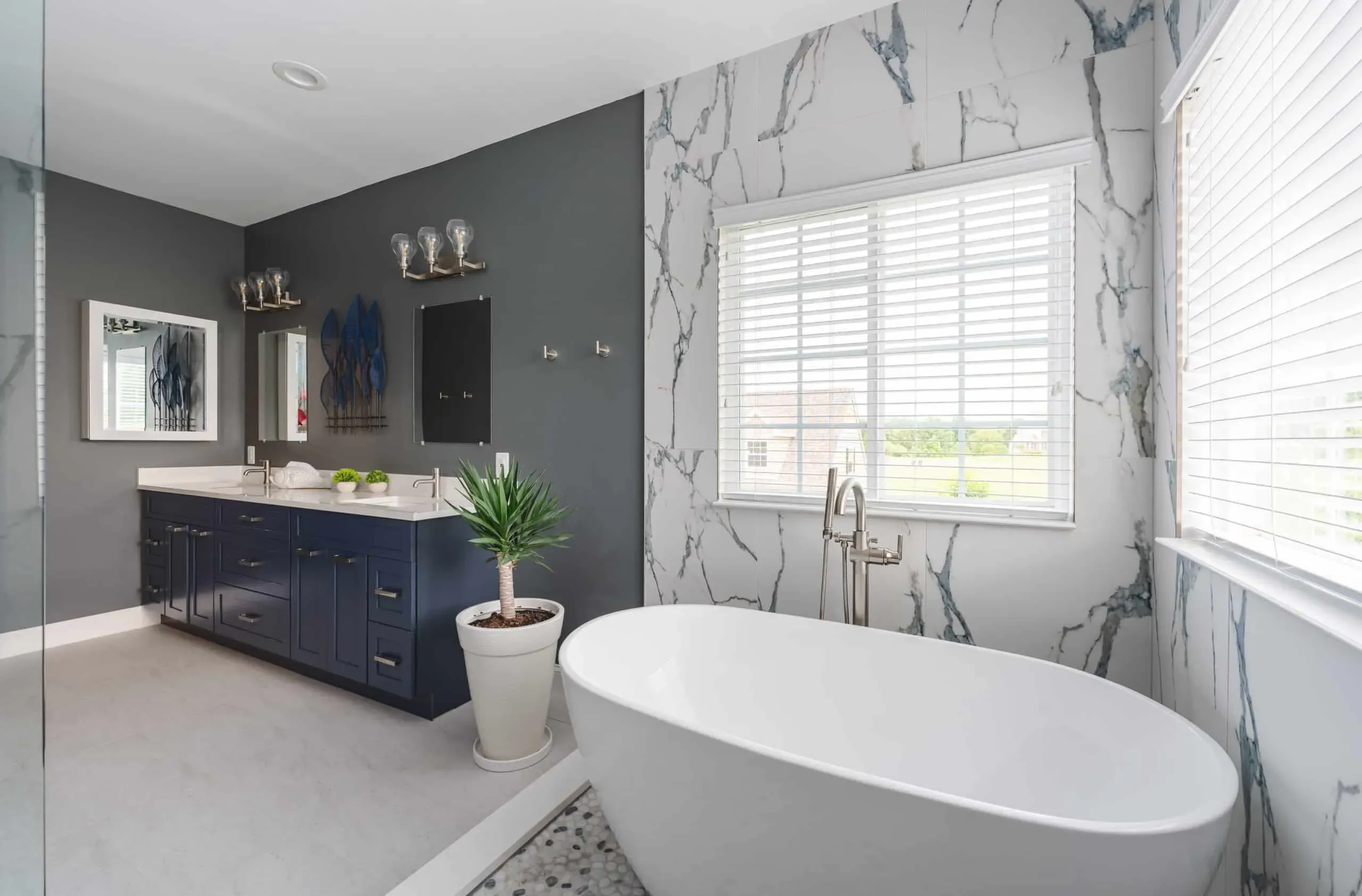
How Long Will Your Bathroom Remodel Take in Annapolis?
Homeowners always ask: How long will I be without my bathroom? In Annapolis, the answer depends not just on the scope of work — but on permitting timelines, Historic District requirements, and the structural surprises hiding behind century-old plaster walls.
Total Project Timeline: What to Expect
| Project Type | Permitting | Construction | Total Timeline |
|---|---|---|---|
| Budget Refresh (cosmetic only) | 0–2 weeks | 3–5 days | 1–3 weeks |
| Mid-Range Remodel | 2–4 weeks | 1–2 weeks | 4–6 weeks |
| Full Gut Remodel | 3–6 weeks | 2–3 weeks | 6–10 weeks |
| Historic District Project | 4–8 weeks | 2–4 weeks | 8–12 weeks |
| Structural/Layout Changes | 4–6 weeks | 3–5 weeks | 8–12+ weeks |
Note: These timelines assume no major structural surprises. Add 1–2 weeks if hidden water damage, outdated wiring, or deteriorated plumbing is discovered.
Phase 1: Permitting (2–8 Weeks Before Construction)
Unlike many jurisdictions, the City of Annapolis requires permits for nearly all bathroom remodels — even work that seems minor.
When Is a Permit Required?
A common misconception is that “cosmetic” remodels don’t need permits. However, Annapolis City Code is explicit: permits are required to “construct, enlarge, alter, repair, move, demolish, or change” any building, or to “install, enlarge, alter, repair, remove, convert or replace any electrical, gas, mechanical or plumbing system.”
| Work Type | Permit Required? | Who Pulls It? |
|---|---|---|
| Replacing a tub or shower | Yes — Plumbing permit | Licensed MD Master Plumber |
| Moving or adding electrical outlets | Yes — Electrical permit | Licensed MD Master Electrician |
| Installing new exhaust fan | Yes — Electrical + possibly Building | Licensed contractor |
| Moving walls or enlarging windows | Yes — Building permit | General contractor |
| Painting and re-caulking only | No | Homeowner or contractor |
| Replacing tile (no plumbing/electrical) | Usually no | Contractor |
The CSS Portal Process
The City of Annapolis has modernized its permit system, moving from paper applications to the Citizen Self Service (CSS) Portal. While this streamlines submissions, it enforces strict document validation.
| Permit Type | Typical Processing Time |
|---|---|
| Trade permits (plumbing, electrical) | 1–3 weeks |
| Residential building permit | 2–6 weeks |
| Historic District review (HPC) | 4–8 weeks (monthly meetings) |
| Critical Area review (if applicable) | 3–6 weeks |
Important Permit Rules:
- Work must commence within 45 days of permit issuance
- If the project stalls for more than 6 months, the permit becomes void
- Absolute completion deadline: 2 years from issuance
Historic Preservation Commission (HPC) Timing
If your home is in the Annapolis Historic District, any exterior-visible changes require a Certificate of Approval (COA) from the HPC. For bathroom remodels, this typically involves:
- Exhaust fan venting — Punching a new hole in an 18th-century brick facade for a vent cap is a “material alteration.” The HPC may dictate vent location (not on primary facade) and cap material (painted metal, not plastic).
- Window changes — Replacing clear glass with frosted, or altering sash configuration, requires review. The Commission generally prefers interior treatments (blinds, film) over altering historic glass.
The HPC meets monthly. Missing a submission deadline can add 4–6 weeks to your timeline.
Phase 2: Pre-Construction Preparation (1–2 Weeks)
Before demolition begins, your contractor handles critical logistics:
Material Lead Times
| Item | Typical Lead Time |
|---|---|
| Stock cabinetry (Merillat Basics) | 1–2 weeks |
| Semi-custom cabinetry (Masterpiece, Brighton) | 4–8 weeks |
| Custom cabinetry (Kenwood Kitchens) | 10–14 weeks |
| Special-order tile | 2–4 weeks |
| Frameless glass shower door | 2–3 weeks (after final measurements) |
| Custom vanity tops (quartz/granite) | 2–3 weeks (after template) |
Pro tip: Order long-lead items during the permitting phase to avoid construction delays.
Annapolis-Specific Logistics
- Parking permits — In downtown Annapolis, parking is a premium. Your contractor must secure permits for work vehicles, coordinated through the city to avoid ticketing and crew delays.
- Site protection — In row houses, the front door often opens directly into the living room. Expect dust barriers, floor protection, and defined pathways for material transport.
- Neighbor notification — Party-wall construction means your neighbors will hear the work. Courtesy communication prevents complaints.
Phase 3: Construction Timeline
Here’s what happens during the actual work, broken down by phase:
Week 1: Demolition & Discovery (Days 1–3)
| Task | Duration | What to Expect |
|---|---|---|
| Fixture removal (toilet, vanity, tub) | Day 1 | Water shut-off to bathroom |
| Tile and drywall demolition | Days 1–2 | Dust, noise — barriers in place |
| Debris removal | Day 2–3 | Multiple trips; narrow access slows this |
| Inspection of hidden conditions | Day 2–3 | This is when surprises emerge |
Common Discoveries in Annapolis Homes:
| Issue | How Often | Added Time | Added Cost |
|---|---|---|---|
| Cast iron waste stack corrosion | 60% of pre-1970 homes | 1–2 days | $1,500–$4,000 |
| Lead bends at toilet connection | 50% of pre-1960 homes | 0.5 days | $400–$800 |
| Sloping floors (2″+ across 5′) | 40% of row houses | 1–2 days | $800–$2,000 |
| Inadequate floor joist capacity | 30% of historic homes | 2–3 days | $1,200–$3,000 |
| Knob-and-tube or aluminum wiring | 25% of pre-1970 homes | 1–3 days | $1,000–$3,000 |
| Hidden water damage or mold | 20% of all projects | 2–5 days | $1,500–$5,000 |
This is why we recommend a 10–15% contingency in every budget.
Week 1–2: Rough-In Work (Days 4–8)
| Task | Duration | Notes |
|---|---|---|
| Plumbing rough-in | 1–2 days | New supply lines, drain connections, valve installation |
| Electrical rough-in | 1–2 days | New circuits, GFCI outlets, fan wiring, lighting boxes |
| HVAC/ventilation | 0.5–1 day | Exhaust fan ducting to exterior |
| Inspections | 1 day | City inspector verifies code compliance before walls close |
Critical checkpoint: Work stops until inspections pass. Schedule inspections promptly to avoid idle days.
Week 2: Waterproofing & Substrate (Days 9–11)
| Task | Duration | Notes |
|---|---|---|
| Subfloor leveling | 0.5–1 day | Self-leveling compound for sloping floors |
| Waterproof membrane installation | 1 day | Schluter-Kerdi or Wedi system behind all tile |
| Cement board installation | 0.5–1 day | Moisture-resistant substrate for tile |
| Shower pan/curb construction | 1 day | For tiled showers; waterproof testing required |
In Annapolis’s humid climate, proper waterproofing is non-negotiable. Rushing this phase leads to mold and structural damage within 2–3 years.
Week 2–3: Tile Installation (Days 12–17)
| Task | Duration | Notes |
|---|---|---|
| Shower wall tile | 2–3 days | Larger format = faster install; intricate patterns add time |
| Floor tile | 1–2 days | Must cure 24 hours before grouting |
| Grouting | 1 day | Cure time before sealing |
| Grout sealing | 0.5 days | Essential for moisture protection |
Week 3: Fixture Installation & Finishing (Days 18–23)
| Task | Duration | Notes |
|---|---|---|
| Vanity and countertop installation | 0.5–1 day | Plumbing connections same day |
| Toilet installation | 0.5 days | Final plumbing connections |
| Shower door installation | 0.5–1 day | Glass doors require precise measurements |
| Lighting and electrical trim | 0.5–1 day | Fixtures, switches, outlets |
| Mirror and accessories | 0.5 days | Towel bars, toilet paper holder, hooks |
| Painting and touch-ups | 1–2 days | Walls, ceiling, trim |
| Final cleaning | 0.5 days | Construction debris removed |
| Final inspection | 1 day | City sign-off on all permitted work |
| Walkthrough with homeowner | 0.5 days | Punch list review |
Timeline by Bathroom Type
| Bathroom Type | Typical Size | Construction Time | Total (with permits) |
|---|---|---|---|
| Half bath / powder room | 15–25 sq ft | 3–5 days | 2–4 weeks |
| Hall bath (standard 5×7) | 35 sq ft | 7–10 days | 4–6 weeks |
| Hall bath with tub-to-shower conversion | 35 sq ft | 10–14 days | 5–7 weeks |
| Primary bath (compact) | 40–50 sq ft | 10–14 days | 5–8 weeks |
| Historic District (any size) | Varies | +3–7 days | 8–12 weeks |
What Can Delay Your Project?
Avoidable Delays:
| Delay Cause | Time Added | How to Prevent |
|---|---|---|
| Indecision on materials/finishes | 1–3 weeks | Finalize all selections before demolition |
| Change orders mid-project | 3–10 days per change | Commit to the plan |
| Late material delivery | 3–7 days | Order long-lead items during permitting |
| Inspection scheduling gaps | 2–5 days | Contractor schedules inspections in advance |
| Permit issues or rejections | 1–4 weeks | Work with experienced local contractor |
Unavoidable Delays:
| Delay Cause | Time Added | Mitigation |
|---|---|---|
| Hidden structural damage | 3–10 days | Budget contingency time and money |
| Failed inspections | 2–5 days | Use licensed, experienced tradespeople |
| HPC revision requests | 2–6 weeks | Submit complete documentation first time |
| Weather (exterior vent work) | 1–3 days | Schedule flexibility |
| Skilled labor availability | 1–2 weeks | Book project 2–3 months ahead |
How to Prepare for the Disruption
Before Construction Begins:
- Arrange alternate bathroom access — Use a guest bath, join a gym temporarily, or coordinate with nearby family. For single-bathroom homes, discuss portable toilet options with your contractor.
- Clear the space completely — Remove all personal items, medications, toiletries, and décor. Store them elsewhere during construction.
- Protect adjacent rooms — Even with dust barriers, fine dust travels. Cover furniture and seal HVAC vents in nearby rooms.
- Plan for noise — Work typically runs 7:30 AM – 4:30 PM on weekdays. Demolition and tile cutting are the loudest phases.
- Communicate with your household — Everyone should know the timeline, which areas are off-limits, and daily expectations.
During Construction:
- Maintain one point of contact — Communicate through your project manager, not individual tradespeople.
- Document everything — Take photos before walls close up, especially of plumbing and electrical.
- Address concerns immediately — Small issues caught early are easier to fix than problems discovered at final walkthrough.
- Stay flexible — Discoveries behind walls may require decisions on the spot. Trust your contractor’s recommendations.
Sample Timeline: Mid-Range 5×7 Bathroom Remodel in Annapolis
Here’s a realistic timeline for a typical mid-range gut remodel:
| Week | Phase | Key Activities |
|---|---|---|
| Weeks 1–3 | Permitting | Submit to CSS Portal; order materials; finalize selections |
| Week 4 | Pre-construction | Materials arrive; site prep; neighbor notification |
| Week 5, Days 1–3 | Demolition | Gut existing bathroom; discover hidden conditions |
| Week 5, Days 4–5 | Rough plumbing & electrical | New supply/drain lines; wiring; exhaust fan ducting |
| Week 6, Day 1 | Inspection | City inspector approves rough-in work |
| Week 6, Days 2–4 | Waterproofing & substrate | Membrane, cement board, shower pan |
| Week 6–7 | Tile installation | Shower walls, floor, grouting, sealing |
| Week 7 | Fixture installation | Vanity, toilet, shower door, lighting |
| Week 8, Days 1–2 | Finishing | Paint, accessories, final cleaning |
| Week 8, Day 3 | Final inspection | City sign-off |
| Week 8, Day 4 | Walkthrough | Punch list review with homeowner |
| Week 8, Day 5 | Project complete | Enjoy your new bathroom! |
Total: 6–8 weeks from permit submission to completion
Why Annapolis Projects Take Longer Than National Averages?
| Factor | Impact on Timeline |
|---|---|
| Stricter permitting (CSS Portal validation) | +1–2 weeks |
| Historic District HPC review | +2–6 weeks |
| Structural complexities in older homes | +1–2 weeks |
| Downtown access and parking logistics | +2–3 days |
| Skilled labor demand in DC-Baltimore corridor | +1–2 weeks (if not booked ahead) |
The bottom line: While national sources cite 1–3 weeks for small bathroom remodels, Annapolis homeowners should realistically plan for 4–8 weeks for a mid-range project and 8–12 weeks for Historic District or structural work.
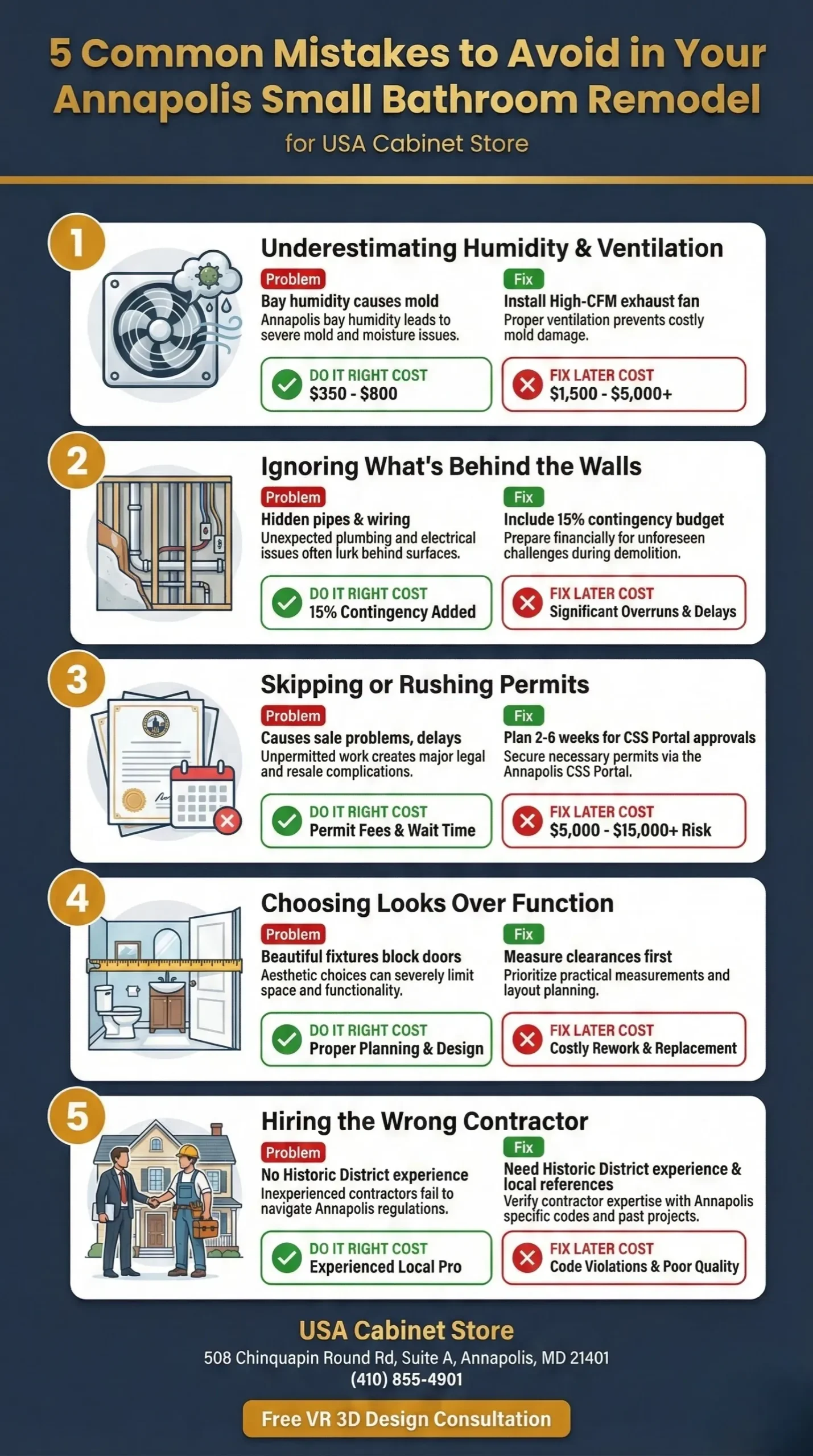
5 Common Mistakes to Avoid in Your Annapolis Small Bathroom Remodel
Learning from others’ missteps saves you time, money, and regret. These are the pitfalls we see most often in Annapolis — and how to sidestep them.
Mistake #1: Underestimating Humidity and Ventilation
The Problem: Annapolis sits on the Chesapeake Bay. High ambient humidity means a window alone won’t ventilate your bathroom — and skipping proper exhaust leads to mold, peeling paint, and rotting substrates within 1–2 years.
The Fix:
- Install a high-CFM exhaust fan (minimum 50 CFM for small baths; 1 CFM per square foot is the rule)
- Duct to the exterior — never into the attic
- Run the fan 20 minutes after every shower (timer switches help)
- In Historic District homes, coordinate vent cap placement with HPC requirements early
Cost to do it right: $350–$800
Cost to fix later: $1,500–$5,000+ (mold remediation, drywall replacement)
Mistake #2: Ignoring What’s Behind the Walls
The Problem: Annapolis homes hide surprises — corroded cast iron stacks, lead bends, undersized joists, and knob-and-tube wiring. Homeowners who budget only for the visible renovation get blindsided.
The Fix:
- Always include a 15% contingency for hidden conditions
- Expect cast iron replacement in pre-1970 homes ($1,500–$4,000)
- Budget for floor leveling in row houses — 2″ slopes across 5 feet are common ($800–$2,000)
- Don’t finalize your tile and fixture selections until after demolition reveals the true scope
Rule of thumb: If your home was built before 1960, assume you’ll find something.
Mistake #3: Skipping or Rushing Permits
The Problem: Some homeowners try to avoid the 2–6 week permitting timeline by skipping permits entirely or starting work before approval. This creates serious problems: failed inspections, stop-work orders, difficulty selling the home, and voided insurance claims.
The Fix:
- Accept that Annapolis requires permits for nearly all bathroom work
- Factor permitting time into your project timeline from the start
- Use a contractor familiar with the CSS Portal and local inspectors
- For Historic District homes, submit HPC applications early — they meet monthly
The risk: Unpermitted work can derail a home sale and cost $5,000–$15,000+ to remedy.
Mistake #4: Choosing Looks Over Function
The Problem: Homeowners fall in love with a beautiful vessel sink or a stunning freestanding tub — then realize there’s no counter space for a toothbrush or the tub blocks the door from opening fully.
The Fix:
- Measure twice, decide once. A 35-square-foot bathroom has no room for error.
- Prioritize clearances: 15″ from toilet center to wall, 21″ in front of toilet, 24″ in front of vanity
- Choose compact fixtures designed for small spaces
- Test the door swing, drawer pulls, and shower door arc in your floor plan before committing
Design truth: A beautiful bathroom that doesn’t work for your morning routine isn’t beautiful — it’s frustrating.
Mistake #5: Hiring the Wrong Contractor
The Problem: Not all contractors understand Annapolis’s unique challenges: party-wall construction, Historic District rules, older plumbing systems, and the logistics of working in congested downtown neighborhoods.
The Fix:
- Choose a contractor with specific Annapolis and Historic District experience
- Ask for local references — row house renovations, not just suburban baths
- Verify they handle permits, inspections, and HPC submissions
- Confirm they provide site protection (dust barriers, floor covering) for occupied homes
Red flags: Requires full payment upfront, no written warranty, vague timeline, reluctant to pull permits, unfamiliar with HPC process.
Quick Reference: Mistakes & Fixes
| Mistake | Consequence | Prevention |
|---|---|---|
| Poor ventilation | Mold, peeling paint, rot | High-CFM fan, proper ducting |
| No contingency budget | Project stalls, debt | 15% buffer minimum |
| Skipping permits | Sale problems, legal issues | Plan 2–6 weeks for approvals |
| Form over function | Daily frustration | Measure clearances, test layout |
| Wrong contractor | Delays, cost overruns, poor quality | Local experience, references, written warranty |
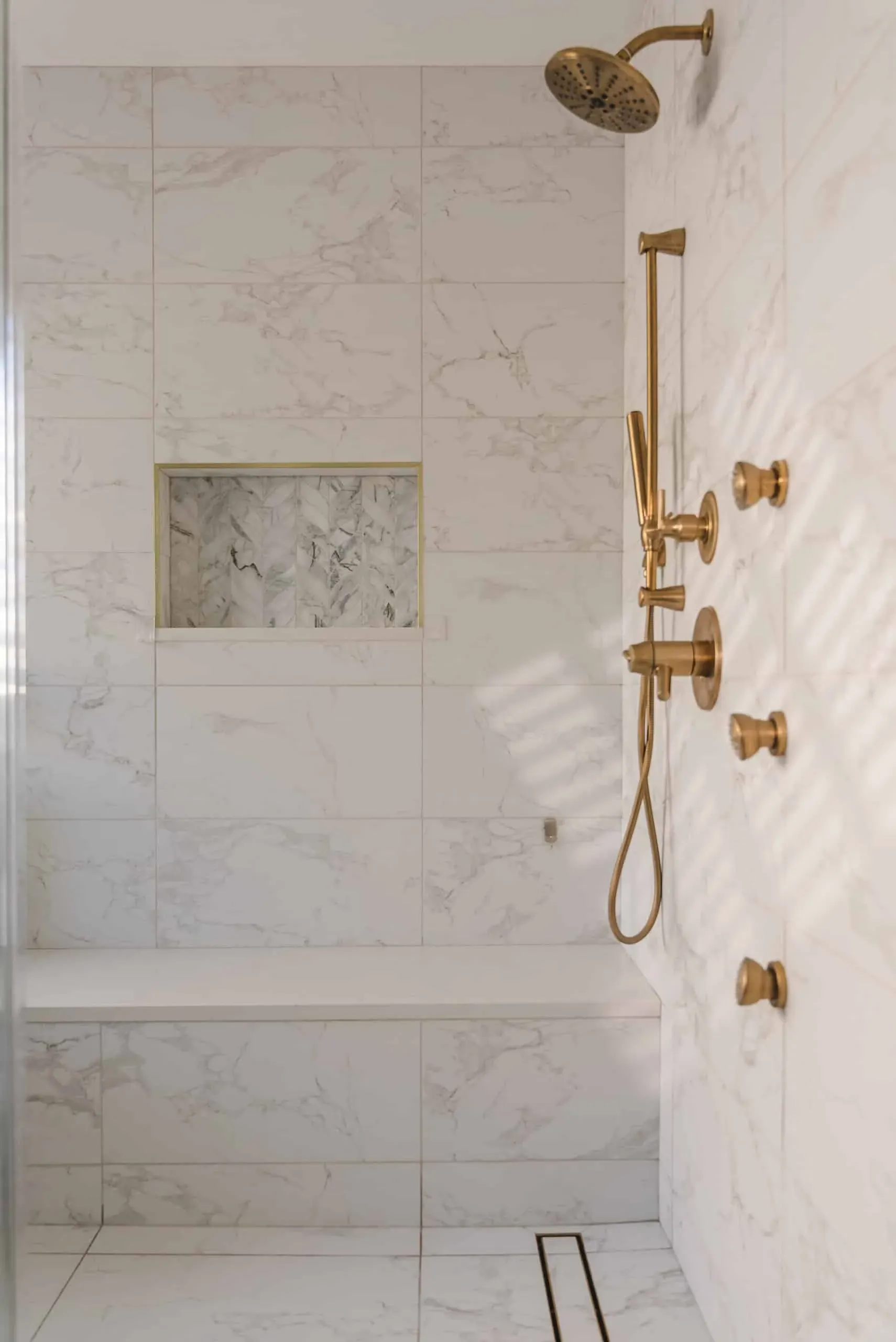
Return on Investment: Is Your Annapolis Bathroom Remodel Worth It?
The short answer: yes — especially in Annapolis’s strong real estate market. Here’s what the data shows.
ROI by Project Type (2026 Data)
| Remodel Type | National ROI | South Atlantic ROI* | Annapolis $25K Example |
|---|---|---|---|
| Mid-Range Bathroom | 70–74% | 73–80% | Recoup $18,250–$20,000 |
| Upscale Bathroom | 45–50% | 48–55% | Lower % but strong appeal to luxury buyers |
| Universal Design | 60–65% | 62–68% | High value for aging-in-place market |
South Atlantic region includes Maryland, Virginia, and DC — Annapolis consistently performs at or above regional averages due to strong buyer demand for updated homes.
Features That Add the Most Value
| Feature | ROI Impact | Why Buyers Care |
|---|---|---|
| Modern vanity with storage | High | Solves the #1 complaint in older homes |
| Walk-in shower (replacing tub) | High | Accessibility plus modern buyer preference |
| Quality tile work | High | Signals a professional, long-term renovation |
| Updated lighting | Medium–High | Makes the space feel larger, brighter, and cleaner |
| Proper ventilation | Medium | Inspectors flag it; buyers notice moisture and mold |
| Heated floors | Low–Medium | Nice comfort upgrade, not a decision driver |
| Luxury fixtures | Low | Diminishing returns beyond mid-range quality |
The Value Beyond Resale
ROI isn’t just about selling. Your bathroom remodel delivers immediate returns:
- Daily comfort — A functional bathroom you enjoy every morning
- Reduced stress — No more fighting cramped layouts or broken fixtures
- Energy savings — Low-flow fixtures and LED lighting cut utility costs
- Health protection — Proper ventilation prevents mold and moisture damage
- Pride of ownership — A home that reflects your standards
When to Remodel for Maximum Return
| Scenario | Recommendation |
|---|---|
| Selling within 6 months | Mid-range remodel; neutral finishes; broad appeal |
| Staying 5+ years | Invest in what you want; ROI matters less than enjoyment |
| Aging in place | Universal design now costs less than retrofitting later |
| Rental property | Budget refresh; durability over luxury |
How to Choose the Right Bathroom Contractor in Annapolis, MD
The right contractor makes the difference between a smooth renovation and a nightmare. In Annapolis, local expertise matters more than most markets.
What to Look For
| Qualification | Why It Matters |
|---|---|
| 10+ years in business | Demonstrates stability and experience through multiple market cycles |
| Annapolis / Historic District experience | Familiarity with HPC requirements, local codes, and row house constraints |
| Licensed and insured (Maryland) | Protects you legally and financially in case of issues or accidents |
| In-house team or consistent subcontractors | Ensures quality control, scheduling reliability, and accountability |
| Written warranty (1–5 years) | Shows confidence in workmanship and long-term responsibility |
| Strong local references | Provides a verifiable track record in the Annapolis area |
Questions to Ask Before Signing
- Have you worked in the Annapolis Historic District? How do you handle HPC submissions?
- Who pulls the permits — you or me?
- What’s your realistic timeline for a project like mine?
- How do you handle surprises behind the walls? (Change order process)
- Who is my daily point of contact during construction?
- What does your warranty cover, and for how long?
- Can you provide 3 references from similar Annapolis projects?
Red Flags to Avoid
| Warning Sign | What It Means |
|---|---|
| Demands full payment upfront | Potential cash-flow issues and no leverage if problems arise |
| No written contract | Lack of accountability; disputes become difficult to resolve |
| Reluctant to pull permits | Likely cutting corners, which can cause resale and inspection issues |
| Cannot provide local references | Limited experience in your specific market |
| Vague or “it depends” pricing | High risk of budget overruns and change-order abuse |
| Pressure to sign immediately | Attempts to prevent you from comparing options |
| Unfamiliar with the HPC process | Likely delays and complications for Historic District projects |
Contractor Types in Annapolis
| Type | Best For | Pros | Cons |
|---|---|---|---|
| Design-Build Firm | Complex historic renovations | Single point of accountability; turnkey process | Higher overhead and cost |
| General Contractor | Standard remodels with homeowner-provided design | More flexibility; often lower cost | Homeowner manages more decisions |
| Specialty Bath Installer | Fast tub-to-shower conversions | Very fast installation (1–2 days) | Limited scope; no structural changes |
The Bottom Line
A good Annapolis contractor will:
- Give you a detailed written estimate (not a ballpark)
- Handle all permits and inspections
- Communicate proactively throughout the project
- Protect your home during construction
- Stand behind their work with a warranty
Invest time in selection upfront — it’s the highest-ROI decision you’ll make.
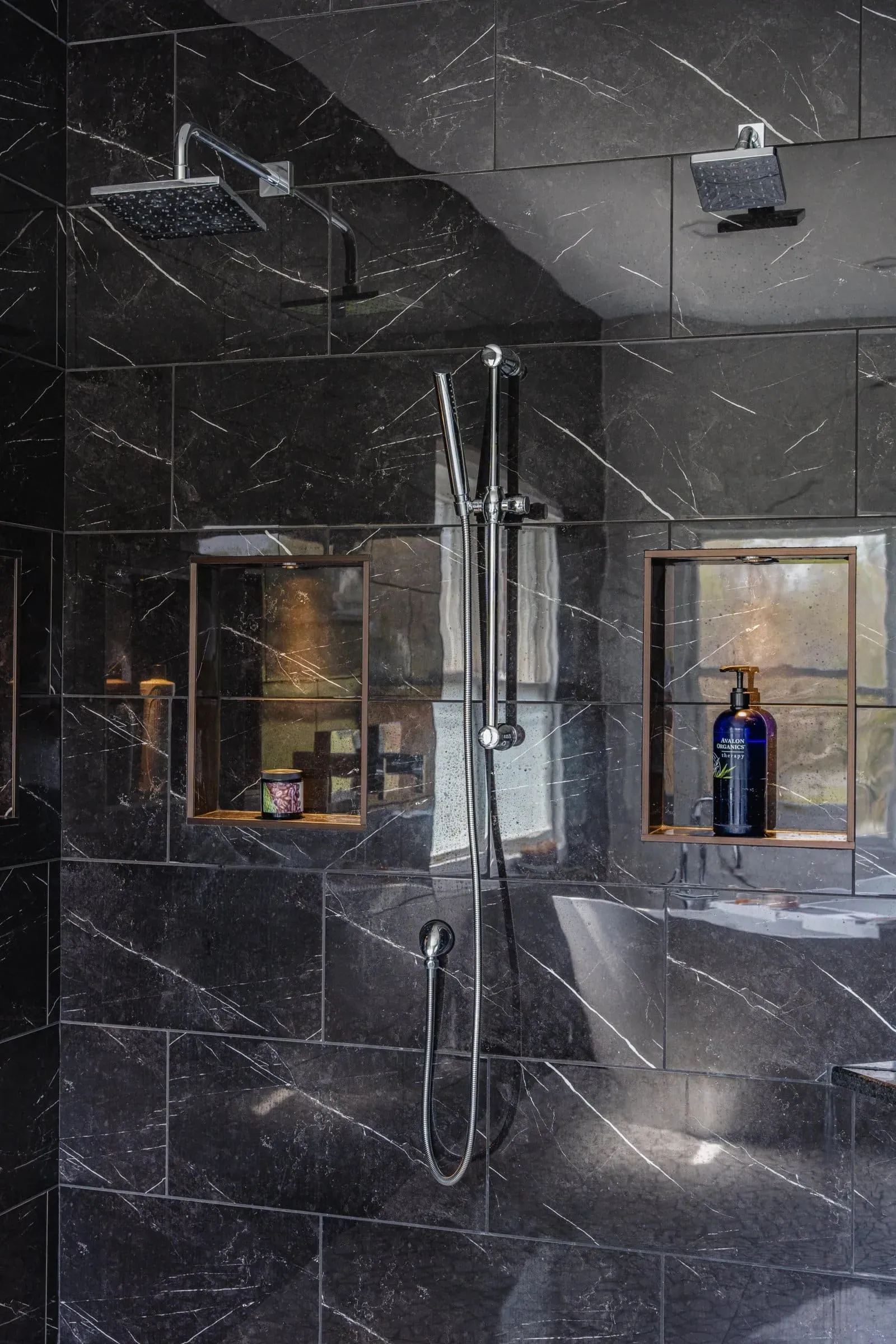
Frequently Asked Questions: Small Bathroom Remodeling in Annapolis
Permits & Regulations
Do I need a permit for my bathroom remodel in Annapolis?
Almost certainly yes. The City of Annapolis requires permits for any plumbing changes (including replacing a tub), electrical work (even swapping a light fixture for a recessed can), or structural modifications. The only clear exemptions are painting and re-tiling when no plumbing or electrical is involved. Your contractor should handle all permit applications through the city’s CSS Portal.
What if my home is in the Historic District?
Any exterior-visible changes require Historic Preservation Commission (HPC) approval — including new exhaust vent caps on your facade. The HPC meets monthly, so factor in 4–8 weeks for review. Interior work generally doesn’t require HPC approval unless you’re altering historically significant elements or changing the home’s floor plan significantly.
How long does permitting take?
Trade permits (plumbing, electrical): 1–3 weeks. Building permits: 2–6 weeks. Historic District review: 4–8 weeks. Plan accordingly — this happens before construction begins.
Costs & Budget
How much should I budget for a small bathroom remodel in Annapolis?
For a typical 35–50 square foot bathroom in 2026:
- Budget refresh: $6,000–$14,000
- Mid-range remodel: $20,000–$35,000
- Upscale renovation: $40,000–$70,000+
Add 15% contingency for surprises — especially in pre-1960 homes.
Why does Annapolis cost more than national averages?
The “Annapolis Premium” reflects Historic District requirements, difficult access in row houses, downtown parking logistics, high humidity demanding superior waterproofing, and skilled labor costs in the DC-Baltimore corridor. Expect 10–25% above national averages.
What’s the ROI on a bathroom remodel here?
Mid-range bathroom remodels in the South Atlantic region (including Maryland) return 73–80% of costs at resale — above the national average of 70–74%. A $25,000 remodel typically adds $18,000–$20,000 to your home’s value.
Timeline
How long will my remodel take?
- Budget refresh: 1–3 weeks total
- Mid-range remodel: 4–6 weeks (including permits)
- Historic District project: 8–12 weeks
- Structural changes: 8–12+ weeks
Construction itself typically takes 1–3 weeks; permitting adds the rest.
Can I stay in my home during the remodel?
Yes, but you’ll need access to another bathroom. The remodeled bathroom will be unusable for 1–3 weeks during construction. Plan for dust, noise (7:30 AM–4:30 PM on weekdays), and workers moving through your home.
Design & Materials
What design style works best in Annapolis?
The “Coastal Historic” aesthetic dominates: warm grays (Benjamin Moore Annapolis Gray HC-176), polished nickel or unlacquered brass fixtures, hexagon floor tiles, and natural textures. This approach honors the city’s colonial architecture while delivering modern comfort.
Should I choose a tub or walk-in shower?
For small bathrooms (under 50 sq ft), a walk-in shower almost always makes more sense — it opens up space visually and appeals to most buyers. Exception: homes with only one bathroom may need a tub for families with young children.
What tile is best for Annapolis’s humidity?
Porcelain. It’s denser than ceramic, absorbs less moisture, and resists mold better. Large-format porcelain tiles (12″×24″ or bigger) that mimic marble give you the historic look without natural stone’s maintenance issues. Fewer grout lines = less mold opportunity.
Are smart bathroom features worth it?
Digital shower controls, smart mirrors, and heated floors are increasingly affordable and appeal to buyers. In 2026, these add $1,500–$5,000 to your project but can differentiate your home at resale. Consider them nice-to-have, not essential.
Common Concerns
What if contractors find problems behind the walls?
Expect it — especially in older Annapolis homes. Common discoveries include corroded cast iron pipes, lead bends, undersized joists, and outdated wiring. This is why we recommend a 15% contingency. Your contractor should present options with clear pricing before proceeding.
How do I prevent mold in my new bathroom?
Three essentials:
- High-CFM exhaust fan properly ducted to the exterior (not into the attic)
- Full waterproofing membrane behind all tile — not just in the shower
- Run the fan 20 minutes after every shower (install a timer switch)
Annapolis’s bay humidity makes ventilation non-negotiable.
Will my bathroom be up to code?
If your contractor pulls proper permits and passes inspections, yes. Key code requirements: GFCI outlets near water sources, proper ventilation, accessible shut-off valves, and adequate lighting. Permitted work protects you at resale and with insurance claims.
Should I DIY any of the work?
Minor tasks like painting, installing towel bars, or adding accessories are DIY-friendly. Leave plumbing, electrical, waterproofing, and tile work to licensed professionals. In Annapolis, DIY plumbing and electrical won’t pass inspection anyway — permits require licensed tradespeople.
Hiring Help
How do I find a good contractor in Annapolis?
Look for 10+ years in business, specific Annapolis/Historic District experience, MD licensing and insurance, written warranties, and verifiable local references. Ask how they handle permits, HPC submissions, and change orders. Avoid anyone who demands full payment upfront or won’t provide a written contract.
When should I book my contractor?
2–3 months ahead is ideal. The skilled labor shortage in the DC-Baltimore corridor means good contractors book out quickly. Planning ahead also secures better pricing and allows time to order long-lead materials during the permitting phase.
Quick Answers
| Question | Short Answer |
|---|---|
| Permit required? | Yes, for almost all work |
| Average cost? | $20,000–$35,000 mid-range |
| Timeline? | 4–6 weeks typical |
| Best ROI? | Mid-range remodel (73–80%) |
| Tub or shower? | Shower for small baths |
| Best tile? | Large-format porcelain |
| DIY? | Paint and accessories only |
| Contingency needed? | 15% minimum |

Customer Success Stories From USA Cabinet Store
What Our Bathroom Remodeling Clients Say
⭐⭐⭐⭐⭐ “Expert advice and a super easy decision process”
I recently ordered a vanity from USA Cabinet Store for the remodel of my 3rd bathroom. The other bathrooms were done a couple years ago using Wolf semi-custom cabinets and since I have been very pleased with the quality, I wanted Wolf again. Designer David Kara is very knowledgeable, gave me expert advice and once again made the decision process super easy.”
— Faye Giguere, Homeowner
⭐⭐⭐⭐⭐ “High quality custom cabinetry — I couldn’t be happier!”
“To remodel my master bathroom they had to change everything except the original tiles. Now I have a high quality custom cabinetry, new bathtub, mirrors, sink and everything else looks just perfect. My remodeled bathroom is more elegant, modern and has more storage space than before. I couldn’t be happier with their work and I highly recommend USA Cabinet Store.”
— John Hanlon, Homeowner
⭐⭐⭐⭐⭐ “Professional team and a complete design partnership”
“We updated the vanity in our master bathroom using the expertise of USA Cabinet Store. They developed a complete design together with us in our first visit. The cabinet delivery and installation was precisely done and team was very professional. We’re extra pleased with the results!”
— Susan Parsons, Homeowner
⭐⭐⭐⭐⭐ “Quality, beautiful, affordable — and on time!”
“We remodeled our kitchen and bathroom and were looking for quality, beautiful and affordable cabinets. Selman from USA Cabinet helped us in selecting the kitchen cabinets and bathroom vanity as well as designing the kitchen. Selman was professional and knowledgeable. He was able to accommodate my timeframe despite the COVID19 delivery challenges. The cabinets arrived on time. We had a great experience and the cabinets are elegant and functional.”
Positive highlights: Responsiveness, Punctuality, Quality, Professionalism
— Jeehan Ghaffar, Homeowner

Why Homeowners Choose USA Cabinet Store for Bathroom Remodels
✓ Expert design guidance from knowledgeable consultants like David Kara and Selman
✓ High-quality custom and semi-custom cabinetry (Wolf and other premium brands)
✓ Professional installation with precise delivery and timing
✓ Complete design partnership from first visit through final installation
✓ On-time delivery even during challenging circumstances
✓ Elegant, functional results that exceed expectations
✓ More storage space through smart design solutions
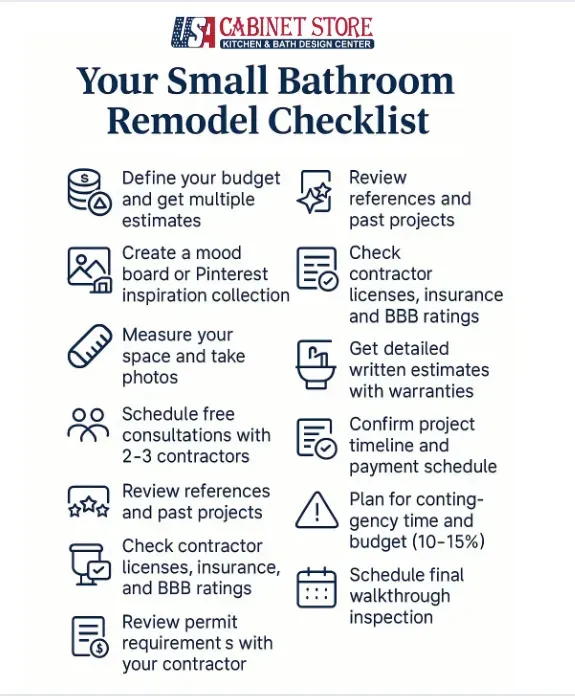
Your Annapolis Small Bathroom Remodel Checklist
Use this checklist to stay organized from planning through completion:
Planning Phase (4–8 Weeks Before Construction)
- Define your budget (include 15% contingency)
- Determine if your home is in the Historic District (affects timeline)
- Research contractors — get 2–3 estimates from firms with Annapolis experience
- Check contractor licenses, insurance, and local references
- Review written estimates and warranties
- Select your contractor and sign contract
- Schedule design consultation
Design Phase (2–4 Weeks)
- Finalize layout and fixture placement
- Select all materials: tile, vanity, countertop, fixtures, hardware
- Choose paint colors (test samples on your walls)
- Confirm ventilation plan (fan CFM, duct routing, vent cap location)
- If Historic District: confirm HPC requirements for any exterior changes
- Approve final design and specifications in writing
- Order long-lead items (custom cabinetry, special-order tile)
Permitting Phase (2–6 Weeks)
- Contractor submits permit applications via CSS Portal
- If Historic District: submit HPC application (allow 4–8 weeks)
- Confirm all permits approved before scheduling demolition
- Verify materials have arrived or are scheduled
Pre-Construction (1 Week Before)
- Clear bathroom completely — remove all personal items, medications, décor
- Arrange alternate bathroom access for your household
- Confirm parking permits for contractor vehicles (downtown Annapolis)
- Notify neighbors (especially in row houses with shared walls)
- Protect adjacent rooms — cover furniture, seal HVAC vents
- Confirm start date and daily work schedule with contractor
During Construction (1–3 Weeks)
- Maintain single point of contact with project manager
- Take photos before walls close (document plumbing, electrical, waterproofing)
- Attend scheduled inspections (or confirm contractor handles)
- Address concerns immediately — don’t wait until the end
- Approve any change orders in writing before work proceeds
- Stay flexible for decisions on hidden conditions
Completion Phase
- Final inspection passed and signed off by city
- Walk through with contractor — create punch list of any issues
- Confirm all punch list items resolved
- Receive warranty documentation and permit closure paperwork
- Make final payment per contract terms
- Leave online review for your contractor
Post-Project
- Register warranties for fixtures and materials
- Save all documentation (permits, warranties, receipts) for resale
- Run exhaust fan 20 minutes after every shower
- Schedule annual grout sealing (or as recommended)
- Enjoy your new bathroom!
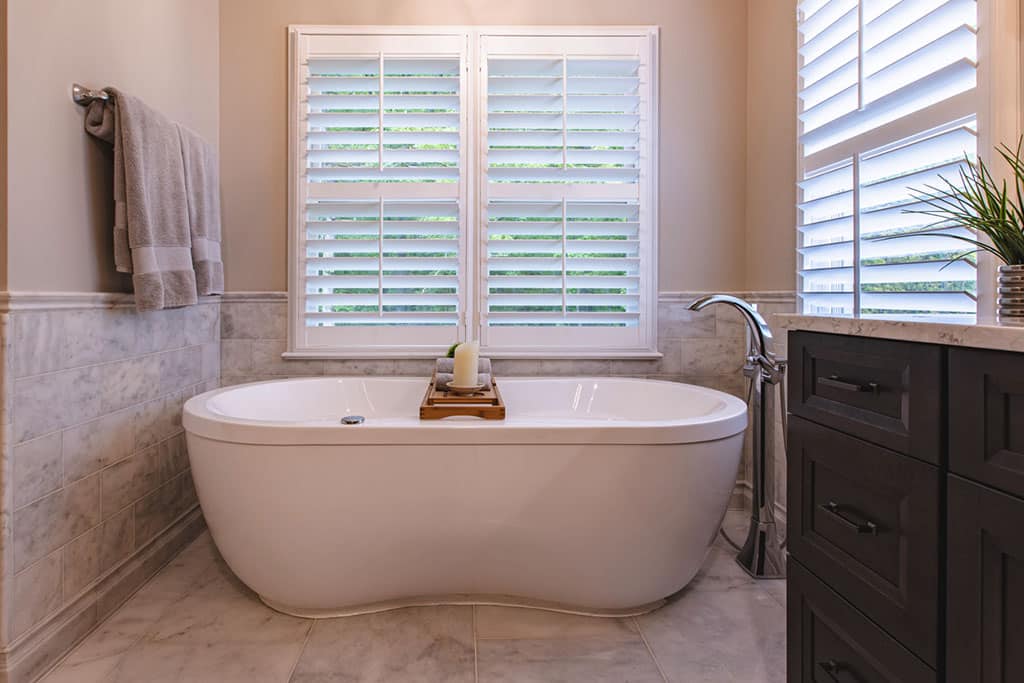
Ready to Transform Your Small Bathroom?
You’ve learned the design strategies, cost realities, timeline expectations, and how to avoid common mistakes. Now it’s time to take action.
At USA Cabinet Store Annapolis, we specialize in small bathroom remodels for Annapolis’s unique homes — from historic row houses downtown to mid-century capes in West Annapolis. Our designers understand the challenges of 35–50 square foot bathrooms: tight footprints, century-old plumbing, Historic District requirements, and the need for superior ventilation in our humid Chesapeake climate.
What Sets Us Apart
| Benefit | What It Means for You |
|---|---|
| Local Annapolis expertise | We know HPC requirements, city permitting, and row house construction |
| In-house design, materials & installation | One team, one point of accountability |
| Free VR 3D design consultation | See your new bathroom before demolition begins |
| Custom & semi-custom cabinetry | Solutions sized for your space, not off-the-shelf compromises |
| Transparent pricing | Detailed estimates with no hidden fees |
| Written warranty | We stand behind our work |
Our Process Is Simple
Step 1: Free Consultation Visit our showroom or schedule a VR 3D design consultation. We’ll discuss your vision, assess your space, and answer all your questions.
Step 2: Custom Design & Estimate Receive a detailed design plan with realistic pricing — including permits, materials, labor, and contingency.
Step 3: We Handle Everything Permits, HPC submissions, materials, installation, inspections — you have one point of contact from start to finish.
Step 4: Enjoy Your New Bathroom A beautiful, functional space designed for Annapolis living.
Visit Our Annapolis Showroom
USA Cabinet Store — Annapolis
📍 Address: 508 Chinquapin Round Rd, Suite A Annapolis, MD 21401 Get Directions →
📞 Call Us: (410)-609-5995
⏰ Showroom Hours: Monday – Friday: 9:30 AM – 6:30 PM Saturday: 10:00 AM – 5:00 PM Sunday: Closed
🌐 Schedule Online: Book Your Free Consultation →
Proudly Serving Annapolis,MD and Surrounding Communities
Annapolis | Historic Downtown | Eastport | West Annapolis | Murray Hill | Parole | Hillsmere | Edgewater | Arnold | Severna Park | Cape St. Claire | Crownsville | Davidsonville | Crofton | Odenton | Gambrills
Your Next Step
Don’t spend another morning in a cramped, outdated bathroom. Whether you’re updating a hall bath in a 1960s cape or renovating a historic row house powder room, we’re ready to help.
Schedule Your Free VR 3D Design Consultation
Transform your small bathroom into a space that works — and feels — like it belongs in your Annapolis home.