
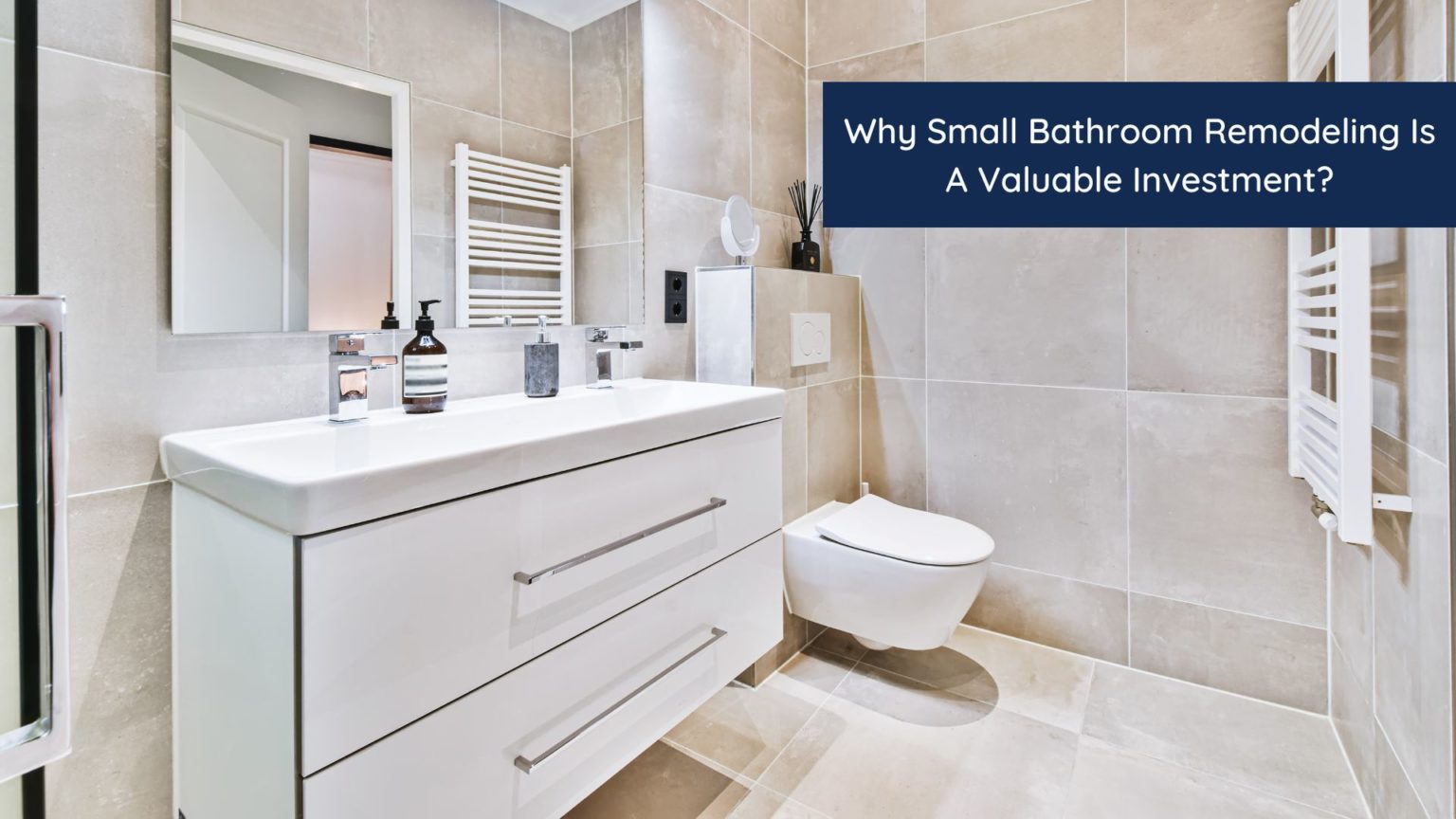
Small Bathroom Remodel:
Is It Worth the Investment?
Cost, ROI & market data for homeowners — updated March 2026
Small Bathroom Remodel Cost Tiers
Basic Refresh
Midrange Remodel
High-End
Upgrade-by-Upgrade ROI
| Upgrade | Cost | ROI |
|---|---|---|
Fresh paint + new fixtures | $300–$1,000 | 90–100% |
Toilet replacement | $300–$900 | 90–100% |
Vanity replacement | $800–$3,500 | 80–100% |
Reglazing tub / tile | $400–$1,000 | 85–100% |
Glass shower door | $800–$2,500 | 75–90% |
Lighting upgrade | $300–$1,500 | 70–90% |
Floor tile replacement | $1,000–$3,500 | 65–80% |
Numbers That Matter
Key Takeaways
Here are the essential numbers and insights from this guide:
- Small bathroom remodels cost $6,000–$15,000 in 2026 — with costs up 4–6% from 2025 due to skilled labor shortages and new tariffs on imported cabinetry.
- Mid-range remodels deliver 65–80% ROI — the strongest return among bathroom renovation tiers, and one of the top-performing home improvement categories overall.
- Homes with updated bathrooms sell 23% faster — reducing time on market and carrying costs for sellers.
- Targeted upgrades like vanity and toilet replacements can return 80–100% — the sweet spot for small bathrooms is the $3,000–$15,000 range.
- Labor is the biggest expense — accounting for 40–65% of most small bathroom projects. Plumber and electrician rates have climbed steadily year over year.
- Keeping the existing layout saves 20–30% — moving a toilet or shower drain can add $1,500–$3,500 in plumbing relocation costs alone.
- Waterproofing is non-negotiable — spending $200–$500 on proper membranes prevents $2,000–$5,000+ in water damage repairs later. The average water damage insurance claim costs $12,514.
- A 50% tariff on imported bathroom vanities took effect in late 2025 — pushing vanity costs up 20–28%. Domestically produced options help offset this.
- Modern fixtures generate ongoing savings — low-flow showerheads cut water use by up to 50%, efficient toilets save 13,000+ gallons per year, and LED lighting uses 80% less energy.
Remodeling Small Bathroom
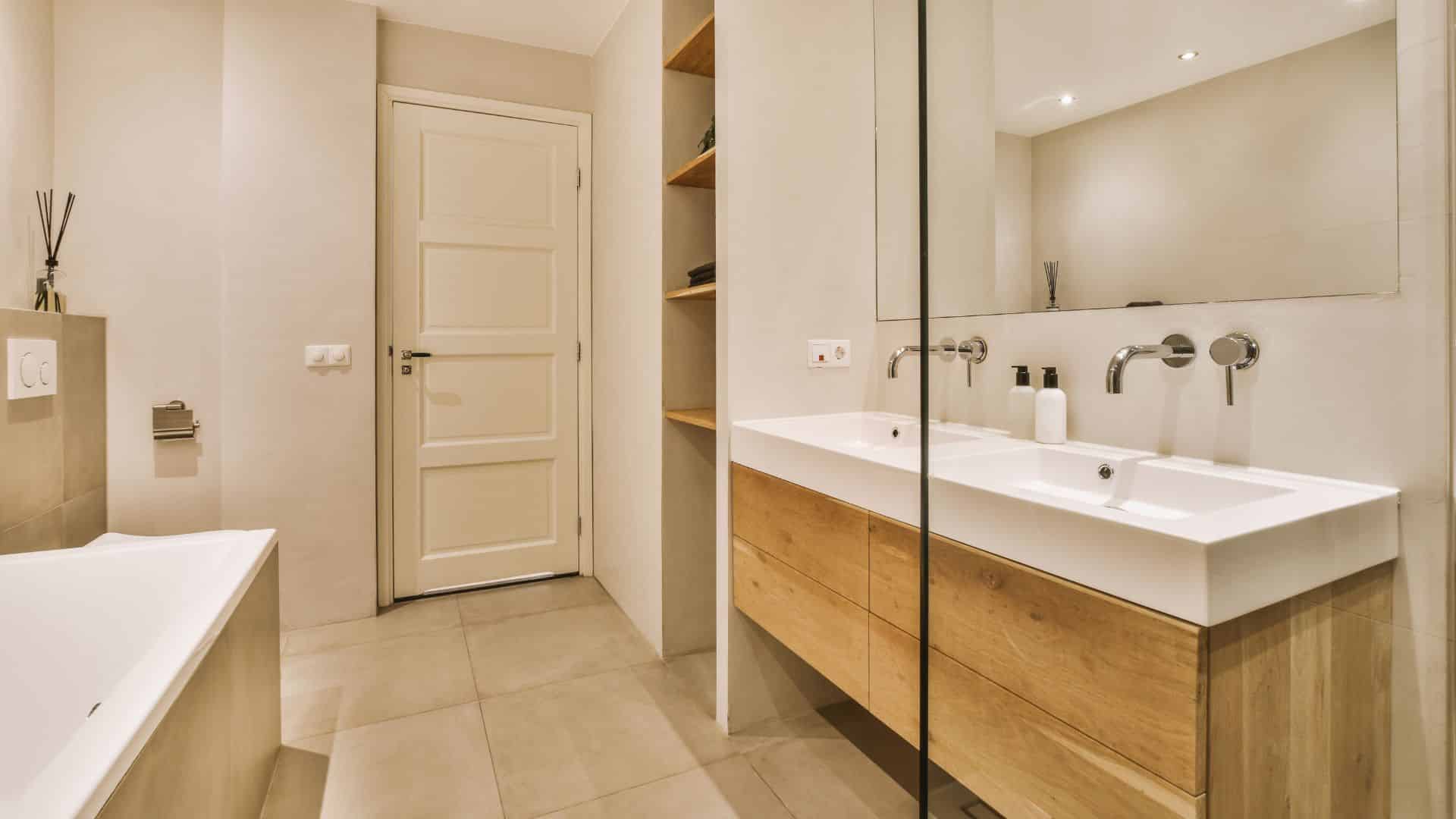
A small bathroom doesn’t have to feel like a compromise. With the right design choices, even a 25–40 square foot space can become one of the most attractive features in your home.
Buyers notice bathrooms. According to Zillow, homeowners see a return of $1.71 for every $1 spent on a bathroom remodel. Updated bathrooms consistently help homes sell faster in competitive markets — research shows homes with renovated bathrooms sell approximately 23% faster than those with outdated ones. A well-executed small bathroom remodel with 60–86% ROI at resale is one of the smartest renovation decisions you can make.
A survey by the National Association of Realtors found that 73% of homeowners believe a bathroom renovation positively impacts their home’s value — reinforcing the market consensus around bathroom upgrades.
If you plan to stay in your home, the payoff is even simpler. You’ll use your bathroom every single day. Spread the cost of a remodel over five or ten years of daily use, and the per-day investment becomes almost negligible. A $10,000 renovation used for a decade costs less than $3 per day.
Your bathroom remodel delivers immediate quality-of-life improvements: daily comfort, reduced stress, energy savings, and pride in your home. A National Association of Home Builders survey found that 76% of homeowners cite enhanced visual appeal and functionality as their primary motivation for renovating a bathroom.
Want a full transformation? You can always hire bathroom remodeling services to make your vision come to life.
Small Master Bathroom Remodel Ideas
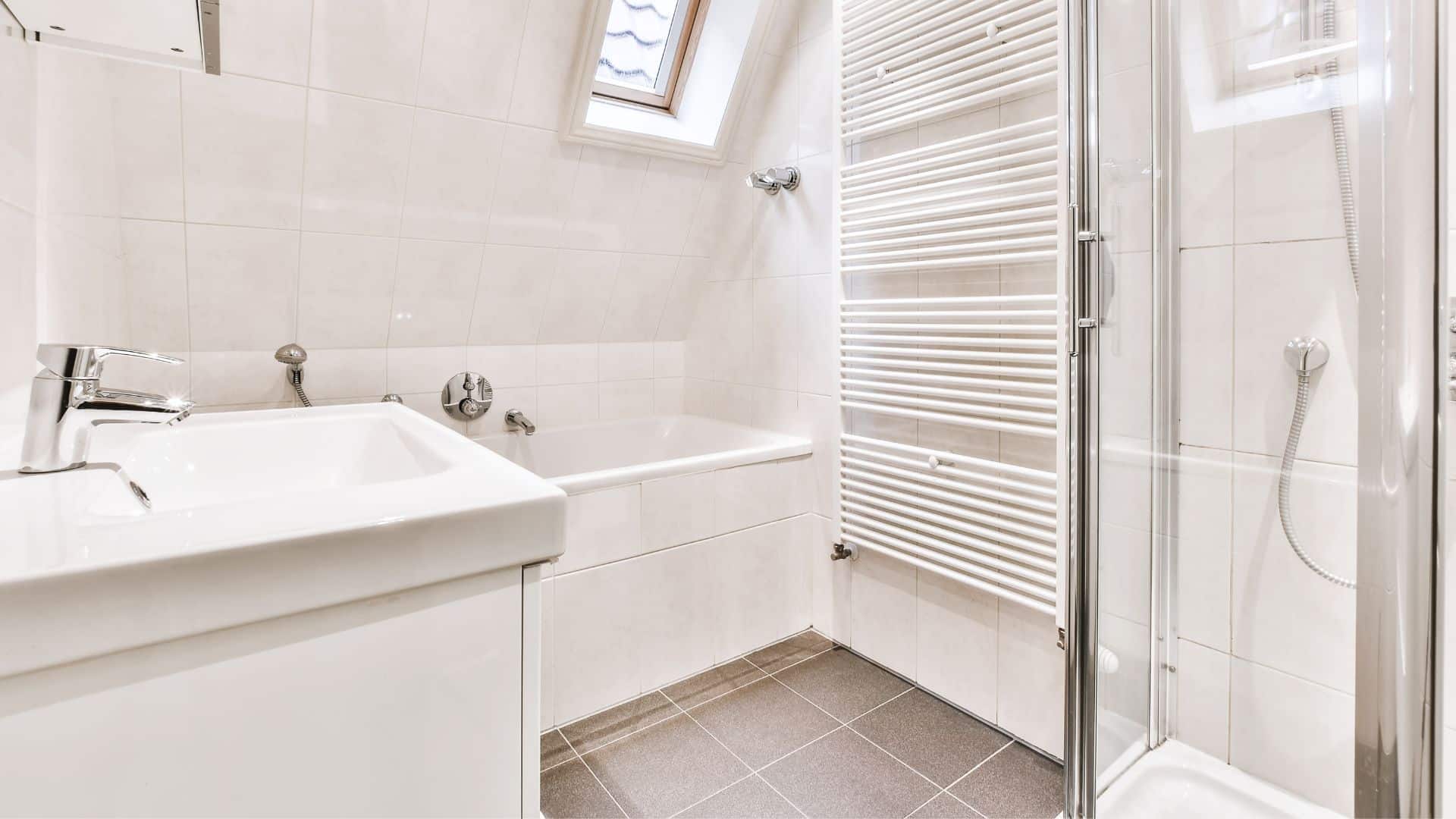
A small master bathroom can still feel spacious with the right approach. The goal is to make the room work harder without making it feel cluttered.
Start with color. White and light neutral tones reflect more light and trick the eye into reading the space as larger. Pair that with a frameless glass shower enclosure instead of a curtain, and the room opens up instantly.
Floating vanities are another strong move. They free up visible floor space, which makes the bathroom feel bigger and gives you room to tuck storage underneath. Recessed medicine cabinets and built-in niches in the shower add storage without eating into your square footage.
Modern fixtures matter too. Swapping outdated brass for brushed nickel or matte black hardware can update the entire look of the room for a few hundred dollars. LED mirrors, low-flow toilets, and water-saving showerheads add both style and efficiency — features that today’s buyers actively look for.
Invest $400–$800 in quality lighting. Combine ambient, task, and accent lighting for a functional and inviting space. Good lighting is worth every penny in a small bathroom.
The key: make a small master bathroom just as functional and comfortable as a larger one, and buyers will barely notice the square footage.
What Is The Return On Investment For Small Bathroom Remodeling?
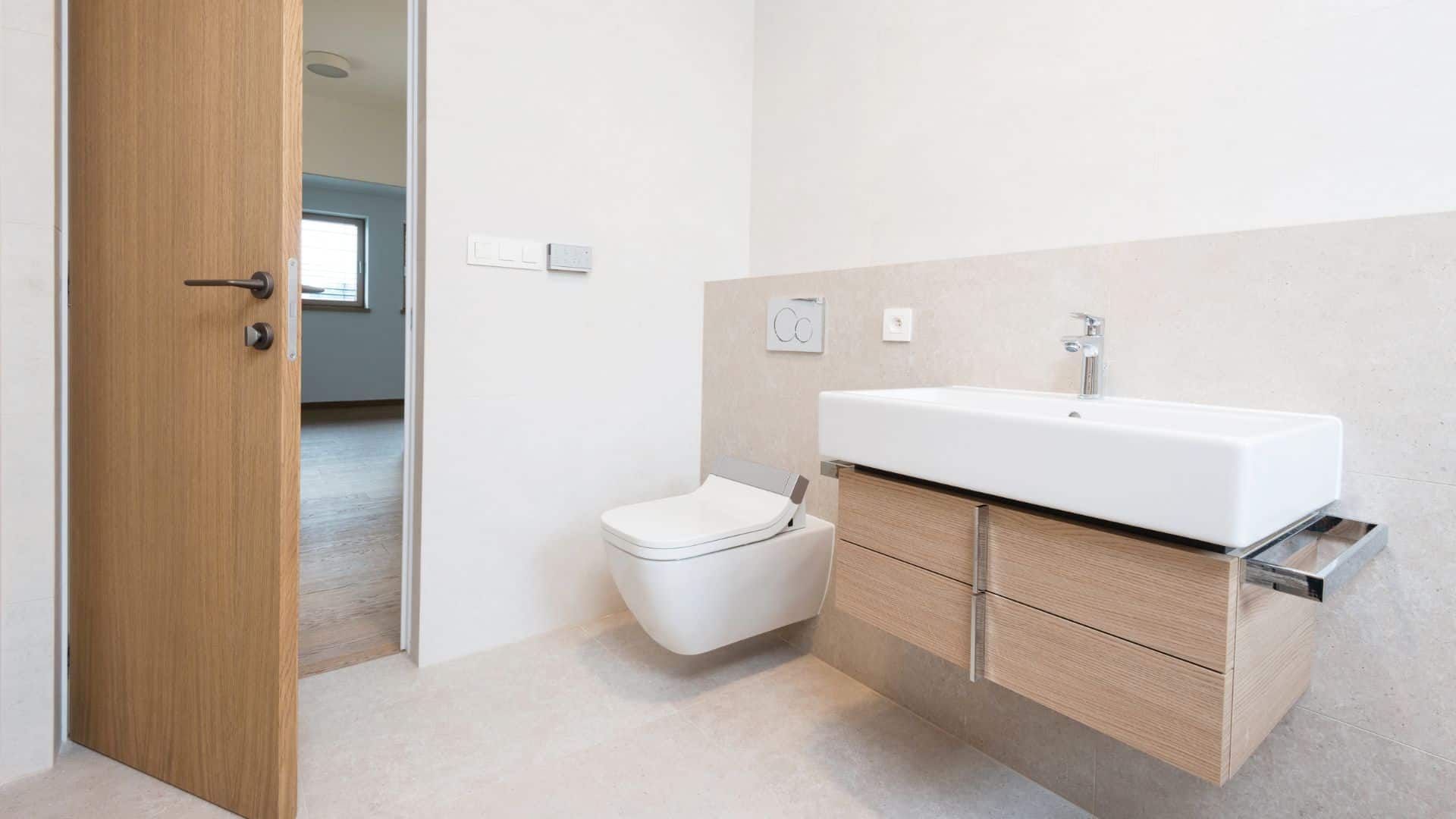
ROI matters when you’re spending thousands of dollars. The 2025 Cost vs. Value Report — the most current industry benchmark — confirms that mid-range bathroom remodels are returning roughly 80% of their cost at resale, the highest ROI since 2007.
Here’s how different remodel tiers compare:
- Basic / minor remodel — 60–86% ROI. Low cost, high percentage return. Cosmetic updates like new fixtures, paint, and a modern vanity go a long way.
- Midrange remodel — 65–80% ROI. The sweet spot. New tile, updated plumbing fixtures, a glass shower enclosure, and quality cabinetry without moving the layout.
- High-end / luxury remodel — 36–55% ROI. Beautiful to live in, but the dollar-for-dollar return drops because high-end finishes appeal to a narrower pool of buyers.
The pattern is clear: simpler remodels return the highest percentage of your investment. Luxury upgrades — heated floors, spa-grade fixtures, natural stone everywhere — feel incredible to use, but they won’t recoup as large a share of the cost at resale.
Which Specific Upgrades Return the Most?
Not all upgrades are created equal. Targeted, high-visual-impact improvements consistently outperform broad luxury renovations on ROI percentage:
| Upgrade | Typical Cost | Estimated ROI |
|---|---|---|
| Fresh paint + new fixtures | $300–$1,000 | 90–100% |
| Toilet replacement | $300–$900 | 90–100% |
| Reglazing tub/tile | $400–$1,000 | 85–100% |
| Mirror upgrade | $200–$800 | 85–100% |
| Vanity replacement | $800–$3,500 | 80–100% |
| Frameless glass shower door | $800–$2,500 | 75–90% |
| Lighting upgrade | $300–$1,500 | 70–90% |
| Floor tile replacement | $1,000–$3,500 | 65–80% |
The sweet spot for small bathroom investments lies in the $3,000–$15,000 range — modernizing the space and improving functionality without the diminishing returns seen in luxury renovations.
Planning to sell? Focus on the updates that appeal to the widest pool of buyers. Planning to stay? Invest in the features that make your daily routine better. For detailed cost breakdowns across all tiers, see our complete bathroom remodeling cost guide.
How Much Should You Spend on a Small Bathroom Remodel?
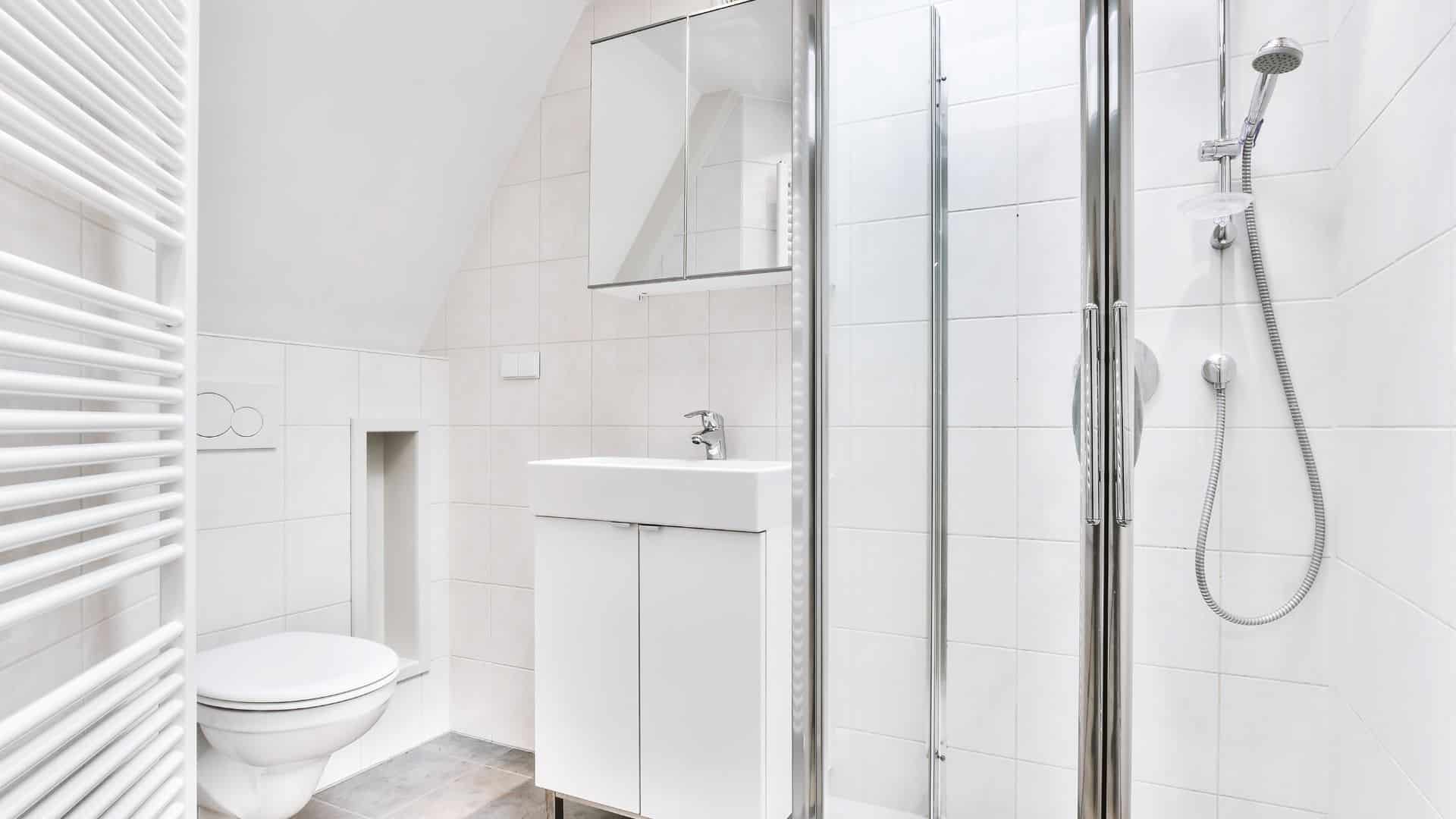
That depends on two things: your budget and your timeline.
Ask yourself one question first — are you remodeling to enjoy the space, or remodeling to sell?
If you’re staying in the home: Spend more on comfort and personal style. Choose finishes you love, invest in quality fixtures that’ll last 15–20 years, and don’t be afraid to add touches that make the bathroom feel like a retreat. There are plenty of trendy bathroom renovation ideas worth considering.
If you’re selling soon: Keep it clean, simple, and broadly appealing. A basic-to-midrange remodel with neutral colors and modern fixtures will attract the widest range of buyers. Avoid overly personal or polarizing design choices — let the next owner customize.
A solid rule of thumb for resale: spend roughly 5–10% of your home’s value on the bathroom project. That keeps the upgrade proportional and avoids over-improving for the neighborhood. Always add a 15% contingency fund for unexpected issues like water damage, mold, or code-required upgrades.
How Much Does a Small Bathroom Remodel Cost in 2026?
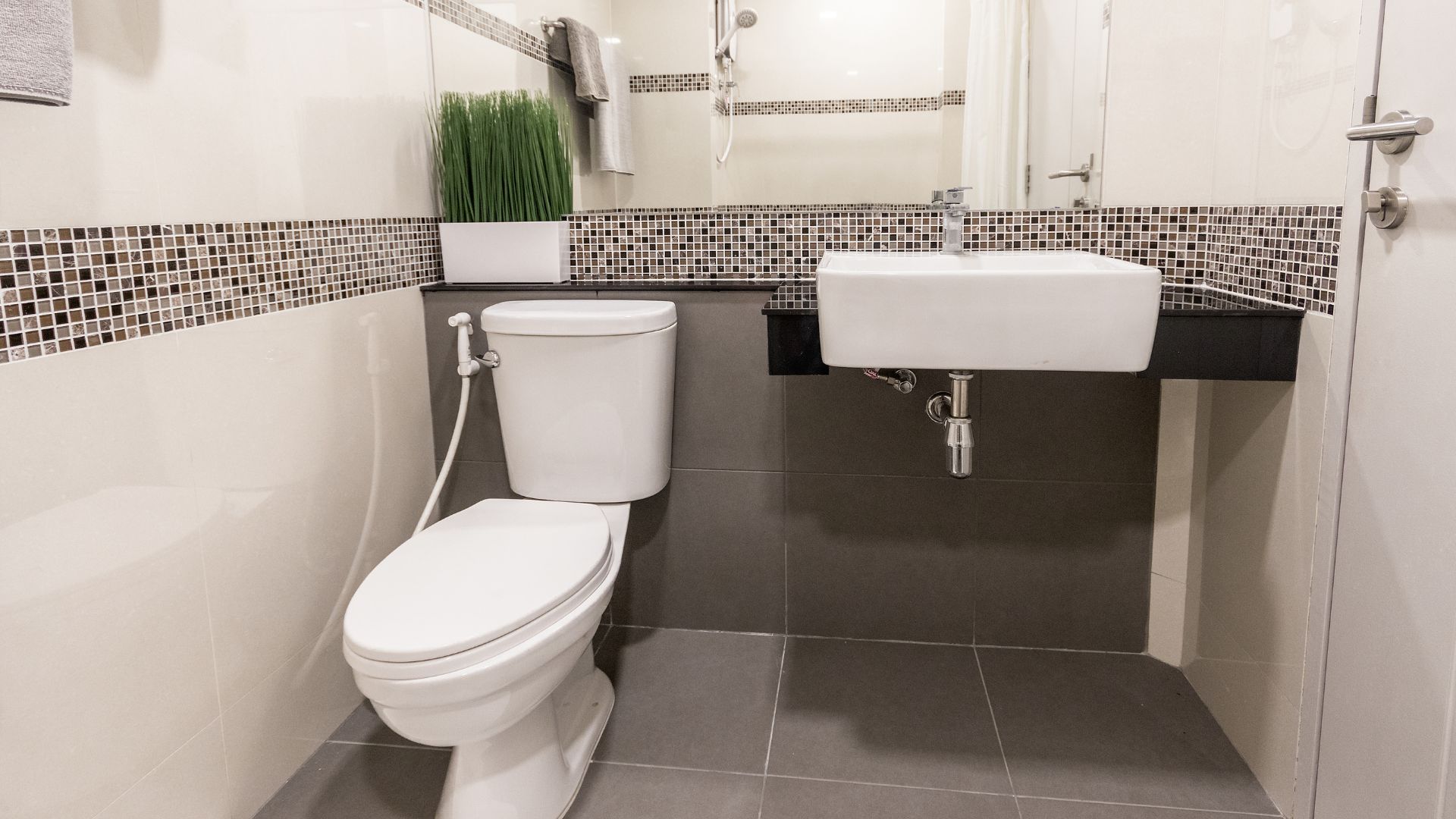
The honest answer: about $6,500 for a typical small bathroom remodel in 2026, though the real range runs from $2,000 for a basic refresh to $15,000+ for a full gut renovation. Small bathroom remodel costs have climbed 4–6% compared to 2025, driven by skilled-labor shortages and new import tariffs on cabinetry and fixtures.
Small bathrooms are usually 40 square feet or less — those familiar 5×7 or 5×8 spaces found in most American homes. Every major trade shows up in a bathroom — plumbing, electrical, tile, carpentry — which is why costs per square foot run higher than in larger rooms.
Basic refresh — $2,000 to $8,000 Fresh paint, new light fixtures, an updated vanity, and replacement hardware. You keep the existing layout and plumbing. This is the highest-ROI tier for resale.
Midrange remodel — $6,500 to $15,000 New tile (floor and shower), a modern vanity with quality countertop, updated plumbing fixtures, a glass shower enclosure, and possibly new bathroom cabinets. Some minor plumbing work, but no major layout changes.
High-end remodel — $15,000 to $20,000+ Custom cabinetry, natural stone or premium porcelain tile, frameless glass shower, high-end fixtures, heated flooring, and possibly smart features like LED mirrors or motion-activated faucets.
Where your money goes: Labor accounts for 40–65% of most small bathroom remodels. In 2026, plumber rates are up 8–10% and electrician rates 6–8% year over year. Materials, fixtures, and finishes consume the remaining 35–60%.
One cost rule worth remembering: keeping your existing layout saves 20–30% on the total project. Moving a shower drain or fixture costs $500–$1,500 per fixture relocated. Relocating a toilet runs $2,500–$3,500. For more on shower-specific pricing, see our shower remodeling cost breakdown.
Tariff alert: A 50% tariff on imported bathroom vanities took effect in late 2025, pushing vanity costs up by an estimated 20–28%. Domestically produced and assembled vanities — like the brands we carry from Fabuwood, Wolf Classic, Showplace, and Ultracraft — help offset this pressure.
Energy and Water Savings: The Hidden ROI
A modern small bathroom renovation creates ongoing savings that compound year after year. These aren’t just feel-good upgrades — they generate measurable utility cost reductions and serve as strong selling points for environmentally conscious buyers.
Low-flow showerheads cut water use by up to 50%. Legacy showerheads operated at 2.5–5.5 gallons per minute; modern WaterSense-certified models use just 1.5–2.0 gpm without sacrificing water pressure. For a family of four, that translates to thousands of gallons saved annually.
Water-efficient toilets reduce consumption by 30–60%. According to EPA data, replacing an old toilet alone can save nearly 13,000 gallons of water per year. A WaterSense dual-flush model can save a family of four over $300 annually on combined water and sewer bills.
LED lighting uses up to 80% less energy than incandescent bulbs and lasts up to 25 times longer. In a bathroom that’s used multiple times daily, the savings add up fast.
The payback period for high-efficiency plumbing fixtures is typically one to four years. When local utility rebates — which frequently offer $50 to $150 per fixture — are factored in, the net cost of these upgrades approaches zero over their lifespan.
Protecting Your Investment: Water Damage Prevention
Beyond aesthetics and resale value, a bathroom remodel serves as a critical infrastructure inspection. Older bathrooms frequently harbor hidden degradation — corroded pipes, failing shower pans, compromised waterproofing — that silently threatens your home’s structural integrity.
The financial stakes are stark. The average water damage insurance claim costs $12,514, and roughly 1 in 50 homeowners file a water damage claim every year. Minor leak repairs run $500–$3,500. Structural water damage — rotted floor joists, compromised load-bearing walls — escalates to $5,000–$15,000. Burst pipes affecting adjacent rooms or finished basements can cost $15,000–$30,000 to restore.
A well-timed remodel exposes and fixes these vulnerabilities when walls are already open — at a fraction of the emergency repair cost. Proper waterproofing membranes ($200–$500), sealed grout, and modern plumbing connections are the most cost-effective insurance policy your bathroom can have.
Accessibility and Aging-in-Place Value
Bathroom remodels increasingly incorporate aging-in-place features — walk-in showers, grab bars, comfort-height toilets, and wider doorways — that improve safety for aging homeowners and family members.
The Joint Center for Housing Studies at Harvard University found that 45% of remodeling spending is directed at making homes more age-friendly. And the market rewards it: ADA-accessible bathroom renovations achieve a 70.6% ROI according to Zillow data — higher than many standard mid-range remodels.
These features appeal to a broad demographic. Multigenerational households, buyers planning to age in place, and families with young children all value accessible design. It’s one of the rare upgrades that delivers strong ROI and genuine daily safety benefits simultaneously.
Is a DIY Small Bathroom Remodel Worth It?
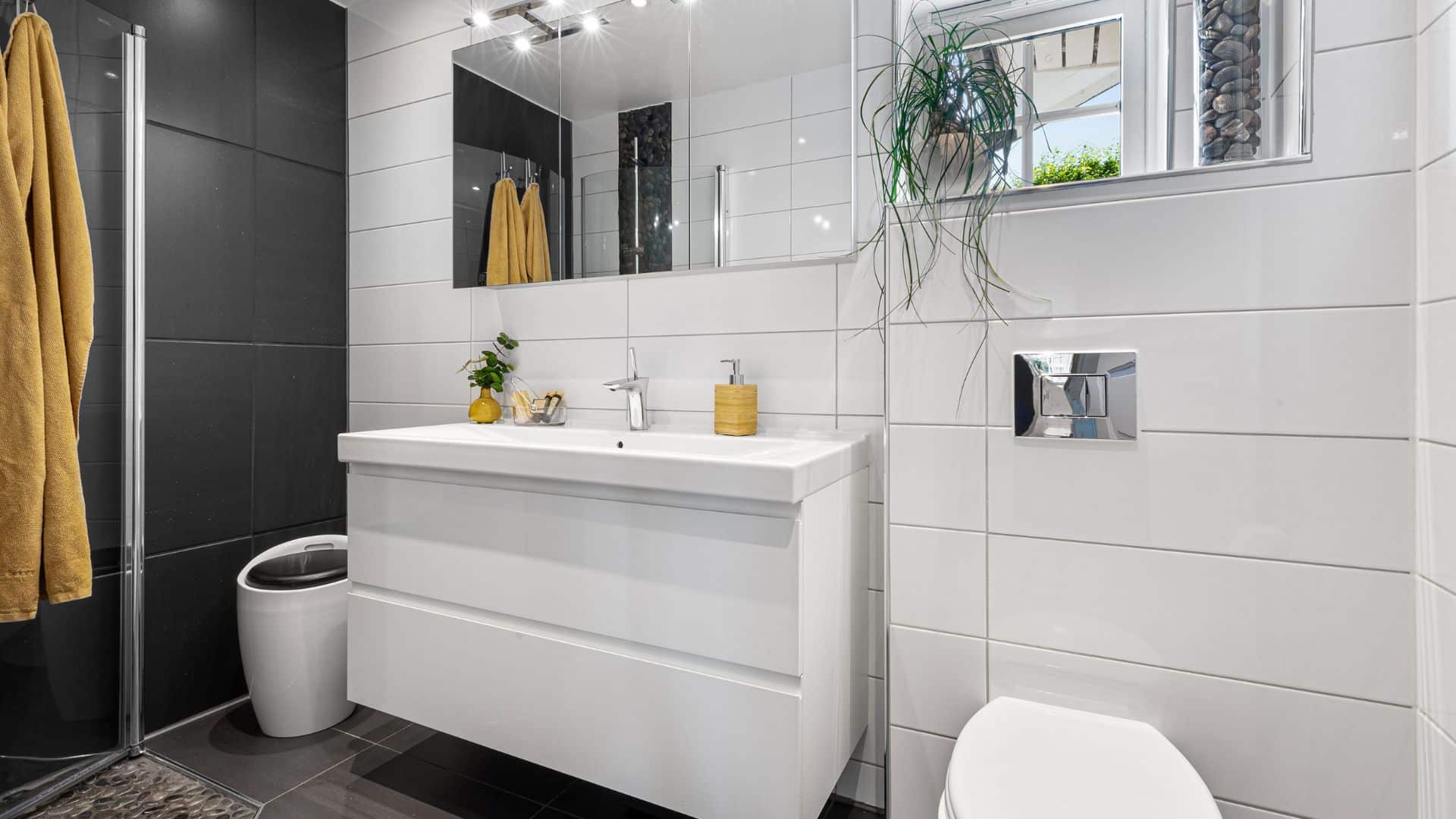
If you have real skills and your own tools — yes, DIY can stretch your budget. Handling your own demolition, painting, vanity installation, and fixture swaps can cut labor costs significantly.
But here’s what we’ve seen after thousands of bathroom projects: bathroom remodeling is unforgiving work. Waterproofing mistakes lead to mold. Bad tile work is visible every day. Plumbing errors can cause leaks inside walls that you won’t notice until the damage is expensive.
Electrical work, major plumbing, and anything involving waterproofing membranes should be handled by licensed professionals. Code requirements have gotten stricter, and even minor fixture changes in older homes can trigger mandatory upgrades to wiring, shutoff valves, or ventilation. The 2023 NEC code changes require updated GFCI protection, AFCI protection, and surge protection in all wet environments.
You need to be especially careful with materials costs. When you shop at regular home improvement stores, you pay a higher price than a professional contractor. Bathroom renovation professionals get better deals because they bring more consistent business to suppliers. This fact can kill any savings you might have gained by doing the work yourself.
A botched DIY job can actually lower your home’s value — especially if a home inspector flags the work during a sale. Trusting professionals for the critical systems is the smartest choice for most homeowners. For a complete step-by-step approach, see our 9-step guide.
Should You Make Your Small Bathroom Bigger?
Expanding a bathroom’s footprint means borrowing space from an adjacent room — a closet, a hallway, a bedroom. It’s expensive, requires permits, and the structural work adds weeks to the timeline.
If you’re planning to sell, it’s usually not worth the cost. A well-designed small bathroom can be just as appealing to buyers as a larger one. Let the new buyer decide if a bigger bathroom is necessary.
If you’re staying long-term and your small bathroom genuinely hurts your quality of life, expansion is a different conversation. Gaining even a few square feet can make room for a proper shower, better storage, or a double vanity that transforms your morning routine.
Expansion projects can double the cost of a standard remodel due to structural, plumbing, and electrical work. Budget accordingly — and get multiple quotes before committing.
5 Common Mistakes to Avoid
- Ignoring proper ventilation — Install a properly sized exhaust fan to prevent mold, mildew, and moisture damage. Good ventilation protects your investment and your family’s health.
- Prioritizing looks over function — Beautiful design means nothing if the bathroom doesn’t work for your daily routine. Plan fixture placement carefully.
- Underestimating storage needs — Custom cabinetry, floating shelves, and recessed medicine cabinets maximize every inch while keeping the space open and organized.
- Poor lighting planning — Combine ambient, task, and accent lighting. A single overhead fixture isn’t enough for a bathroom where you shave, apply makeup, or get ready for the day.
- Skipping waterproofing — Proper waterproofing ($200–$500) prevents expensive water damage repairs ($2,000–$5,000+) down the road. Use waterproof membranes like Schluter-Kerdi or RedGard, sealed grout, and quality caulking. Never cut this corner.
Frequently Asked Questions About Small Bathroom Remodels
How much does it cost to remodel a small bathroom in 2026?
A typical small bathroom remodel costs about $6,500 in 2026, with the range running from $2,000 for a basic cosmetic refresh to $15,000+ for a complete gut renovation. Small bathrooms are usually 40 square feet or less, and costs per square foot tend to run $150–$280 for mid-range projects. Labor accounts for 40–65% of the total budget, and costs have climbed 4–6% compared to 2025 due to skilled-trade shortages and tariff increases on imported fixtures.
What is the ROI on a small bathroom remodel?
Most small bathroom remodels return 70-80% of their cost at resale. Budget-focused updates can exceed 80% ROI in some markets.
Luxury projects generally return less. Midrange remodels with new tile, fixtures, and cabinetry recoup 65–80% of their cost. The 2025 Cost vs. Value Report confirms that mid-range bathroom remodels are returning roughly 80% at resale, the strongest figure since 2007. Luxury remodels deliver 36–55% ROI. Targeted upgrades like toilet replacement (90–100% ROI) and vanity swaps (80–100% ROI) consistently outperform broad renovations.
How long does a small bathroom remodel take?
A standard small bathroom remodel takes 1–3 weeks from demolition to completion with a professional contractor. A full renovation can stretch to 3–6 weeks if you’re relocating plumbing or doing structural work. DIY projects should be planned for 4–10 weeks or longer. Arrange alternate bathroom access before work begins, and finalize all design decisions ahead of time to avoid delays.
Does a bathroom remodel help my house sell faster?
Yes. Research shows homes with recently renovated bathrooms sell approximately 23% faster than those with outdated bathrooms. A dated bathroom can turn away buyers before they evaluate the rest of the house. Even minor updates — new faucets, fresh grout, modern lighting — signal that the home has been well maintained and can meaningfully shorten time on market.
What are the best upgrades for a small bathroom in 2026?
The highest-impact upgrades for small bathrooms include: a modern vanity with quality countertop (80–100% ROI), a glass shower enclosure (75–90% ROI), updated plumbing fixtures in brushed nickel or matte black, large-format tile, LED lighting (70–90% ROI), and low-flow water fixtures. Smart technology like LED mirrors and motion-activated faucets are increasingly popular with buyers. For space-saving strategies, floating vanities and recessed storage make the biggest difference.
Do I need permits for a small bathroom remodel?
In most cases, yes — if your project involves plumbing modifications, electrical work, structural changes, or fixture relocations. Simple cosmetic updates like painting, swapping hardware, or replacing a vanity top typically don’t require permits. Check with your local building department. Skipping required permits can create complications when you sell your home.
How can I save money on a small bathroom remodel?
Keep the existing layout (saves 20–30% by avoiding plumbing relocation). Choose porcelain tile over natural stone — it performs almost identically at a fraction of the cost. Consider prefab shower pans instead of custom tile. Buy your vanity domestically to avoid tariff markups. Time your project for January–February when contractor availability is better and labor rates can run 10–20% lower than peak summer months. Install water-efficient fixtures to qualify for local utility rebates ($50–$150 per fixture).
What materials are trending for small bathrooms in 2026?
Large-format porcelain tiles remain dominant for their clean look and reduced grout lines. Matte black and brushed nickel hardware continue to outperform chrome in buyer appeal. Quartz countertops are preferred over granite for bathroom vanities due to their non-porous surface. Natural wood tones in cabinetry — warm walnut, white oak — are replacing the all-white trend. Textured tiles and zellige-style surfaces are gaining traction as accent features.
Are aging-in-place features worth including?
Yes — both financially and practically. ADA-accessible bathroom renovations achieve a 70.6% ROI according to Zillow, higher than many standard renovations. Features like walk-in showers, grab bars, comfort-height toilets, and wider doorways appeal to a wide demographic: aging homeowners, multigenerational households, and families with young children. Harvard’s Joint Center for Housing Studies reports that 45% of remodeling spending now goes toward age-friendly improvements.
Ready to start your small bathroom remodel?
Book a complimentary consultation with our design team, or visit one of our showroom locations to see materials and layouts in person.