A kitchen remodel is one of the most impactful home improvements you can make—boosting daily comfort, functionality, and long-term value. But with labor and material costs continuing to climb, most homeowners start their planning with the same question: How much should I budget for a kitchen remodel in 2026?
The short answer: the national average kitchen remodel costs around $27,000 to $35,000, with most projects falling between $15,000 and $75,000 depending on size, scope, and finish level. Minor cosmetic updates can start in the mid-teens, while complete luxury renovations regularly exceed $150,000—especially in high-cost markets.
In the Washington D.C. metro area, including Northern Virginia, costs run significantly higher. The average kitchen remodel in Northern Virginia is approximately $75,000—roughly twice the national average. Premium labor rates, complex permitting requirements, and elevated material expectations all contribute to this regional premium.
What’s driving these numbers in 2026? A combination of persistent skilled labor shortages, tariff-influenced material costs, and growing demand for features like induction cooking and smart home integration. Some homeowners report paying nearly double what similar projects cost just three or four years ago.
This guide breaks down real kitchen remodeling costs based on kitchen size, remodel scope, material choices, and regional labor rates. Using data from hundreds of completed projects and the latest 2025–2026 industry studies, you’ll find clear, practical guidance for planning your budget—whether you’re refreshing a galley kitchen or transforming an open-concept culinary space.
What’s Different About Kitchen Remodeling in 2026?
Before diving into specific costs, it’s worth understanding the market forces shaping prices this year. Three major factors are driving the current cost environment, and understanding them helps explain why quotes may seem higher than expected.
Labor Shortages Are Structural, Not Temporary
The construction industry faces an ongoing shortage of skilled tradespeople—particularly electricians and plumbers. This isn’t a temporary pandemic-era spike; an aging workforce, fewer apprenticeships, and strong demand have created a structural deficit unlikely to reverse soon.
What this means for your budget: Labor-intensive projects—moving plumbing, rewiring for induction ranges, adding island electrical—cost significantly more than they did five years ago. Scheduling reliable subcontractors requires longer lead times, and rushing projects commands premium rates.
In Northern Virginia specifically, master electricians command $90–$130+ per hour and master plumbers charge $100–$150 per hour—substantially above national benchmarks where residential electricians might bill $50–$100 per hour. These rates are baked into every contractor quote you receive.
Tariffs Have Stabilized Cabinetry Pricing—For Now
A 25% tariff on imported kitchen cabinets remains in effect through 2026, with a planned increase to 50% currently delayed until January 2027. This creates a window of relative price stability for imported cabinetry.
Domestic manufacturers, while shielded from aggressive price undercutting, haven’t significantly lowered prices—they’ve used the tariff umbrella to maintain margins. The practical impact: the gap between budget imported cabinets and entry-level domestic semi-custom lines has narrowed. If you’re planning a late-2026 remodel, be aware that a surge in demand may occur as projects accelerate to beat the 2027 tariff increase.
Return on Investment Varies by Scope and Location
According to the 2025 Cost vs. Value Report, minor kitchen remodels deliver the strongest ROI of any interior renovation—approximately 113% on average nationally. That means a well-executed cosmetic refresh can actually add more value than it costs.
Mid-range major remodels recoup around 50% of costs at resale, while upscale renovations see approximately 36% return. However, these national figures shift in premium markets: the report’s closest market to Northern Virginia is Washington, DC, where minor kitchen remodels recoup about 101% of their cost, midrange majors about 49% and upscale remodels about 32% (Cost vs. Value Report, 2025). The report doesn’t publish a separate Northern Virginia figure.
This doesn’t mean luxury remodels are bad investments—just that they’re partly consumption spending for your enjoyment rather than pure asset appreciation. Choose your scope based on how long you’ll stay in the home and what daily improvements matter most to you.
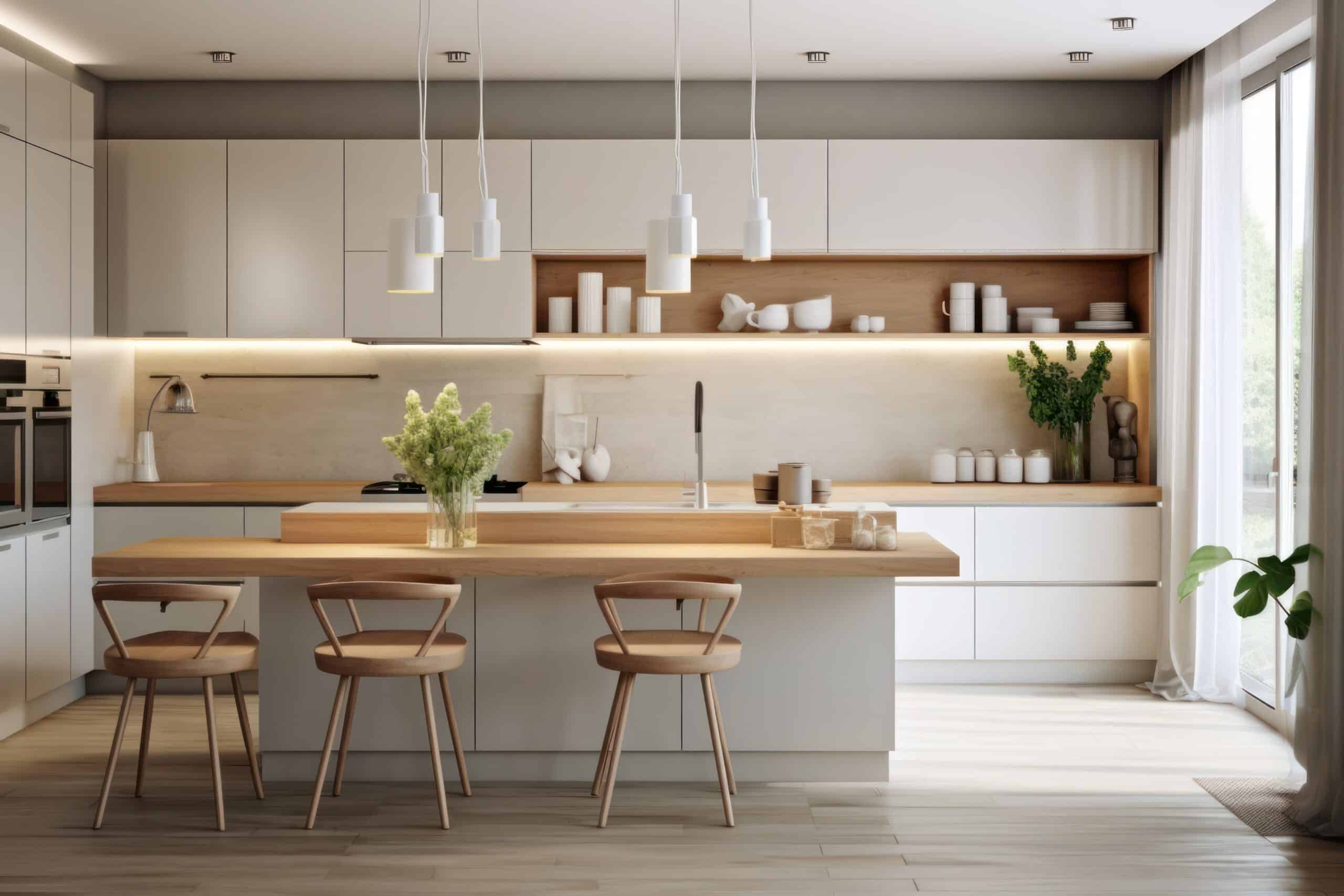
How Kitchen Size Affects Remodeling Costs
Kitchen size is one of the biggest cost drivers because more square footage means more cabinets, countertops, flooring, and labor hours. Here’s what to expect at each size tier, with both national benchmarks and Northern Virginia-specific guidance.
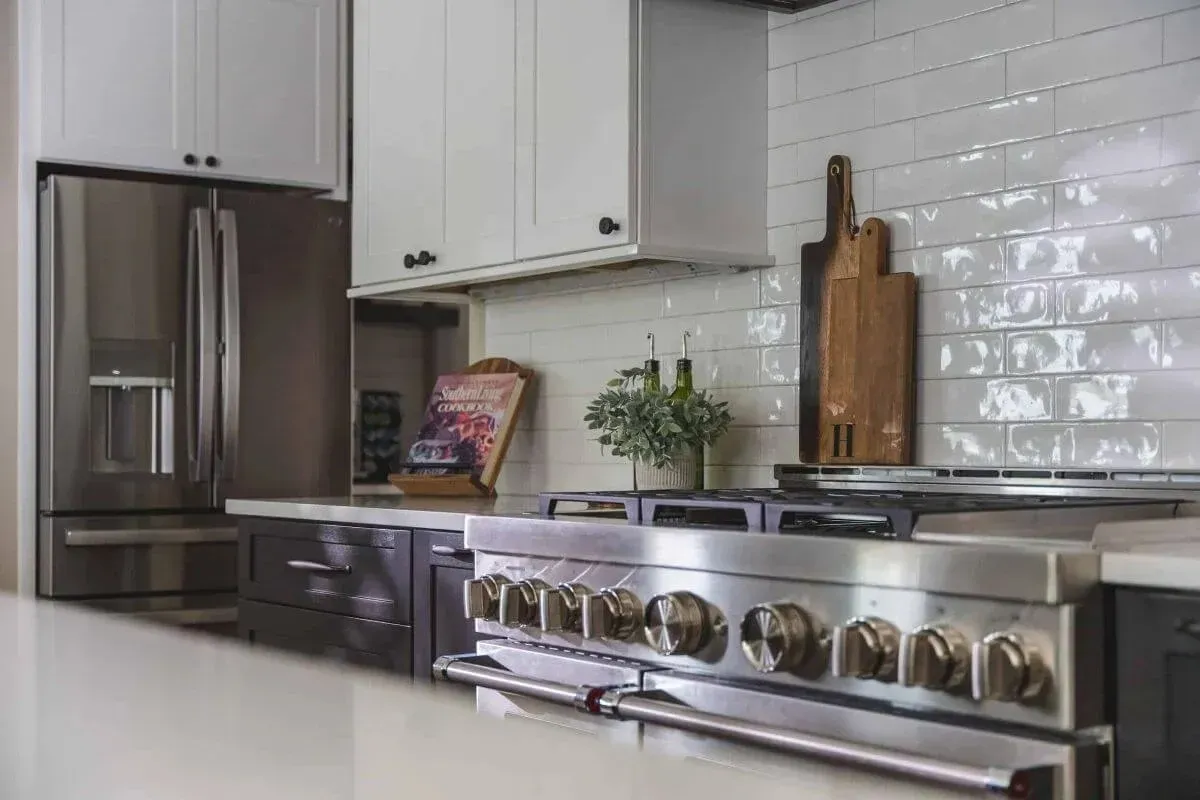
Small Kitchens (Under 70 Square Feet)
Small kitchens—typically galley layouts or compact U-shapes—are designed for efficiency rather than entertaining. You’re usually working with 15–20 linear feet of cabinetry, limited counter space, and standard-size appliances.
The advantage of a small footprint is that material costs stay manageable. The challenge is that fixed costs (design, permits, contractor mobilization) are spread over less area, which can push per-square-foot costs higher than larger projects.
Common small kitchen upgrades and typical costs:
Countertops represent one of the best value upgrades in a small kitchen. Laminate runs $20–$50 per square foot installed, while entry-level quartz starts around $60–$80 per square foot. For a small kitchen with 20–25 square feet of counter space, that translates to $1,200–$2,000 for laminate or $1,500–$2,500 for basic quartz.
Cabinet refacing—keeping existing boxes but replacing doors, drawer fronts, and hardware—typically costs $4,000–$9,000 for a small kitchen. Full cabinet replacement with stock or semi-custom units runs $8,000–$15,000.
Appliance upgrades vary widely based on brand and features. A compact or counter-depth refrigerator runs $800–$1,500, a standard 30-inch range $600–$1,200, and a basic dishwasher $400–$800. For a complete small-kitchen appliance package, budget $2,000–$4,500.
Smart storage solutions—pull-out shelves, corner carousels, drawer organizers—add functionality without expanding your footprint. Expect $150–$300 per pull-out unit or $2,000–$4,000 for comprehensive storage upgrades.
Total small kitchen remodel costs: A cosmetic refresh (new counters, backsplash, hardware, paint, light fixtures) typically runs $8,000–$15,000 nationally, or $15,000–$25,000 in Northern Virginia. A basic remodel runs $15,000–$25,000 nationally ($25,000–$40,000 in NOVA), a mid-range remodel with new cabinets and appliances $25,000–$45,000 ($40,000–$65,000 in NOVA), and a high-end renovation with layout changes $45,000–$70,000+ ($65,000–$100,000+ in NOVA).
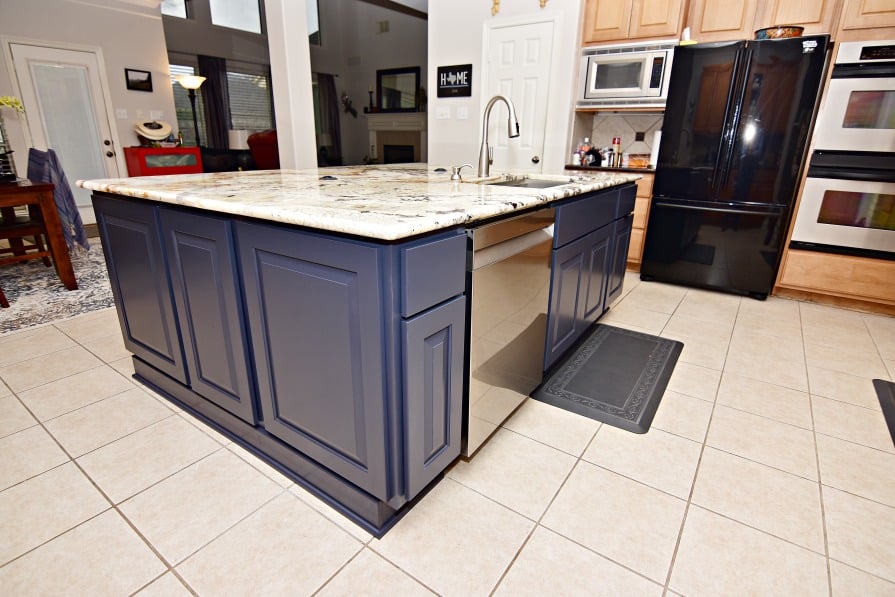
Medium Kitchens (70–150 Square Feet)
Medium kitchens offer enough space to incorporate popular features—islands, pantry cabinets, dedicated prep zones—while keeping budgets more controlled than large open-concept spaces. Most suburban homes fall into this category, typically with L-shaped or U-shaped layouts.
This size range provides flexibility but also introduces more decisions about whether to add an island, how much to invest in cabinetry, and whether modest layout changes are worthwhile.
Islands are among the most requested additions. A basic 4×3-foot island with stock cabinets and laminate top runs $2,000–$4,000 installed. Islands with electrical outlets, pendant lighting, and quartz surfaces typically cost $4,000–$8,000. Larger islands with seating, prep sinks, or specialty features can exceed $10,000–$15,000.
Semi-custom cabinetry—which allows dimension modifications, better construction quality, and more finish options than stock—typically costs $200–$650 per linear foot installed. For a medium kitchen with 25–35 linear feet of cabinets, that’s $5,000–$22,750 for the cabinetry portion alone.
Countertop costs scale with square footage. Medium kitchens typically have 30–50 square feet of counter space. Mid-range quartz at $75–$100 per square foot installed translates to $2,250–$5,000. Premium options at $100–$150 per square foot push countertop costs to $4,500–$7,500.
Layout modifications become practical at this size. Removing a non-load-bearing wall or peninsula typically costs $800–$2,000 for demolition and finishing. Relocating a sink or adding an island with plumbing adds $1,500–$4,000 in plumbing labor. Moving electrical for island outlets or upgraded range circuits runs $500–$2,000 depending on complexity.
Total medium kitchen remodel costs: Minor updates nationally run $18,000–$35,000. Mid-range renovations fall between $35,000–$70,000. High-end projects reach $70,000–$120,000+.
In Northern Virginia, a 12×12 kitchen (144 square feet) typically costs $45,000–$95,000 for a mid-range remodel with Fabuwood or Wolf Classic semi-custom cabinets, quartz countertops, and new appliances. Luxury transformations with Decora custom cabinetry and professional-grade appliances can exceed $150,000.

Large Kitchens (Over 150 Square Feet)
Large kitchens—typically open-concept spaces flowing into dining and living areas—require more of everything: materials, labor, coordination. These spaces often feature oversized islands, professional-grade appliances, and architectural details like coffered ceilings or custom millwork.
The scale of large kitchens means material choices have amplified cost impacts. Choosing quartz at $100 per square foot versus granite at $70 per square foot might represent a $1,500 difference in a medium kitchen, but $3,000–$4,000 in a large one.
Custom or high-end semi-custom cabinetry dominates large kitchen budgets. At $500–$1,500+ per linear foot, a large kitchen with 50+ linear feet of cabinetry can easily require $25,000–$75,000 in cabinet costs alone—often more than the total budget of a small kitchen remodel.
Structural changes are more common in large kitchen renovations. Removing load-bearing walls to create open flow typically costs $3,000–$10,000 including engineering, permits, temporary support, and finishing. Adding or enlarging windows runs $1,500–$5,000 per opening. Building out a butler’s pantry or walk-in pantry adds $5,000–$15,000 depending on size and finishes.
Professional-grade appliances are standard in high-end large kitchens. A 36-inch or 48-inch professional range from Wolf, Thermador, or Viking runs $5,000–$15,000+. Built-in column refrigerators from Sub-Zero cost $10,000–$20,000. Complete professional appliance suites can total $20,000–$50,000+.
Total large kitchen remodel costs: Basic renovations in large kitchens run $25,000–$45,000 nationally ($40,000–$65,000 in NOVA). Mid-range projects run $45,000–$90,000 ($75,000–$130,000 in NOVA). High-end complete renovations run $90,000–$175,000+ ($150,000–$300,000+ in NOVA).
In Northern Virginia, full large-kitchen remodels with custom cabinetry, premium surfaces, professional appliances, and structural modifications routinely reach $150,000–$300,000+, particularly in premium communities.
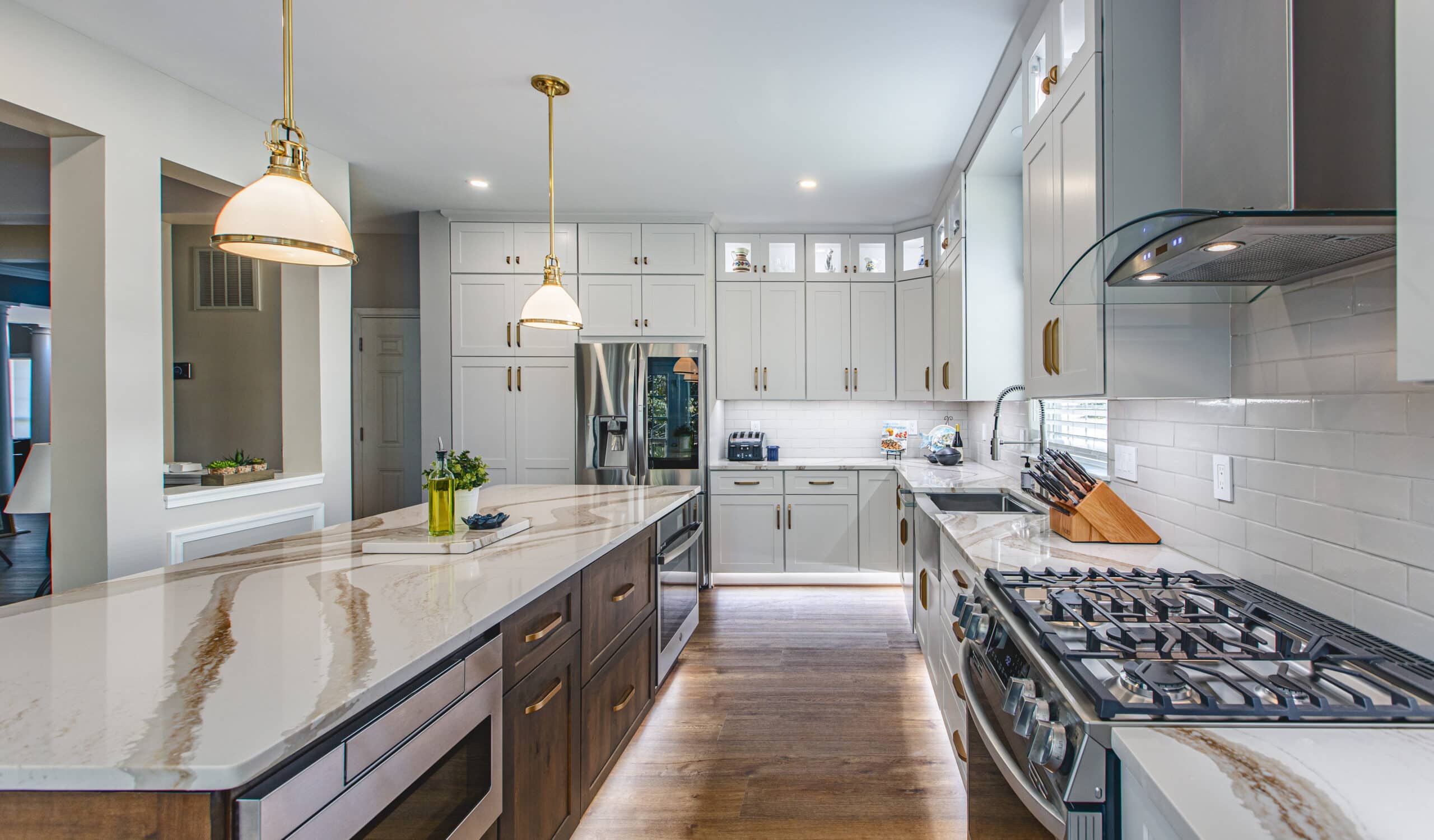
Kitchen Remodel Levels: What You Get at Each Price Point
Understanding what’s included at different budget levels helps you align expectations with investment. Here’s what each tier typically delivers.
Minor/Basic Remodel ($15,000–$35,000 nationally; $25,000–$45,000 in NOVA)
A minor remodel focuses on visual and functional updates without changing the kitchen’s footprint or infrastructure. The goal is maximum impact from strategic surface-level improvements.
Cabinet work at this level means refinishing or refacing existing cabinets rather than replacement. Professional cabinet painting costs $3,000–$6,000 for a medium kitchen. Refacing (new doors, drawer fronts, and hardware while keeping existing boxes) runs $5,000–$12,000. New hardware alone—modern pulls and knobs—adds $200–$800 and provides surprising visual impact.
Countertops move from dated laminate or tile to either high-end laminate or entry-level quartz. Budget $1,500–$4,000 depending on material choice and counter area.
Backsplashes get updated with ceramic or porcelain subway tile ($10–$20 per square foot installed) or budget-friendly glass tile ($15–$30 per square foot). Most minor remodels include $600–$2,000 for backsplash work.
Appliances are selectively replaced rather than completely upgraded. Swapping out a dated range and dishwasher while keeping a functional refrigerator saves money. Budget $1,500–$4,000 for strategic appliance updates.
Lighting improvements—under-cabinet LEDs, updated pendant fixtures, adding recessed cans—typically run $500–$2,000 and dramatically improve both function and ambiance.
Key constraint: The original layout stays intact. Plumbing and electrical remain in their current locations. This avoids the most expensive labor categories.
Best fit: Homeowners planning to sell within 1–3 years (highest ROI tier), budget-conscious updates, or kitchens with good layouts that simply need modernization.
Mid-Range Remodel ($35,000–$90,000 nationally; $45,000–$95,000 in NOVA) and Major/Full-Gut ($95,000–$150,000 in NOVA)
A mid-range remodel represents a comprehensive overhaul—new cabinets, countertops, appliances, flooring, and often modest layout improvements. This is the typical “gut and replace” scope for long-term homeowners.
Cabinetry at this level means semi-custom units with better construction quality (plywood boxes, soft-close hardware), more style options, and sizing flexibility. Budget $8,000–$25,000 depending on kitchen size and cabinet line selection.
Countertops upgrade to mid-tier quartz, granite, or solid surface materials. At $75–$125 per square foot installed, most mid-range projects allocate $3,000–$7,000 for counters.
Full appliance suites from mid-range brands (Bosch, KitchenAid, GE Profile, Samsung) including refrigerator, range, dishwasher, and microwave typically run $5,000–$10,000 as a coordinated package.
Flooring covers the full kitchen with quality materials—engineered hardwood at $8–$15 per square foot or premium LVP at $5–$10 per square foot. Budget $2,000–$5,000 for flooring in most medium and large kitchens.
Layout modifications become practical at this budget level. Adding a modest island, removing a peninsula, or reconfiguring door swings improves flow. Minor structural changes, plumbing adjustments, and electrical updates add $3,000–$10,000 depending on scope.
Lighting gets comprehensive treatment with a layered plan: recessed ambient lighting, under-cabinet task lights, and decorative pendants. Budget $1,500–$4,000 for complete lighting transformation.
Best fit: Homeowners staying 5+ years who want functional improvements and updated aesthetics without luxury-tier spending.
High-End/Upscale Remodel ($90,000–$200,000+ nationally; $150,000–$300,000+ in NOVA)
An upscale remodel represents a full transformation—often architect- or designer-led—with premium materials, custom craftsmanship, and significant structural or layout changes.
Custom cabinetry built to exact specifications allows unlimited design flexibility, exotic wood species, furniture-grade construction, and integrated specialty storage. At $500–$1,500+ per linear foot, cabinetry often represents $30,000–$75,000+ of an upscale budget.
Premium countertops move beyond standard quartz to natural quartzite, exotic granites, book-matched marble, or specialty surfaces like Dekton or porcelain slabs. At $100–$250+ per square foot, countertop costs can reach $7,000–$15,000+.
Professional-grade appliances define the high-end kitchen: pro-style ranges, built-in refrigeration, steam ovens, warming drawers, built-in coffee systems. Complete professional appliance packages typically run $20,000–$50,000+.
Structural changes are standard at this level: removing load-bearing walls, adding windows or skylights, relocating major plumbing stacks, and HVAC modifications for range ventilation or radiant heating.
Custom features include specialty lighting control systems (Lutron, Control4), integrated smart home connectivity, designer plumbing fixtures ($2,000–$5,000+ for high-end sinks and faucets), and architectural details like custom range hoods or furniture-style islands.
Design and project management services—kitchen designers, architects, project managers—typically add 5–15% of project cost but are essential for coordinating complex high-end renovations.
Best fit: Forever homes, luxury properties, or homeowners with specific culinary requirements.
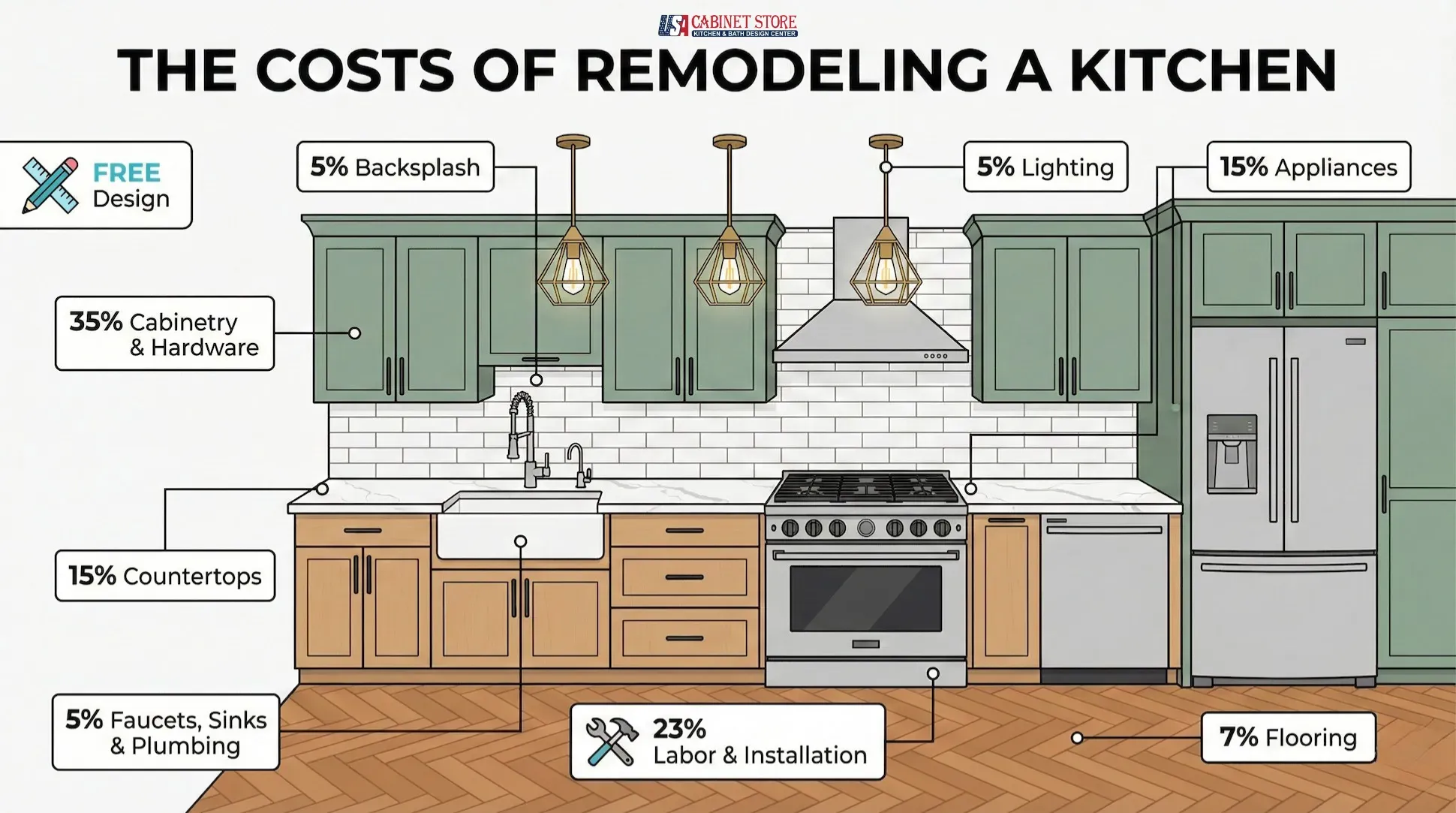
Kitchen Remodel Cost Breakdown by Component
Understanding where your dollars go helps you make informed trade-offs. Here’s how a typical mid-range kitchen remodel budget breaks down:
Cabinetry: 30–40% of Budget
Cabinets consume the largest share of most kitchen budgets—appropriately, since they define storage, workflow, and visual style.
Stock cabinets come in standardized sizes with limited finish options. Quality varies significantly; better stock lines use plywood construction while budget options use particleboard. A small kitchen might need $2,500–$5,000 in stock cabinets; a large kitchen $8,000–$15,000.
Semi-custom cabinets offer dimension modifications (typically in 3-inch increments), more door styles and finishes, and better construction standards. They represent the volume leader in mid-range renovations and deliver the best balance of quality, customization, and value for most homeowners.
Custom cabinets are built to exact specifications with no limitations on size, style, material, or finish. Lead times typically run 7–11 weeks from final design sign-off, or 10–14 weeks for European frameless lines like Bauformat.
Cabinet alternatives include refacing ($4,000–$12,000) and professional painting ($3,000–$8,000). Both deliver significant visual updates at lower cost than replacement.
Countertops: 10–15% of Budget
Countertops deliver outsized visual impact relative to their cost share.
Quartz (engineered stone) has become the most popular countertop choice in mid-range and upscale kitchens. It offers consistent patterns, excellent durability, and zero maintenance. Premium quartz brands (Cambria, Caesarstone, Silestone) command higher prices than value-oriented lines.
Appliances: 10–20% of Budget
Individual appliance ranges (2026):
- Refrigerator: $800–$15,000+ (standard to built-in)
- Range/Cooktop + Oven: $600–$15,000+ (freestanding to pro-style)
- Dishwasher: $400–$2,500 (builder to premium quiet)
- Range Hood: $200–$3,000+ (standard to custom)
- Microwave: $150–$2,000 (countertop to built-in drawer)
Labor: 20–35% of budget on cosmetic scopes, 35–50% on full remodels in 2026 as skilled-trade shortages push rates up
Labor’s share varies with project complexity. Surface-level renovations typically run 20–35% labor; projects involving significant plumbing, electrical, or structural work run 35–50%.
Trade labor rates vary significantly by region:
General contractor fees typically include 15–25% markup over direct trade costs, covering project management, scheduling, permits, insurance, and warranty.
Other Components
Flooring (5–10% of budget): LVP at $3–$10/sq ft, tile at $5–$15/sq ft, engineered hardwood at $8–$15/sq ft. Budget $1,500–$5,000 for most kitchens.
Lighting (3–5% of budget): Recessed cans ($150–$300 each installed), under-cabinet LEDs ($200–$600 total), pendants ($200–$1,000+ each). Budget $1,000–$5,000 total.
Backsplash (2–5% of budget): Ceramic subway at $10–$20/sq ft, glass mosaic at $25–$50/sq ft, natural stone at $30–$100/sq ft. Budget $600–$3,000.
Design services (5–10% of budget): $2,000–$8,000 for mid-range to high-end projects. Good design pays dividends in layout efficiency and avoiding expensive mistakes.
Permits (varies): $200–$1,500 depending on jurisdiction and scope.
Contingency (10–20% of budget): Essential for unexpected discoveries—outdated wiring, plumbing issues, moisture damage, or code compliance requirements.
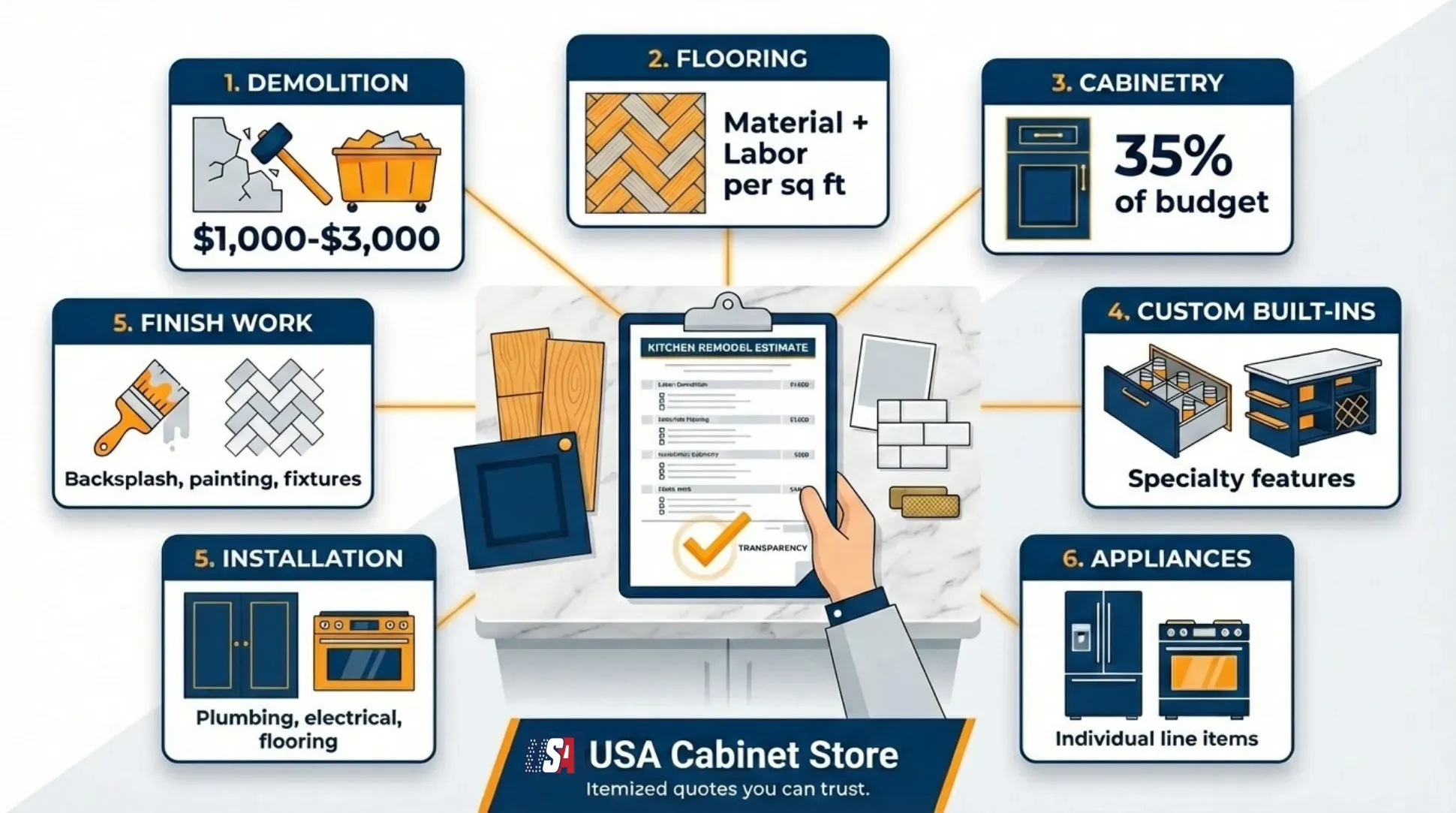
What a Detailed Kitchen Remodel Estimate Should Include?
One of the most common frustrations homeowners share is receiving a single lump-sum quote with no breakdown. As one homeowner put it: “Whether $50K is high or $20K is low depends on what you actually get for those amounts.”
A transparent, professional estimate should itemize costs so you can make informed comparisons and decisions. When reviewing quotes from contractors, look for these categories broken out separately:
Demolition and haul-away covers removing existing cabinets, countertops, flooring, and fixtures, plus disposal fees. This typically runs $1,000–$3,000 for a medium kitchen, but varies based on what’s being removed and local disposal costs. Knowing this number helps you understand whether DIY demo could save money—or whether the contractor’s price is reasonable for the labor involved.
Flooring with underlayment should show the material cost per square foot plus installation labor. A quote that just says “flooring: $3,500” doesn’t tell you whether you’re getting LVP at $5/sq ft or engineered hardwood at $12/sq ft. Ask for the breakdown so you can evaluate material quality against alternatives.
Cabinetry, hardware, and countertops represent the largest material costs and deserve detailed line items. You should see the cabinet line and door style specified, the linear footage, hardware allowance, and countertop material with square footage. Vague descriptions like “new cabinets and counters” make it impossible to compare quotes fairly. A good estimate might read: “Fabuwood Allure Galaxy Frost, 28 LF upper/lower, soft-close, quartz countertops (Calacatta Laza), 42 SF including backsplash.”
Custom built-ins and modifications include items like islands, pantry pull-outs, appliance garages, or wine storage. These should be itemized separately from standard cabinetry so you can see exactly what you’re paying for specialty features—and decide whether they’re worth the premium.
Finish-out work encompasses backsplash installation, wall prep and painting, light fixture installation, outlet and switch work, and plumbing connections. This category often gets buried in “labor” but can vary significantly. A tile backsplash installation might be $800; a full-height slab backsplash could be $3,000+. Electrical work for under-cabinet lighting differs from rewiring for a new island. Ask for specifics.
Appliances should be listed individually with brand, model, and price—not bundled as “appliance package.” This allows you to comparison shop, upgrade specific items, or supply your own appliances if you find a better deal. A line-item approach might show: range ($2,400), refrigerator ($2,800), dishwasher ($900), microwave ($450), range hood ($650).
Why this matters for your budget: Detailed estimates let you make apples-to-apples comparisons between contractors. A $45,000 quote with semi-custom cabinets, quartz counters, and mid-range appliances is very different from a $45,000 quote with stock cabinets, laminate counters, and a larger labor allowance. Without line items, you can’t tell which offers better value.
Red flags to watch for: Estimates that show only labor and materials as two line items, quotes that don’t specify cabinet brands or countertop materials, and contractors who resist providing detailed breakdowns. Reputable remodelers understand that transparency builds trust—and they’re willing to show their work.
At USA Cabinet Store, we provide itemized quotes that break down every component so you know exactly what you’re investing in. Our estimates specify cabinet lines, door styles, countertop materials, and hardware selections—because understanding your costs shouldn’t require guesswork.
What Real Homeowners Say About Kitchen Remodel Costs?
Research across Reddit, Quora, and home improvement forums reveals consistent patterns in how homeowners experience kitchen remodeling costs. Understanding these real-world perspectives can help you avoid common pitfalls and set realistic expectations.
The Expectation Gap Is Real
Homeowners systematically underestimate kitchen remodel costs by 20–40%, according to patterns across hundreds of forum discussions. The disconnect typically stems from three sources: relying on national averages that don’t reflect local markets, underestimating labor costs, and not accounting for feature creep during the design process.
One Chicago homeowner shared a common experience: they initially budgeted $30,000 for cabinets but ultimately spent $70,000 after the design process revealed features and upgrades they hadn’t considered during initial planning. This pattern repeats frequently—homeowners begin with estimates based on basic cabinet boxes but gradually add soft-close hardware, pull-out organizers, specialty storage, and upgraded finishes as they work through detailed plans.
The lesson: View your initial budget as a floor, not a ceiling. Industry professionals recommend adding 20–30% buffer for upgrades you’ll likely want once you see the options.
The Single Biggest Money-Saving Decision
Across forum discussions, one strategy emerged as the most impactful way to control costs: keeping your existing layout. Maintaining current sink, range, and refrigerator locations eliminates expensive plumbing relocation ($3,000–$8,000), gas line moving ($1,500–$4,000), and electrical panel upgrades often required when adding circuits to new locations ($2,000–$5,000).
One Minnesota homeowner emphasized this approach enabled their $35,000 complete remodel—a price point that would have reached $50,000–$60,000 with layout changes. If your current kitchen workflow functions reasonably well, investing in better materials within the existing footprint often delivers more value than reconfiguring the space.
What Homeowners Regret Skipping
Experienced renovators consistently identified specific areas where budget trimming proves counterproductive:
Undermount sinks versus drop-in emerged as a frequent regret. The upgrade costs only $200–$400 more but requires deciding before countertop fabrication. Several homeowners who chose drop-in sinks to save money wished they’d spent the extra—and faced $3,000+ to replace countertops if correcting the choice later.
Adequate electrical outlets proved consistently valuable. The advice “think you have enough outlets, then double it” recurred across multiple discussions. Homeowners who added extra outlets and dedicated circuits ($800–$1,500 during renovation) appreciated the investment daily, while those who economized complained about outlet scarcity and circuit overloads for years.
Quality range hood with proper venting represented another common regret. Cheap range hoods that recirculate rather than vent externally prove inadequate for serious cooking. Upgrading later requires ductwork installation through cabinets or walls ($2,000–$4,000). Investing in proper venting initially costs $1,500–$3,000 but delivers superior performance throughout the kitchen’s lifespan.
Cabinet construction quality matters more than most homeowners initially realize. Those who selected bargain cabinets often reported regret within 2–3 years as particleboard boxes sagged, doors misaligned, and finishes deteriorated. The cost difference between particleboard and plywood box construction adds $3,000–$5,000 to a kitchen, but the longevity difference spans decades versus years.
The Lifestyle Return on Investment
Forum discussions revealed that homeowners increasingly evaluate kitchen renovations through lifestyle enhancement rather than purely financial ROI—especially for those planning to stay in their homes long-term.
One homeowner summarized this perspective: “We spent $75,000 on our kitchen remodel and it has been completely worth it. We cook every meal and hardly ever go out. The improved functionality and the joy of being in a beautiful space adds value to our lives every single day that a spreadsheet can’t capture.”
Families consistently described improved daily routines, reduced cooking stress, and enhanced home enjoyment justifying renovation costs even when ROI calculations suggested more modest investments. Multiple homeowners noted they actually cook more frequently post-renovation simply because the improved kitchen made the activity enjoyable rather than frustrating.
Timeline Reality Check
Forum members reported that timelines almost always extend beyond initial estimates:
- Cabinet lead times: Counted from final design sign-off, stock lines take about 2–5 weeks, semi-custom 5–9 weeks, custom 7–11 weeks and European frameless 10–14 weeks. Add 1–3 weeks if the door style changes.
- Countertop fabrication: Requires measuring after cabinet installation, then 1–3 weeks for fabrication plus 1–2 days for installation
- Permit processing: Simple projects might take 1–2 weeks; projects with structural, electrical, or plumbing changes require 3–6 weeks in most jurisdictions
- Inspection scheduling: Each required inspection (electrical rough-in, plumbing, final) requires 3–7 days advance scheduling
The practical implication: families planning for a 6-week project should mentally prepare for 8–10 weeks. Building this buffer into your timeline reduces stress when inevitable delays occur.
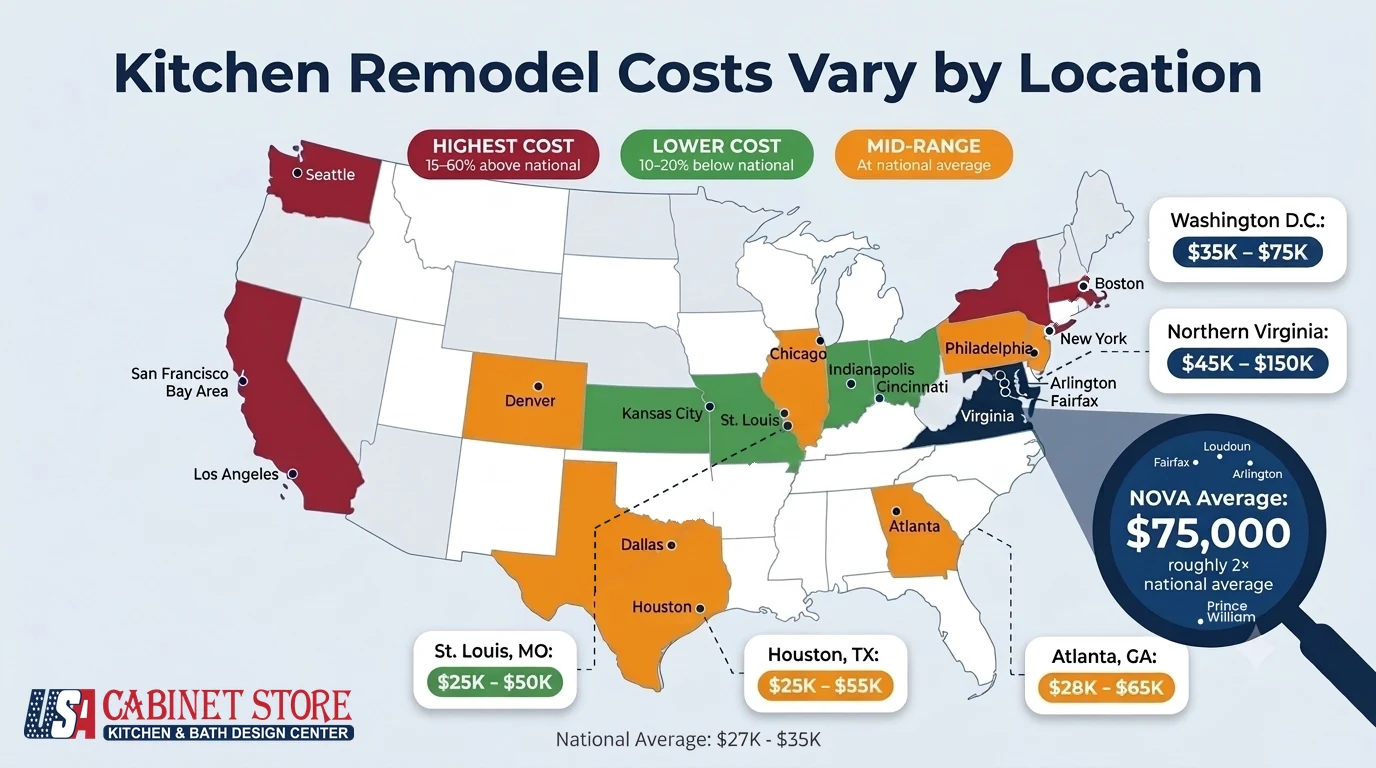
Kitchen Remodeling Costs by Region
Location significantly impacts total costs, primarily through labor rate differences and local cost of living.
Washington D.C. Metro Area
The D.C. metro—including Northern Virginia (Fairfax, Arlington, Loudoun, Prince William counties) and Maryland suburbs—represents one of the highest-cost kitchen remodeling markets in the country.
Typical project ranges in USA Cabinet Store markets:
- Washington D.C.: $35,000–$75,000
- Northern Virginia (Fairfax, Arlington, Loudoun): $45,000–$150,000
- Columbia, MD: $35,000–$70,000
- Chesapeake, VA: $28,000–$60,000
Premium communities like McLean, Great Falls, and North Arlington typically run an additional 15–25% above baseline NOVA costs due to larger homes, higher material expectations, and affluent market premiums.
Other Major Markets
Highest-cost metros (15–60% above national averages, highest in California): San Francisco Bay Area, New York City, Los Angeles, Boston, Seattle.
Mid-range markets (at or near national averages): Atlanta, Houston, Dallas, Denver, Philadelphia, Chicago.
Lower-cost markets (10–20% below national averages): St. Louis, Cincinnati, Kansas City, Indianapolis, and many Midwest and Southern metros.
Typical project ranges in other major markets:
- Houston, TX: $25,000–$55,000
- Atlanta, GA: $28,000–$65,000
- St. Louis, MO: $25,000–$50,000
Ultra-custom projects in luxury markets can exceed $600–$750 per square foot.
How Much of Your Home’s Value Should You Spend?
A traditional guideline suggests spending 5–15% of your home’s current value on a kitchen remodel. For a $400,000 home, that translates to $20,000–$60,000.
However, this rule has limitations in 2026’s market. Rising costs have pushed many homeowners to 15–25% of home value for comprehensive mid-range renovations—and they consider it worthwhile for daily quality of life. The old 5–15% range may be unrealistically low for markets where labor costs have surged.
Resale value considerations vary by market and scope:
- Minor kitchen remodels: ~113% ROI nationally
- Mid-range major remodels: ~50% ROI nationally
- Upscale remodels: ~36% ROI nationally
- Minor kitchen remodels in the Washington, DC market: ~101% ROI
- Northern Virginia: no separate figure in the report; Washington, DC is the closest market
Match kitchen quality to neighborhood norms. Over-improving for your market rarely pays back. A $150,000 kitchen in a neighborhood of $350,000 homes may not add commensurate value at resale. Conversely, a dated kitchen in an upscale area may actively hurt resale prospects.
Frequently Asked Questions: Kitchen Remodeling Costs
How much does a kitchen remodel cost in 2026?
According to our 16 years of experience and nationwide 14-showroom data, the average cost of a kitchen remodel in 2026 is $27,000–$35,000 nationally, with most projects landing between $15,000 and $75,000 depending on size, scope, and finish level. Minor cosmetic updates start near $15,000, mid-range renovations run $35,000–$90,000, and high-end projects climb past $90,000–$200,000+. In Northern Virginia, the average cost of a kitchen remodel rises to about $75,000 — roughly twice the national average — due to premium labor rates, complex permitting, and elevated material expectations.
What is the kitchen remodel cost per square foot in 2026?
Cost per square foot tracks with scope and location. Nationally, basic/cosmetic work runs $75–$150 per square foot, mid-range $150–$250, and high-end $250–$400+. In Northern Virginia, expect $125–$200 (basic), $200–$350 (mid-range), and $350–$500+ (high-end). Ultra-custom projects in luxury markets can exceed $600–$750 per square foot. Smaller kitchens often cost more per square foot, since fixed expenses like permits, design, and mobilization spread across less area.
How much does a 10×10 kitchen remodel cost?
A 10×10 kitchen (100 square feet, about 20–25 linear feet of cabinets) falls in the medium-kitchen range. Nationally, expect $18,000–$35,000 for a basic remodel, $35,000–$70,000 for mid-range work, and $70,000–$120,000+ for high-end finishes. In Northern Virginia, the same kitchen runs $30,000–$50,000 for a basic scope, $45,000–$95,000 for mid-range, and $100,000–$175,000+ for high-end.
How much does a 10×20 kitchen remodel cost?
A 10×20 kitchen (200 square feet) falls into the large category. Nationally, expect $25,000–$45,000 for basic work, $45,000–$90,000 for mid-range, and $90,000–$175,000+ for high-end finishes. In Northern Virginia, the same kitchen runs $40,000–$65,000 for basic work, $75,000–$130,000 for mid-range, and $150,000–$300,000+ for high-end. A 200-square-foot kitchen usually holds 35–45 linear feet of cabinetry plus a large island, so cabinetry alone can reach $15,000–$30,000 depending on the line you choose.
Can I remodel a kitchen for $15,000?
Yes — with realistic scope. A $15,000 budget covers cabinet painting or basic refacing, laminate or entry-level quartz counters, a simple backsplash, one or two appliance swaps, and cosmetic updates like hardware and lighting. It won’t stretch to new cabinets or a full appliance package in most markets.
How much does a kitchen remodel cost without new appliances?
Keeping your existing appliances trims 10–20% off a full-remodel estimate. Appliances usually account for $2,000–$10,000+ depending on tier, so a mid-range remodel quoted at $50,000 with a full suite might run $40,000–$45,000 if you keep your current refrigerator, range, and dishwasher. This works best when your appliances are newer, still performing well, and suit the design — just confirm they fit new cabinet dimensions and countertop layouts, especially built-in microwaves and dishwashers.
What is the 30% rule in remodeling?
The 30% rule is a budgeting guardrail: keep any single renovation under about 30% of your home’s value, with a kitchen specifically landing around 5–15%. There’s also a spending-split version — roughly 30% of your kitchen budget on cabinetry, 20% on labor, and the rest across countertops, appliances, and finishes. Both are guidelines, not hard limits; flex them to your priorities and how long you plan to stay.
How much does a kitchen remodel cost in California?
California — especially the San Francisco Bay Area, Los Angeles, and San Diego — is one of the priciest remodeling markets in the country, routinely 40–60% above national averages. A mid-range remodel that costs $50,000 nationally typically runs $70,000–$90,000 in California, and full gut renovations in the Bay Area often hit $100,000–$200,000+, with contractors quoting $500–$1,000 per square foot in premium areas like Marin County or Silicon Valley. The drivers: premium labor (40–60% higher wages), strict permitting ($3,000–$8,000 added), and higher material transport costs.
What’s the difference between stock, semi-custom, and custom cabinets?
Stock cabinets are pre-made in standard sizes at $100–$300 per linear foot and arrive in about 2–5 weeks from final design sign-off, the budget-friendly choice. Semi-custom cabinets like Showplace and Bertch add size, door, and finish options at $200–$650 per linear foot with 5–9 week lead times, and they’re where most homeowners land for the best balance of quality and value. Custom cabinets are built to exact specifications with unlimited options, running $500–$1,500+ per linear foot over about 7–11 weeks, or 10–14 weeks for European frameless lines like Bauformat. Depending on the projects those lead times are changeable. You should ask to our showrooms or to your contractor for the best times.
What is the most expensive part of a kitchen remodel?
Cabinetry, almost always — 30–40% of most budgets, or $15,000–$20,000 on a $50,000 project. Labor is typically next. The exception is high-end kitchens, where a professional appliance package (think Wolf, Sub-Zero, Thermador) can rival or exceed cabinet costs.
How much profit should a contractor make on a kitchen remodel?
A reputable contractor typically builds in a 15–25% markup over direct costs — covering project management, permits, insurance, and warranty — landing around 10–20% net profit. On a $50,000 kitchen, that’s roughly $7,500–$12,500 in gross margin. A markup well below that can signal corners being cut; well above it, without premium service to match, is worth questioning.
How long does a kitchen remodel take?
It depends on scope: minor remodels take 2–4 weeks, mid-range projects 6–10 weeks, and high-end renovations 12–20 weeks or longer once work starts on site. Cabinet lead time comes on top, counted from final design sign-off: about 2–5 weeks for stock lines, 5–9 weeks for semi-custom, and 7–11 weeks for custom. Build in buffer for permitting, material delays, and surprises; permit processing in Fairfax County adds 2–4 weeks, and other jurisdictions vary.
Should I hire a kitchen designer?
For projects over $30,000–$40,000, professional design usually pays for itself through smarter layouts, fewer costly mistakes, and tighter specifications. Budget 5–10% of project cost — roughly $2,000–$8,000 for mid-range to high-end work. Many cabinet suppliers, including USA Cabinet Store, offer design services that can be credited toward your purchase.
Can I get a kitchen remodel estimate from Home Depot or Lowe’s?
Yes — both Home Depot and Lowe’s offer free kitchen design and estimates. Their stock lines (Hampton Bay at Home Depot, Kitchen Classics at Lowe’s) start at $100–$300 per linear foot installed. A 10×10 kitchen with stock cabinets from either runs $4,000–$8,000 for cabinets alone, or $18,000–$35,000 as a complete basic remodel with installation, counters, and backsplash. Big-box works well for standard layouts; kitchens with unusual angles, non-standard ceiling heights, or specific storage needs often do better with semi-custom options.
Is it cheaper to remodel or move?
Selling and buying carries transaction costs — realtor commissions, closing costs, and moving — of 8–12% of home value, or $32,000–$48,000 on a $400,000 home. If your current location, lot, and layout still suit you, putting that money into a kitchen transformation often makes more financial sense than moving.
Planning Your Kitchen Remodel: Next Steps
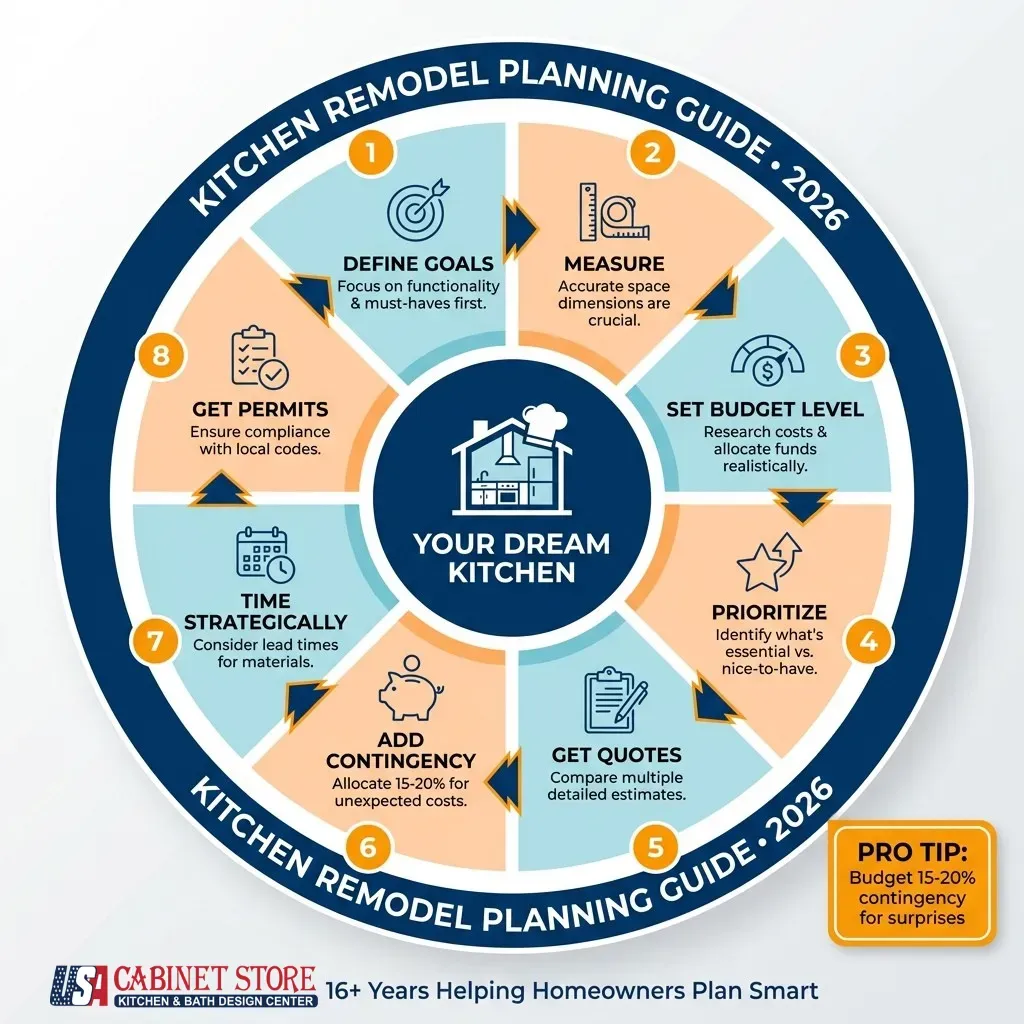
- Define your goals clearly. Are you focused on resale value, daily functionality, entertaining capacity, or cooking performance? Your priorities should drive material and scope decisions.
- Measure your kitchen accurately. Square footage and linear cabinet feet determine material quantities. Bring dimensions when shopping for estimates.
- Choose your remodel level realistically. Align your vision with your budget. A well-executed mid-range remodel delivers more satisfaction than a stretched upscale project with cut corners.
- Prioritize high-impact investments. Cabinets, countertops, and lighting deliver the strongest visual and functional returns.
- Get multiple detailed quotes. Compare at least 3 contractor bids on equivalent scopes. Understand exactly what’s included and excluded.
- Build in contingency. Budget 10–20% beyond your target number. Surprises are the norm, not the exception.
- Consider timing strategically. Late fall and winter (November–February) often offer better contractor availability and sometimes 5–10% off-season discounts for interior projects.
- Don’t skip permits. Permitted work is inspected work, which protects you legally and at resale.
Ready to Start Your Kitchen Remodel?
USA Cabinet Store brings 16+ years of kitchen and bath remodeling expertise to homeowners across America. Our family-owned company offers access to industry-leading cabinet brands at competitive prices—from affordable stock options to luxurious custom cabinetry.
What we offer:
- Design showrooms across key markets where you can see and touch materials
- Expert design consultation to optimize your layout and material selections
- Vetted contractor network for complete installation services
- Transparent pricing with no hidden fees or surprises
- Nationwide cabinet shipping with styles from traditional to contemporary
- Licensed, bonded, and insured with labor warranty on all installations
Whether you’re planning a budget-conscious refresh or a complete luxury transformation, our team provides honest guidance based on thousands of completed projects.
Try the Northern Virginia Remodeling Cost Calculator for instant, location-specific estimates.
Provided by USA Cabinet Store Define your dream space and your live cost projection appears at the bottom. © USA Cabinet Store. All Rights Reserved. Visit our official website:
usacabinetstore.com
NOVA 2026 Pricing Index v3.3 Updated for 2026 Market Rates
Northern Virginia Remodeling Budget Planner

Project Configuration
Schedule a Free Design Consultation
Last Updated: October 2026
Sources: 2025 Cost vs. Value Report (Zonda), Houzz Kitchen Trends Study, HomeLight, Fixr, Angi, regional contractor data, USA Cabinet Store project records.