
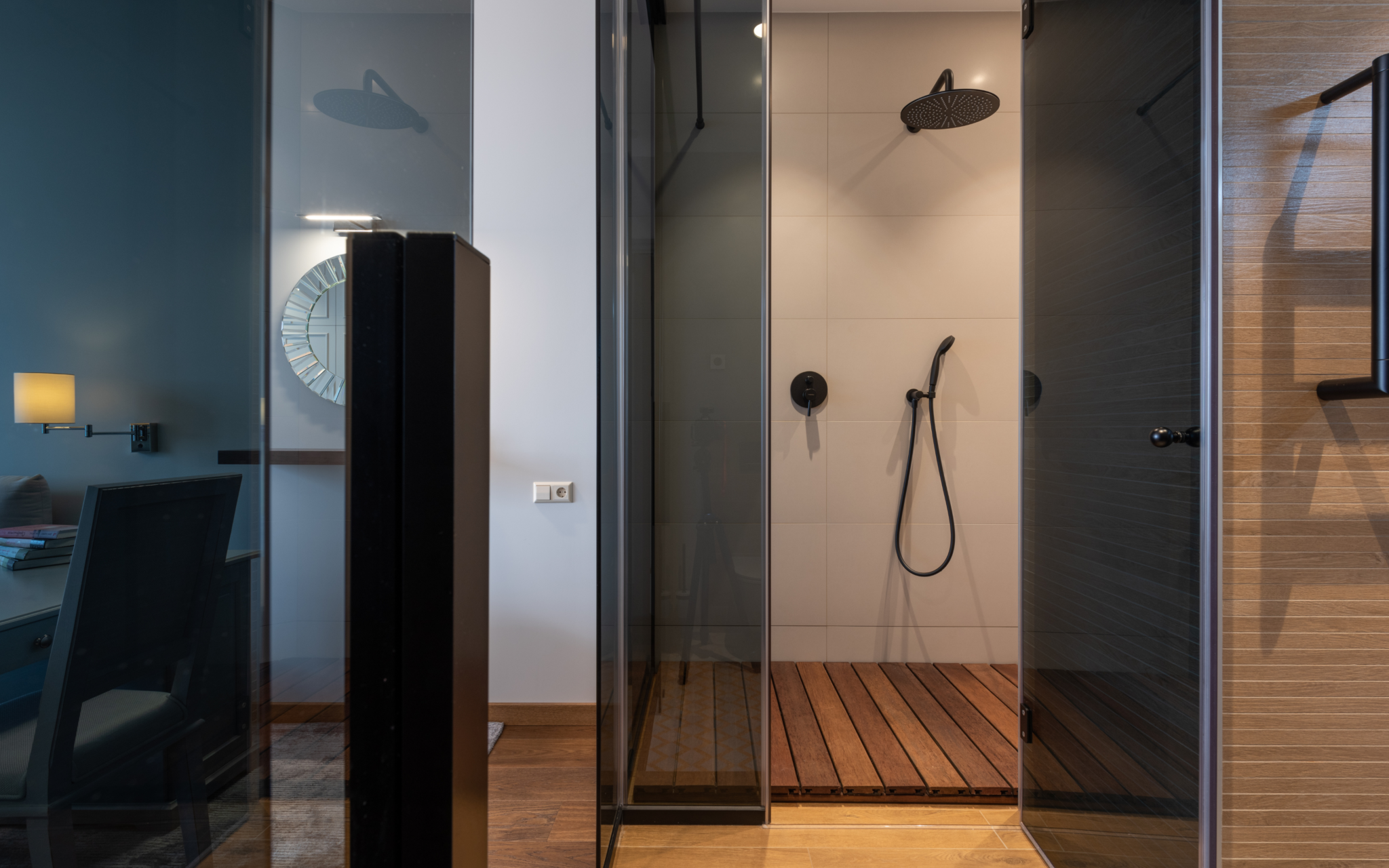
Key Factors That Impact Shower Remodel Cost
Every shower project is unique, but a handful of variables drive most of the price differences you will see from one quote to the next. Understanding these factors helps you make tradeoffs that match your priorities and your wallet.
Type of Shower
The kind of shower you want—tub-and-shower combo, prefab walk-in stall, custom tiled enclosure, or full wet room—determines the baseline complexity and cost. A simple prefab swap with fiberglass panels can wrap up in one to three days, while a custom-tiled walk-in with a curbless threshold may keep your contractor busy for four to six weeks.
Size and Layout
Bigger showers require more tile, more waterproofing membrane, and more labor hours. But the real cost jump often comes from layout changes. Moving the drain even a few inches on a concrete slab can mean jackhammering and re-patching—an added $500 to $1,500 per fixture relocated in 2026.
Materials
Surface materials create the biggest visual impact and the widest price swing. Standard porcelain tile runs $2 to $15 per square foot for materials alone, while handmade Zellige tiles can reach $35 per square foot, and natural stone slabs push past $300 per square foot at the luxury end.
| Material | Material Cost / sq ft | Installed Cost / sq ft |
|---|---|---|
| Ceramic tile | $2 – $10 | $10 – $25 |
| Porcelain tile | $2 – $15 | $15 – $50 |
| Glass tile | $7 – $30 | $35 – $60 |
| Mosaic tile | $5 – $25 | $22 – $45 |
| Zellige (handmade) | $10 – $35 | $25 – $55+ |
| Natural stone (marble, quartzite) | $15 – $50 | $20 – $65 |
| Stone slabs (grout-free) | $75 – $300 | Custom quote |
| Solid surface panels (Swanstone, Corian) | $1,000–$1,300 / 3-wall kit | 1-day install |
Plumbing
Plumbing is the invisible backbone of your shower and the most volatile line item. Licensed plumbers in 2026 charge $85 to $175 per hour—an 8–10% increase over 2025—and most firms quote flat-rate pricing for standard tasks. A simple valve replacement may cost $400 to $800, while a full rough-in with relocated drains can run $3,000 to $20,000 depending on your foundation type and distance from the main soil stack.
If your home sits on a concrete slab, moving the drain even a few inches means jackhammering, re-routing the pipe, and patching the concrete. This can double or triple the plumbing cost compared to homes with a crawlspace or basement.
Benches, Niches, and Accessories
These upgrades add functionality and feel more expensive than they actually are—making them some of the best values in a shower remodel. A built-in tile niche keeps shampoo bottles off the floor for $200 to $1,200. A custom tiled bench adds $800 to $1,500 but transforms the shower into a place you actually want to linger. Grab bars ($100 to $350 each) are increasingly designed to double as sleek towel bars, blending safety with style.
Labor
Labor is the single biggest cost driver in 2026. The construction industry is facing a generational retirement cliff of skilled tradespeople, and that scarcity shows up in your quote. Reputable contractors are booking three to six months out in many markets. Here is what the major trades charge:
| Trade | 2026 Rate | Key Notes |
|---|---|---|
| Licensed plumber | $85 – $175/hr | 8–10% above 2025; most use flat-rate pricing |
| Tile installer (standard) | $12 – $22/sq ft | Herringbone/complex patterns add 20–30% |
| Tile installer (stone/large format) | $15 – $30/sq ft | Requires back-buttering, two-person lifts |
| General contractor markup | 13% – 22% | Covers coordination, scheduling, permits |
| Electrician (steam/smart features) | $60 – $145/hr | Required for 240V circuits, GFCI outlets |
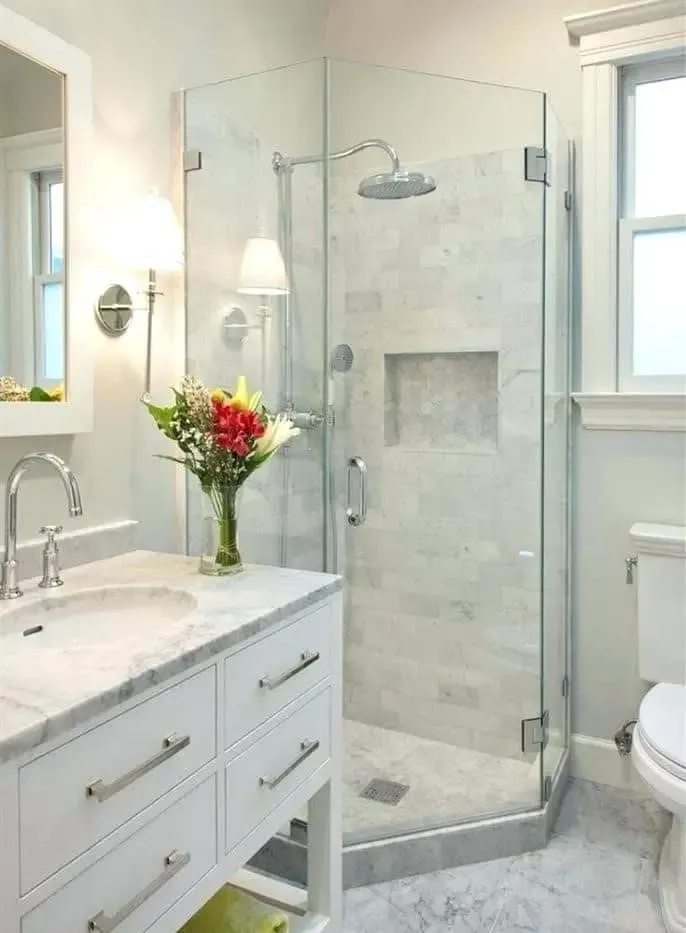
Shower Remodel Cost by Type of Project
Your total investment depends heavily on the scope of work. Here are the three most common project types homeowners tackle in 2026, plus the emerging wet-room category that is gaining ground fast.
Budget Tier: Cosmetic Refresh / Prefab Replacement
$2,895 – $4,500
This is the entry point—remove the old unit and drop in a fiberglass or acrylic stall kit. The kit typically includes the shower pan, wall surrounds, and sometimes a door mechanism in a single box. Labor is minimal (one to three days), and you skip the intensive waterproofing required for custom tile. This tier dominates the rental property market and secondary bathrooms where function matters more than style.
Mid-Range Tier: Standard Professional Remodel
$7,000 – $11,500
This is the sweet spot for most American homeowners. It involves tearing down to the studs, installing a proper waterproofing system (such as Schluter-Kerdi), laying porcelain tile walls with mosaic tile floors, and finishing with a frameless glass door. Plumbing work includes replacing the mixing valve for a fresh warranty and modern pressure-balancing safety features. Expect two to three weeks of active work and an ROI around 70–75% at resale.
High-End Tier: Luxury and Customization
$15,000 – $30,000+
This tier is defined by structural modifications and premium everything. Drains get relocated, walls may come down, and floor joists are reinforced for heavy stone. Material choices shift to natural stone slabs, Zellige tiles, and large-format porcelain. Smart digital valves, steam generators, body sprays, rain heads, linear drains, heated benches, and curbless entries are all on the table. Expect four to six weeks of work involving a master plumber, a master tile artisan, an electrician, and possibly a structural carpenter.
Wet Room Conversion
$13,000 – $35,000
The wet room eliminates the enclosed shower cubicle entirely—the entire bathroom becomes the shower zone. This maximizes space in smaller urban footprints but demands rigorous engineering. The whole floor must slope to a drain, waterproofing extends floor-to-ceiling across every surface, and the material and labor costs for tile and membranes effectively double compared to a standard shower.
| Component | Budget / Prefab | Mid-Range Custom | Luxury / Spa | Wet Room |
|---|---|---|---|---|
| Demolition | $400 | $1,200 | $2,500 | $3,500 |
| Plumbing | $600 | $1,500 | $5,000 | $4,500 |
| Waterproofing | Included in kit | $1,200 | $2,500 | $4,500 |
| Surfaces | $800 | $2,500 | $10,000 | $12,000 |
| Glass / enclosure | $300 | $1,200 | $3,500 | $1,500 |
| TOTAL (estimated) | $2,800–$4,500 | $7,200–$11,500 | $25,000+ | $26,000+ |
Shower Remodel Cost by Component
Breaking your budget into individual components helps you see exactly where the money goes—and where you have room to adjust.
Plumbing
| Plumbing Task | 2026 Cost |
|---|---|
| Rough-in new plumbing (full) | $3,000 – $20,000 |
| Drain / fixture relocation | $500 – $1,500 |
| Pressure-balancing valve install | $400 – $800 |
| Thermostatic valve + diverters | $1,500+ (labor alone) |
| Tub-to-shower conversion (plumbing only) | $3,000 – $8,000 |
Shower Pan
The shower pan is the watertight floor of your shower. Prefabricated acrylic pans ($150 to $800 for materials, $500 to $1,550 installed) offer leak-proof simplicity. Custom-poured concrete pans ($350 to $650 for materials, $900 to $1,500 for custom work) allow full design flexibility. A hot-mop pan (tar and felt, popular in Southern California) runs $225 to $500 for the pan alone.
Drain
Standard center drains cost $10 to $100 in materials, with complete kits running $100 to $300. Linear drains—the modern choice that allows a single-plane floor slope for large-format tiles—range from $70 to $400+ for the hardware and $300 to $500 installed. Note that linear drains usually require moving the waste line to the wall, which adds $900+ in plumbing.
Waterproofing
This is the most important invisible cost in your shower. Skimping here leads to structural rot, mold, and potentially $10,000+ in water damage repairs.
| Method | 2026 Cost | Best For |
|---|---|---|
| Sheet membrane (Schluter-Kerdi kit) | $640–$800 materials + $800–$1,200 labor | Standard professional remodels |
| Liquid applied membrane (RedGard, etc.) | $1,570–$1,945 per shower | Complex shapes, custom work |
| Hot mop (tar + felt) | $225–$500 (pan only) | SoCal tradition; pan only, needs hybrid approach |
Tile Surrounds
Your tile choice defines the visual identity of your shower. In 2026, large-format tiles (24”×48” and larger) are trending hard because they minimize grout lines, but they require a flatter substrate, lippage-control systems, and often two installers—driving labor to the higher end. Zellige tiles command a 50% labor premium over standard tile due to their handmade irregularity.
Shower Door / Enclosure
| Door Type | 2026 Installed Cost |
|---|---|
| Framed sliding door / curtain | $300 – $500 |
| Semi-frameless enclosure | $500 – $1,550 |
| Frameless hinged (3/8″ glass) | $1,000 – $2,500 |
| Frameless sliding | $1,200 – $2,000 |
| Custom heavy glass (1/2″, steam-rated) | $3,000 – $3,500+ |
Pro Tip: Hydrophobic glass coatings (such as EnduroShield) add $50–$200 but dramatically cut cleaning time by preventing water-spot buildup.
Bench
A custom tiled bench adds roughly $800 to $1,500 to the framing and tiling budget. Prefabricated benches are a budget-friendly alternative at $250 to $500. Floating teak benches offer a spa look without the tile labor.
Niche
A built-in shower niche (recessed shelf for toiletries) costs $200 to $1,200 depending on size, finish tile, and whether it requires blocking between studs. Place it at a height that is easy to reach while standing and low enough for leg-shaving—a detail homeowners frequently get wrong.
Grab Bars
Modern grab bars ($100 to $350 each installed) no longer look institutional. Many designs double as towel bars or shelf supports, and installing blocking during framing adds almost nothing to the cost while future-proofing the shower.
Average Cost to Remodel a Shower by Size
Shower size directly affects the amount of tile, waterproofing, and labor required. Here are 2026 averages by common dimensions:
| Shower Size | 2026 Average Cost | Notes |
|---|---|---|
| 30″ × 30″ (small stall) | $6,500 – $7,000 | Compact; common in condos |
| 32″ × 60″ (standard tub-to-shower) | $3,000 – $8,000 | Most common conversion size |
| 36″ × 36″ (corner stall) | ~$7,057 | Popular neo-angle option |
| 42″ × 42″ (neo-angle) | $4,000 – $10,000 | Corner footprint, spacious feel |
| 60″ × 36″ (large walk-in) | $7,089 – $10,000 | Room for a bench |
| 72″ × 48″ (luxury walk-in) | $8,000 – $15,000+ | Spa-grade; dual showerheads common |
Saving Money on Your Shower Remodel
- Keep plumbing in place. Moving a single fixture costs $500–$1,500 per fixture relocated, which can eat half a modest budget overnight.
- Choose porcelain over marble. Porcelain performs just as well in a wet environment at roughly one-fifth the cost of natural stone.
- Use a prefab pan instead of a custom tile pan to save $500–$2,000 without sacrificing waterproofing reliability.
- Handle demolition yourself. DIY demo saves 10–15% of total project cost with minimal skill required.
- Book in January or February. Labor rates run 10–20% lower during the slow season, and contractor availability is at its peak.
- Consider solid-surface panels (Swanstone, Flexstone). They look better than fiberglass, cost less than tile, and eliminate grout maintenance entirely.
- Skip the trendy finishes. What is stylish in 2026 may look dated by 2031. Timeless materials protect your investment.
Hiring a Contractor
For any project involving plumbing relocation, electrical work, or structural changes, a licensed contractor is the safer and often cheaper choice in the long run.
In 2026, general contractor markups typically range from 13% to 22% of the total project cost—a fee that covers trade coordination, permit management, inspection scheduling, and the expertise to catch problems before they become expensive.
Get at least three detailed, written quotes. Make sure each one specifies the waterproofing system by name (not just “we will waterproof it”), includes a line item for permits, and states a clear timeline with milestones. Ask about warranty coverage on both labor and materials.
- Valid state license and liability insurance (ask for certificate)
- References from at least three recent bathroom projects
- Named waterproofing system in the written estimate
- Permit line item and willingness to pull permits
- Written warranty on labor (minimum one year)
- Realistic timeline with start and completion dates
- Contingency clause for hidden damage (pre-authorized remediation)
Maintaining Your New Shower
Protecting your investment starts the day the project wraps. Here is what keeps a new shower looking and performing like new for decades:
- Seal natural stone annually. Stone absorbs moisture and stains without a protective sealer. Schedule this every 12 months.
- Use epoxy grout from the start. It costs more than cement grout during installation but never stains, never cracks, and saves you years of scrubbing—the number-one regret among homeowners who chose white cement grout.
- Run your exhaust fan for 20 minutes after every shower. Proper ventilation prevents mold growth and protects the waterproofing membrane behind the tile.
- Squeegee glass doors after each use. A quick swipe removes mineral deposits before they harden. If your glass has a hydrophobic coating, this step is even faster.
- Inspect caulk joints every six months. Caulk (not grout) fills the expansion joints where walls meet the floor and where the glass meets tile. Cracked caulk is the most common source of leaks in a tiled shower.
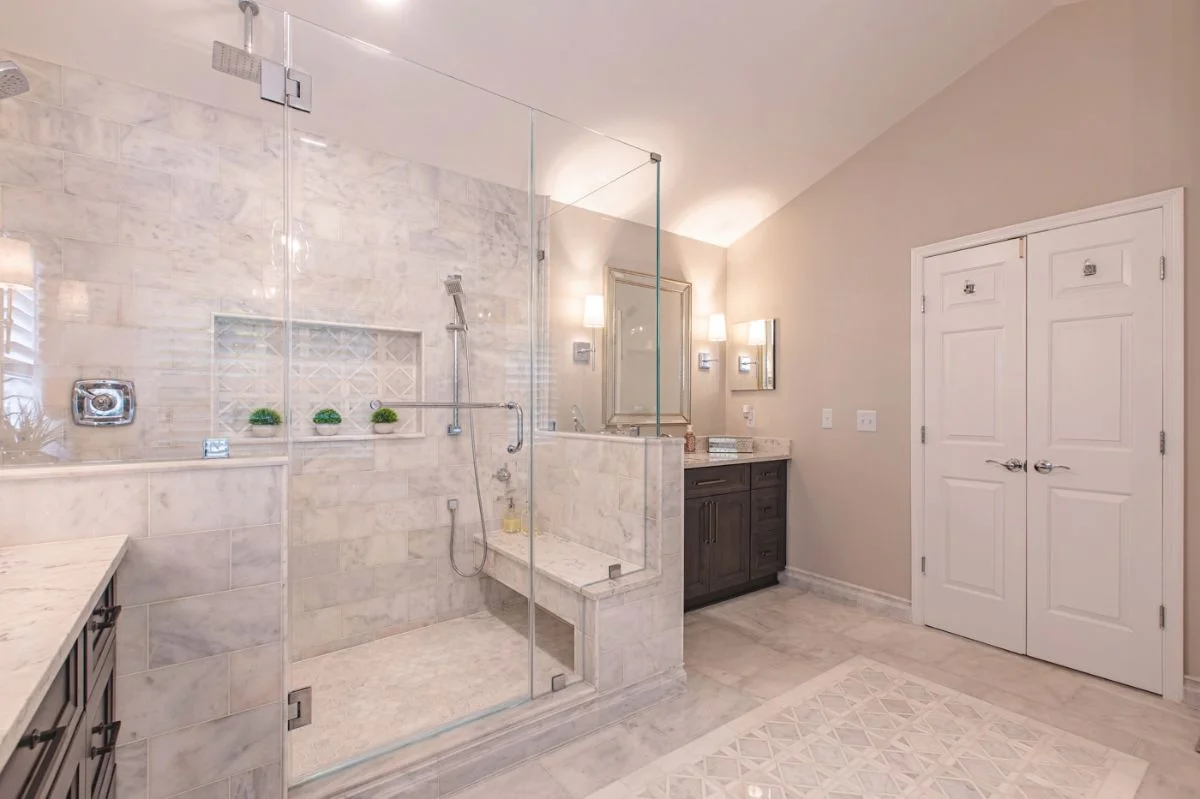
2026 Shower Design Trends
The shower has evolved from a utilitarian box into a wellness sanctuary. Here is what designers and homeowners are gravitating toward this year:
- Curbless / barrier-free showers: Zero-threshold entries are the top accessibility and design trend, adding $500–$1,500 for the structural floor work.
- Smart shower systems: Digital valves ($800–$3,500) let you preset water temperature, start the shower remotely, and monitor water usage.
- Steam showers: Home wellness is booming. Prefab steam systems start around $2,800 and custom builds reach $25,000. A steam setup requires a 240V circuit, sloped ceiling tile, and vapor-proof enclosure.
- Large-format and slab tiles: Minimizing grout lines with 24”×48” tiles or full porcelain slabs creates a seamless, easy-to-clean look.
- Bold, saturated tile colors: White subway tile is giving way to jewel tones, earth tones, and organic textures.
- Biophilic design: Wood-look tile, pebble floors, living plants, and natural light bring nature into the shower space.
- Curved shower profiles: Walls, doorways, and layouts are moving away from sharp rectangles toward softer organic shapes.
- Linear drains: A functional and aesthetic upgrade that enables large-format floor tiles with a single-plane slope. Hardware runs $70–$400+.
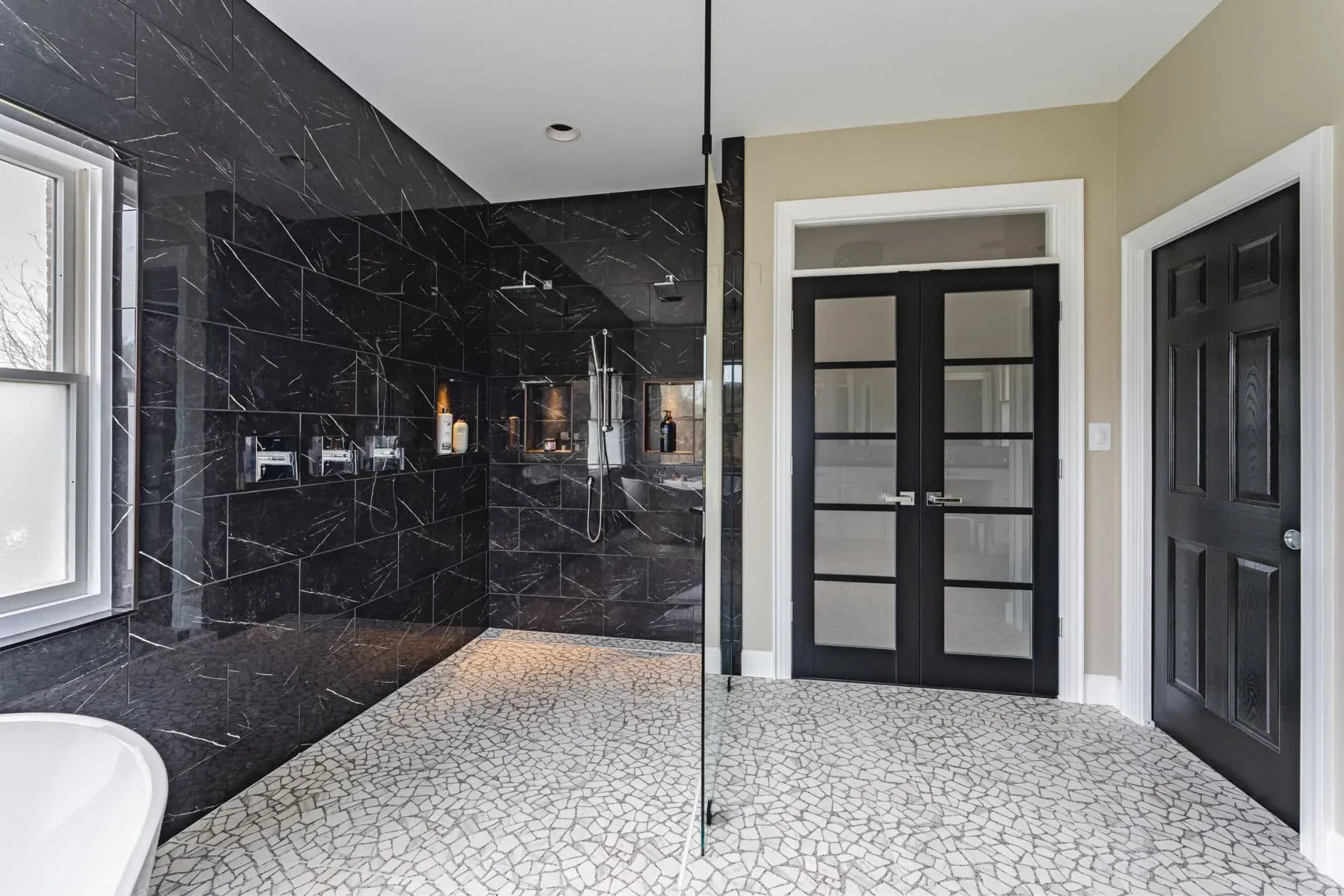
Frequently Asked Questions For Shower Remodeling Cost
How much does a walk-in shower remodel cost?
A standard walk-in shower remodel in 2026 typically falls between $6,000 and $12,000 for a basic 32” × 60” conversion. Real homeowners consistently report contractor quotes landing in the $8,000–$10,000 range for a quality, mid-range installation with porcelain tile and frameless glass. Costs rise another 20–30% if you want a curbless (zero-entry) design, because the subfloor must be recessed to create a seamless transition.
Should I DIY my shower remodel or hire a contractor?
DIY makes sense when the project is cosmetic (paint, fixtures, simple re-tiling with no plumbing moves) and you have four to ten weeks to commit. You can save 40–65% of the total cost by eliminating labor.
However, if the project involves moving plumbing, electrical work, or structural changes, hire a licensed contractor. Improper waterproofing—the most critical element—causes water damage that costs $10,000 or more to fix. As experienced DIY renovators warn: plan for the project to take three times longer than you expect.
Can you remodel a shower for $5,000?
Yes, but only if you strictly limit the scope to cosmetic updates within the existing layout. Keep all plumbing in place (moving a single fixture costs $500–$1,500 per fixture relocated), use a prefabricated fiberglass or acrylic shower unit ($1,000–$1,500), and handle demolition yourself. A $5,000 budget focuses on surface-level improvements rather than stud-level changes.
What is the least expensive way to redo a shower?
Reglazing (resurfacing) your existing tile or tub is the cheapest option at $300 to $700, saving up to 75% compared to replacement. A professional glaze lasts 10–15 years. The next cheapest option is a prefabricated shower unit at $800–$2,500 installed. Solid-surface acrylic panels (Flexstone, Swanstone) offer a step up in appearance while eliminating grout maintenance.
Should I choose a shower or bathtub for resale value?
In 2026, showers have the edge for most markets. Homes with showers as the primary bathing option sell for an average of 10% more than those with only tubs, with homeowners receiving roughly $1,583 more on average. The ideal configuration for the broadest buyer appeal: keep at least one tub in the home (families with young children need it), and install walk-in showers in every other bathroom.
What are the biggest mistakes people make in shower remodels?
The most common regrets reported by homeowners include: choosing white or light grout (stains quickly, requires constant upkeep—use medium gray or epoxy instead), selecting chrome fixtures (shows every water spot—brushed nickel or matte black is more forgiving), placing the shower niche at the wrong height, skipping heated floors (cheap to install during construction, expensive to retrofit), and failing to allocate a 15–20% contingency fund for hidden damage behind walls.
Why is a shower remodel so expensive?
Much of the cost is invisible. You are paying for waterproofing systems that prevent structural rot, licensed plumbers and master tile setters who command $85–$175 per hour, code-compliant electrical and plumbing work, permits, and a contingency buffer for the hidden water damage or mold that shows up in the majority of tear-out projects. Labor alone accounts for 40–65% of the total ticket.
How much do plumbers charge to change a shower?
Plumbers typically charge $85 to $175 per hour in 2026. A simple fixture swap on a raised foundation costs $850–$1,500 in labor. A full tub-to-shower conversion with rerouted drains and supply lines runs $3,000–$8,000 for plumbing alone. On slab foundations, the cost can double or triple because the concrete must be cut and patched.
Is it cheaper to reglaze tile or replace it?
Reglazing is significantly cheaper: $300–$700 versus $1,500–$5,000 for full replacement. Choose reglazing if the underlying tile is structurally sound but cosmetically dated. However, if you see cracked tiles, loose grout, or spongy walls, do not reglaze—these signal water damage behind the surface, and covering them up leads to far more expensive structural repairs later.
What is the most expensive part of a bathroom remodel?
Plumbing relocation and tile labor consistently top the list. Moving a shower drain or fixture costs $500–$1,500 per fixture relocated, relocating a toilet runs $2,500–$3,500, and professional tile installation averages $16–$20 per square foot as of January 2026. Custom frameless glass enclosures ($1,400–$3,300 installed) round out the big-ticket items.
What is a realistic budget for a bathroom remodel in 2026?
For a complete tear-out and rebuild: guest or kids’ bath $8,000–$35,000 (budget to high-end), mid-range primary bath $29,000–$50,000, luxury primary bath $60,000–$120,000+. The national average for a full bathroom remodel is $16,500.
A useful guideline: spend 5–10% of your home’s value on a primary bathroom remodel for optimal resale return. Always hold back 15–20% of the budget for contingencies.
What should I not skimp on in a shower remodel?
Never cut corners on waterproofing (use systems like Schluter-Kerdi or RedGard), the shower valve (invest $500–$1,500 in a quality thermostatic valve), ventilation (prevents mold and structural damage), and grout (epoxy grout costs more upfront but never stains or cracks). You can safely save on tile choice (porcelain performs like marble at a fraction of the cost), by using a prefab shower pan, and by doing your own demolition.
How long will my bathroom be out of commission?
With a professional contractor, a shower remodel takes two to four weeks. A full bathroom renovation takes three to six weeks. DIY projects should be planned for four to ten weeks or longer. Arrange alternative shower access before work begins—a gym membership, a guest bathroom, or even a temporary RV shower in the basement.
When is the best time of year to remodel a shower?
January and February offer the best pricing and availability: labor rates run 10–20% lower, and contractors are eager for work. Fall (September through November) offers a good balance of pricing and convenience. Peak season (May through August) brings the highest costs and wait times of three to six months. Regardless of timing, book your contractor two to three months ahead (six or more months for peak season).
Regional Cost Variances
Construction costs across the United States vary by as much as 40% depending on where you live. Here is how major regions compare to the national average in 2026:
| Region | Cost vs. National Average | Key Factors |
|---|---|---|
| Northeast (Philadelphia / NJ / NY) | +10% to +20% | Union density, older homes, strict disposal laws |
| Pacific Northwest (Seattle) | +6.6% annual rise | Tech-sector demand, high cost of living |
| California | +15% to +25% | Title 24 energy standards, water-conservation fixtures |
| Southeast (Florida) | Variable | Hurricane/flood compliance, waterproofing codes |
| Rural / Midwest | −5% to −10% | Lower labor rates (offset by delivery trip charges) |
Invest in Yourself with a Shower Remodel
A well-planned shower remodel is more than a home improvement project—it is an investment in how you start and end every day. The 2026 market rewards homeowners who budget for the invisible (waterproofing, quality plumbing, proper ventilation) and plan for the unexpected. Mid-range bathroom remodels are returning roughly 80% of their cost at resale, the highest ROI since 2007.
Whether you are upgrading a basic builder-grade shower or building a spa-grade retreat with steam, smart controls, and curbless entry, the key is the same: know your costs, hire the right team, and invest in the infrastructure that you cannot see. The tile and glass get the compliments, but the waterproofing and plumbing protect your home for decades.
USA Cabinet Store offers free design consultations and competitive pricing on shower components, vanities, and bathroom fixtures. Contact us today to turn your vision into reality.