
Most DC bathrooms have the same problem. The bones are good—solid plaster walls, decent square footage, maybe even original tile work from the 1940s. But the fixtures? The layout? Stuck somewhere between “builder grade” and “that renovation the previous owner did in 2009.”
We hear the same question in our showrooms every week: how do I make this room feel current without gutting the character that makes my home a DC home?
Classic modern design answers that. It keeps what works about older homes—proportions, natural materials, clean geometry—and swaps in better fixtures, smarter storage, and finishes that actually hold up to daily life.
A lot has changed since we first wrote this guide in 2022. Chrome disappeared. Brushed brass and matte black took over. Painted white shaker cabinets gave way to sealed oak and walnut with visible grain. Vanities moved off the floor and onto the wall. And touchless faucets, smart mirrors, and programmable showers went from “fancy upgrade” to “why wouldn’t you?”
The same direction showed up at Milan Design Week 2025, where sculptural stone basins and asymmetrical tub profiles dominated the floor displays (as covered in Decorilla’s 2026 bathroom trend forecast). Designer Jenny Marrs, partnering with Re-Bath, confirmed the shift: cool grays and stark whites are giving way to natural stone and wood. And Sherwin-Williams made it official—their 2026 Color of the Year, Universal Khaki (SW 6150), is a warm mid-tone tan. Not gray. Not white. Warm.
Here are four bathroom styles that work well in DC homes right now. We’ll cover what goes into each one, what it costs, which smart features are worth the money, and which DC neighborhoods each style suits best.
Classic Modern Bathrooms in DC
2026 Style Guide • 4 Styles • Real Costs
✕ What’s Out in 2026
• All-white bathrooms
• Chrome-only fixtures
• Gray & white color schemes
• Glossy floor tile
• Freestanding vanities on the floor
• Single overhead light fixture
Sources: House Digest, Livingetc, NKBA 2026 Report
✓ What’s In for 2026
• Warm earth tones (sage, terracotta, khaki)
• Brushed brass & matte black hardware
• Floating wall-mounted vanities
• Sealed white oak & walnut wood
• Microcement & large-format tile
• Smart mirrors & touchless faucets
Sources: Sherwin-Williams, Milan Design Week 2025, Emily Henderson
80%
ROI at Resale
$35K–$75K
DC Remodel Range
8–12
Weeks Timeline
77%
Want Spa-Like Baths
4 Styles That Work in DC
Tap each style to scroll down for full details, costs, and smart features
2026 Color Palette • Sherwin-Williams & NKBA Picks
Universal Khaki
SW 6150
Sage Green
NKBA Top Pick
Warm Terracotta
Earth Tone
Forest Green
Accent Tone
Amber Caramel
Zellige Tile
Warm Walnut
Vanity Wood
Not sure which style fits your home?
Match your DC neighborhood and home type to a style below ↓
10 Key Takeaways for Your Classic Modern Bathroom
Space & Flow: Floating vanities create the illusion of more space while providing accessible storage underneath
Natural Materials: Warm wood tones in moisture-resistant finishes like sealed white oak and teak are dominating vanity selections
Smart Integration: Touchless faucets, programmable showers, and smart mirrors with Bluetooth capabilities enhance daily routines
Texture Focus: Fluted and ribbed cabinet fronts add tactile interest while maintaining clean, modern lines
Color Evolution: Rich earth tones including sage green, warm terracotta, and deep forest hues replace stark whites
Sculptural Elements: Freestanding bathtubs and vessel sinks serve as artistic focal points rather than mere fixtures
Sustainability Priority: Water-saving fixtures and eco-friendly materials align with DC’s environmental consciousness
Lighting Innovation: Layered lighting schemes with LED integration and smart controls create spa-like ambiance
Storage Solutions: Vertical tower storage and hidden compartments maximize functionality in compact DC spaces
Wellness Design: Biophilic elements and natural textures promote relaxation and mental well-being
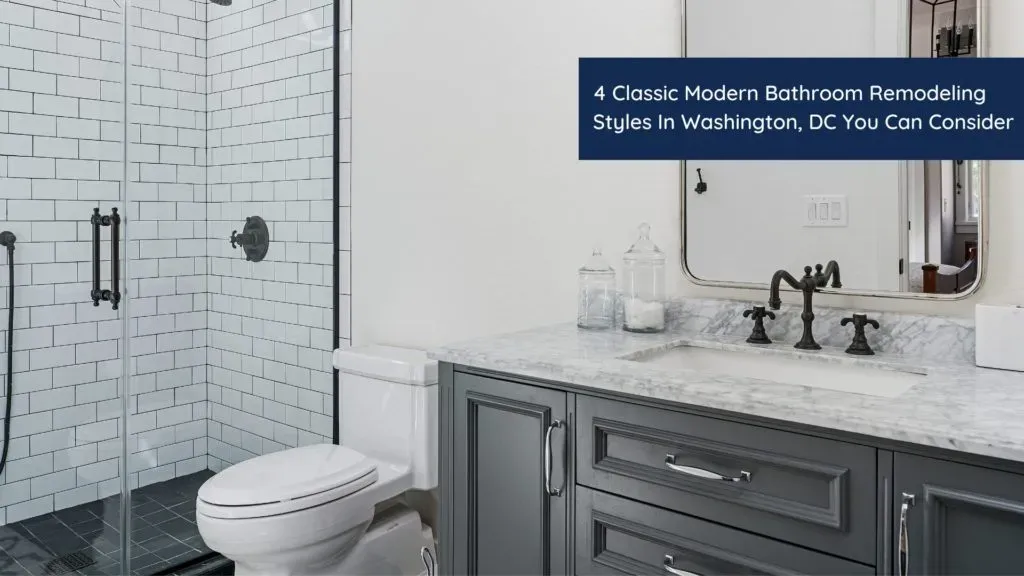
What’s Changed Since 2022
| Element | 2022 | 2026 |
|---|---|---|
| Fixtures | Chrome, polished nickel | Brushed brass, matte black, mixed metals |
| Cabinets | Painted white shaker | Sealed white oak, walnut, fluted fronts |
| Vanity Style | Freestanding on floor | Wall-mounted floating designs |
| Colors | Gray and white | Sage green, terracotta, warm khaki, forest |
| Tech | Optional upgrades | Touchless faucets, smart mirrors, digital showers |
| Surfaces | Subway tile, granite | Large-format porcelain, microcement, book-matched slabs |
| Priority | Looks first | Wellness, comfort, and sustainability |
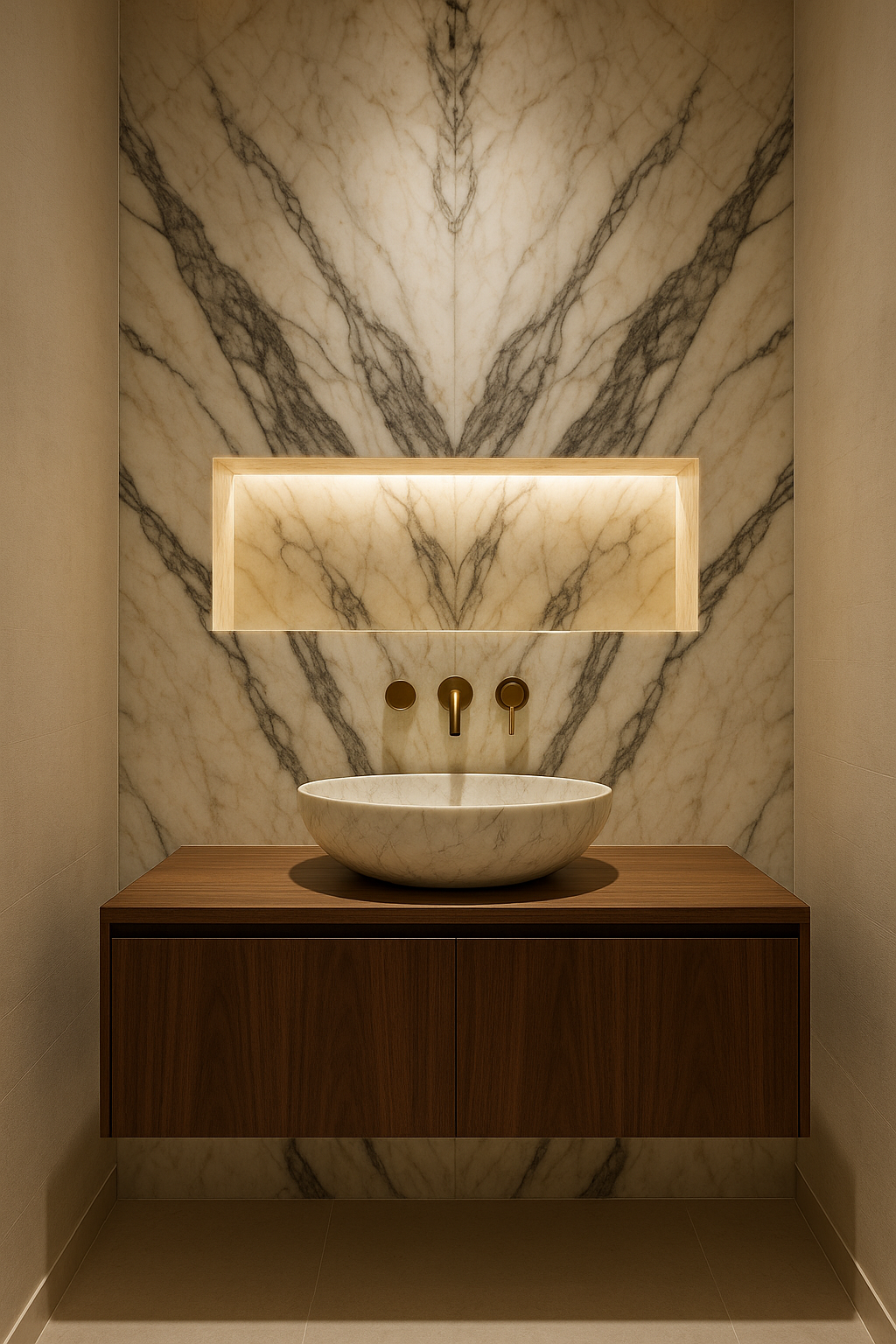
Style 1: Floating Wood Vanity with Smart Features
Best for: Georgetown row homes, Capitol Hill places, tight bathrooms under 80 sq ft
Hang a vanity on the wall instead of setting it on the floor and the room changes. Sightlines open up. A 60-square-foot bathroom starts to feel like 80. That matters in DC row homes, where most bathrooms are narrow, windows are small, and every inch counts.
Sealed white oak or walnut gives the vanity warmth. The matte finish keeps water from damaging the grain. It looks like real furniture—because it is.
Materials and What to Spec
- Vanity box: Sealed white oak or walnut, moisture-resistant construction, matte coat
- Countertop: Quartz slab with light veining. Caesarstone and Cambria are popular in our DC showrooms.
- Sink: Undermount ceramic. Easy to wipe, no lip collecting gunk.
- Faucet: Wall-mounted in brushed brass or matte black. Kohler’s Composed line works well here.
- Mirror: LED-lit smart mirror with anti-fog coating and Bluetooth speaker
Smart Features Worth the Money
- Touchless faucet with temp presets (control it from your phone—sounds gimmicky, turns out to be useful)
- USB charging port hidden inside the top drawer
- Under-vanity LED strip that changes color temp through the day. Cool white at 6 AM. Warm amber at 10 PM.
Storage That Actually Works
People worry that floating vanities lose storage. Fair point. Here’s how to fix it:
- Inside: Soft-close drawers with dividers built for hair tools, meds, and the stuff you grab every morning
- Beside: A tall tower cabinet, 60 to 72 inches, for towels and backup supplies
- Below: That open gap under the vanity? It fits baskets. Or it lets your robot vacuum do its thing.
What It Costs
- Floating vanity with quartz top: $3,000–$6,500
- Smart mirror: $400–$1,200
- Touchless faucet: $350–$900
- Tower cabinet: $800–$2,000
Rough total before install: $4,500–$10,600
Style 2: Sculptural Freestanding Tub with Organic Materials
Best for: Big master baths in Northwest DC, Bethesda, Alexandria, and the suburbs
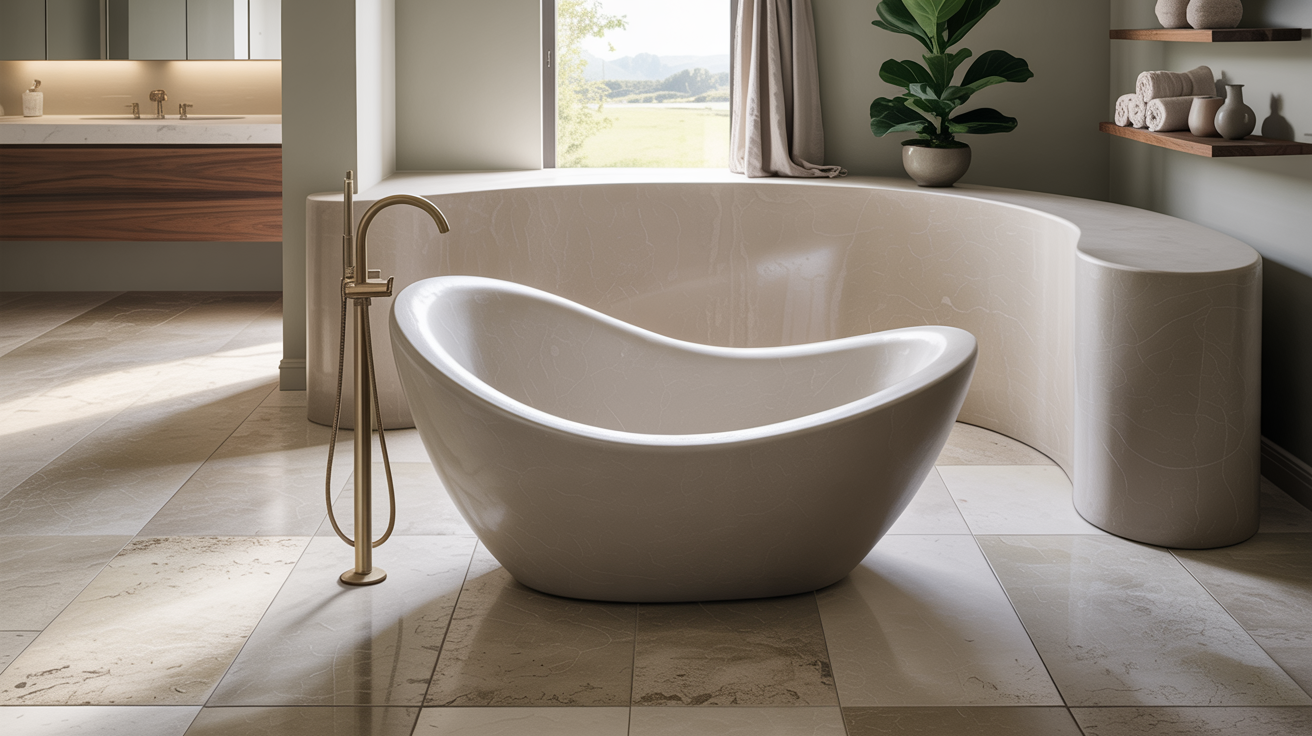
You need space for this one. Around 100 square feet minimum. But if you’ve got it, a freestanding tub becomes the thing you notice first when you walk in. It anchors the whole room.
Forget the old clawfoot look. The 2026 version has curved, asymmetrical profiles and deep soaking basins. Some borrow directly from what showed up at Milan Design Week—sculptural forms in cast stone that look carved from a single block. Others go with cast iron (still the champ for keeping water hot) or lightweight composites that mimic marble.
Materials and What to Spec
- Tub: Freestanding soaker, 67–72 inches, in cast stone, acrylic, or composite
- Walls: Microcement—a hand-troweled cement coat that goes right over existing tile. No grout lines.
- Floor: Large honed travertine or limestone tiles with slip-resistant finish
- Accents: Floating teak or walnut shelf near the tub. Candle, book, glass of wine—pick your vice.
- Tub filler: Floor-mounted or wall-mounted digital filler with saved temp and depth presets
Why Microcement Keeps Coming Up
It’s a thin cement layer you trowel on by hand over existing surfaces. It dries smooth, waterproof, and grout-free. Bed Threads flagged it as one of 13 bathroom trends set to define 2026—and we’re seeing the same demand in our DC projects. The real win is skipping tile demo. That alone saves a week of labor and $2,000–$4,000 in tearout costs. The finish also makes mid-size bathrooms look bigger because there are no visual breaks on the walls.
What It Costs
- Freestanding tub: $2,500–$10,000 (material dependent)
- Microcement walls: $15–$25 per square foot
- Digital tub filler: $1,200–$3,000
- Radiant floor heat: $800–$2,500
Rough total before install: $5,000–$15,500
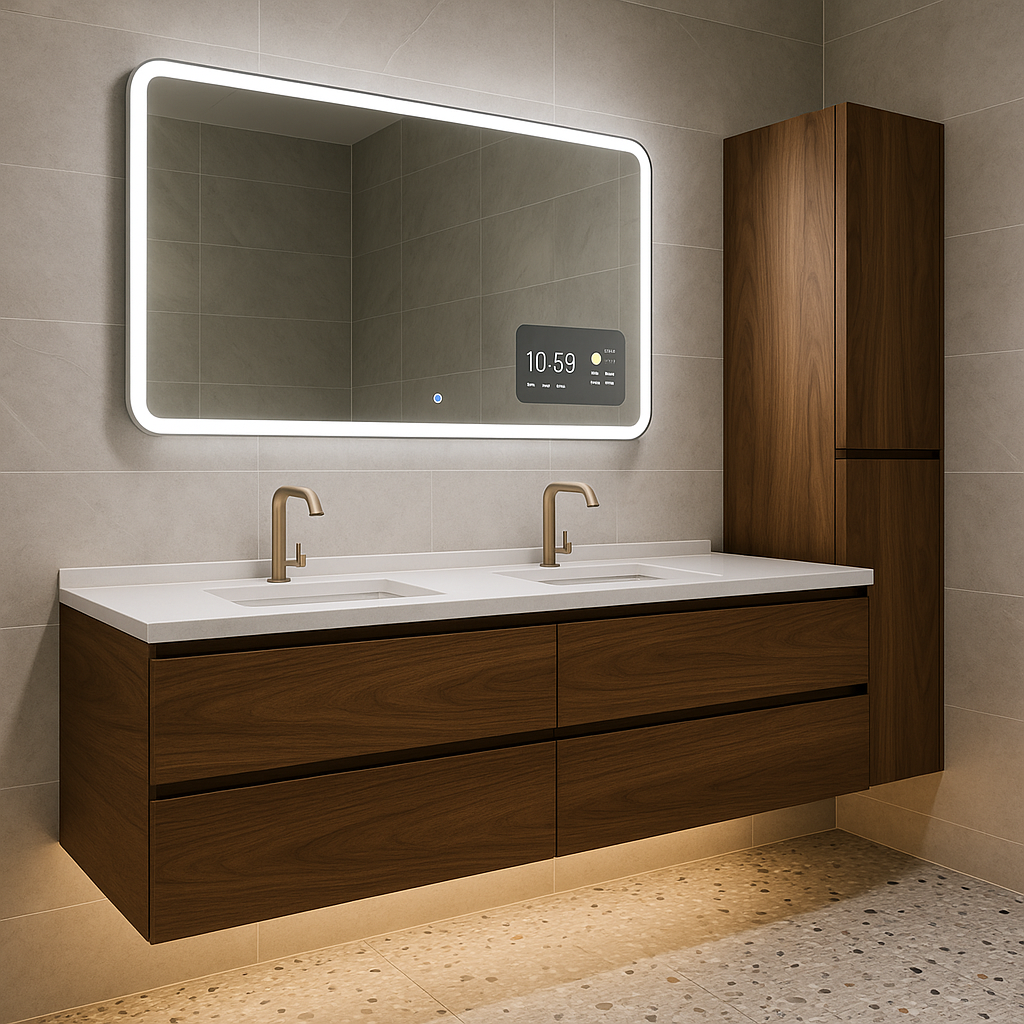
Style 3: Vessel Sink with Natural Stone Drama
Best for: Powder rooms, guest baths, Dupont Circle condos, anywhere you want a “wow” on a small footprint
A vessel sink sits on top of the counter like a bowl on a table. Simple idea. Big impact. In a powder room—the one room every guest uses—it turns a forgettable space into a talking point.
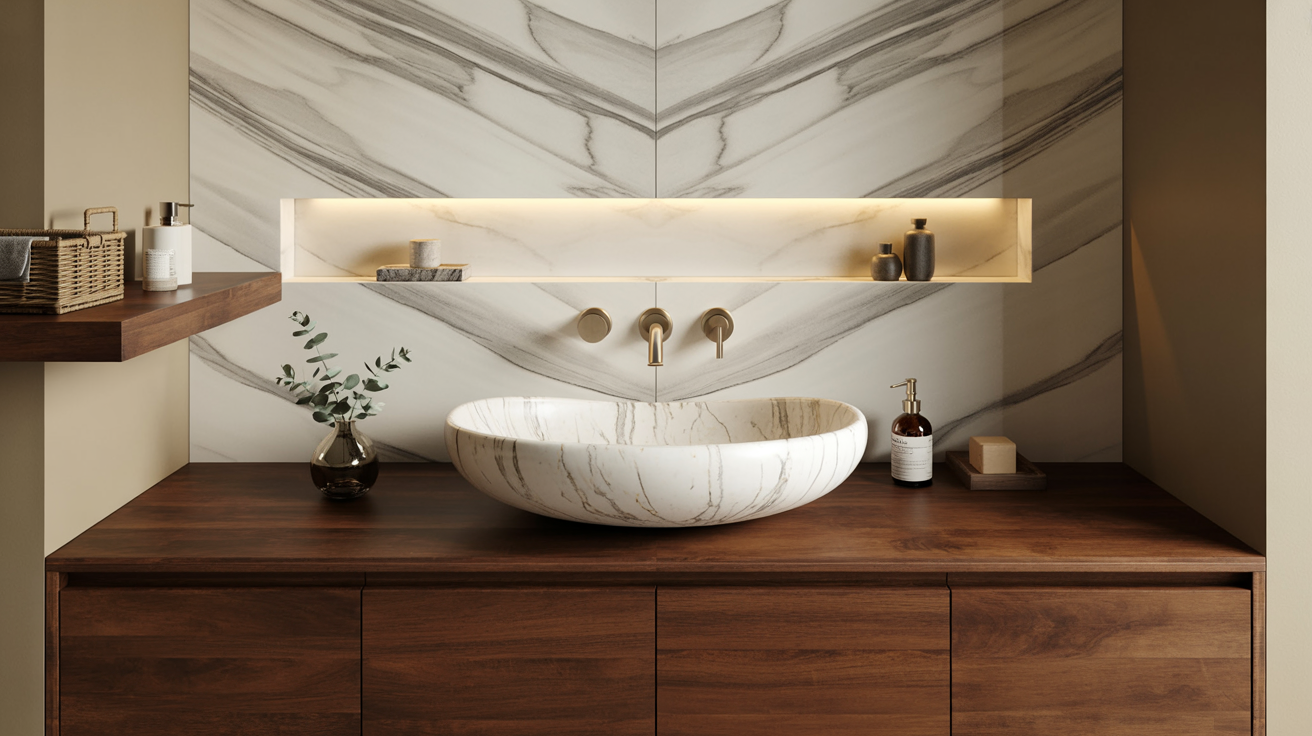
The 2026 take pushes further. Hand-carved white marble with veining you can trace with your finger. Or a matte ceramic shaped like a river stone. Put either one on the right vanity, add one bold wall behind it, and you’ve got a room that punches way above its square footage.
Materials and What to Spec
- Sink: Hand-finished vessel in marble, matte ceramic, or travertine. 14–18 inches across.
- Vanity: Floating, painted in sage green, forest, or warm terracotta. Sized 12–18 inches wider than the sink on each side.
- Wall: Book-matched stone slab from countertop to ceiling—one unbroken vertical surface
- Faucet: Wall-mounted single-lever in brushed brass. Keeps the counter totally clear.
- Lighting: Recessed LED strips in a wall niche to catch the stone’s veining
What “Book-Matched” Means
Take a stone block. Slice two slabs from it. Open them like a book. The veining mirrors itself across the seam—like a butterfly’s wings. In a small powder room, one book-matched marble wall IS the design. No tile. No grout. No distractions.
It’s the single most dramatic thing you can do in a compact space.
What It Costs
- Stone vessel sink: $300–$1,500
- Floating painted vanity: $1,800–$4,500
- Book-matched stone wall (installed): $3,000–$8,000
- Wall-mounted faucet: $250–$800
Rough total before install: $5,350–$14,800
Style 4: Textured Tile Feature with Wellness Details
Best for: Master baths, spa-style suites, anyone who wants their bathroom to actually help them relax
Tile used to be background. Pick a color, lay it flat, move on.
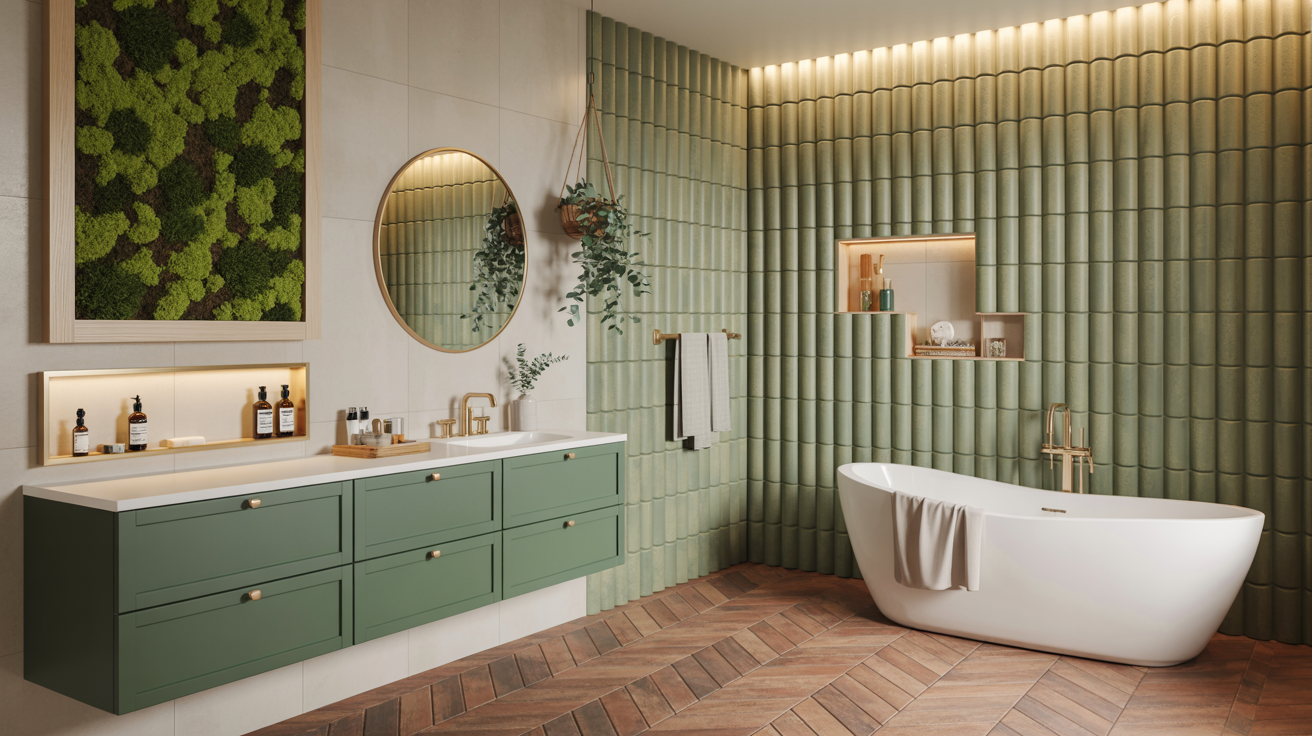
Not anymore. Three-dimensional tile—fluted, ribbed, scalloped—gives walls texture you can run your hand across. As the light shifts during the day, the shadows change. The wall looks different at 7 AM than it does at 7 PM. Quiet drama. No effort.
Add real wellness features on top—lighting tuned to your body clock, clean air, a hint of eucalyptus—and the room does something most bathrooms don’t. It helps you wind down. According to the NKBA’s 2026 Bath Trends Report, 77% of designers say homeowners now want spaces that feel like a hotel retreat. This style delivers that.
Materials and What to Spec
- Feature wall: 3D fluted or ribbed porcelain in matte earth tones (sage, clay, warm sand)
- Floor: Large porcelain in herringbone or hexagonal terracotta-look tile
- Shower zone: Microcement or large slab for a grout-free wet area
- Accents: Zellige tile (hand-glazed Moroccan tile with natural color variation) for niches and borders. Design writer Emily Henderson called amber and caramel zellige the tile color of 2026.
- Hardware: Matte black or aged brass pulls on fluted-front cabinets
Wellness Features That Go Beyond a Candle
- Lighting that follows the sun: Circadian LED systems shift from cool blue-white in the morning to warm amber at night. Your sleep improves. Really.
- Built-in scent: A small diffuser recessed into the shower wall. Eucalyptus at dawn, lavender before bed.
- Air quality: Compact HEPA filter behind a vent grille. Keeps humidity and mildew in check.
- Sound control: Acoustic underlayment under floor tile and behind walls cuts noise transfer—a big deal in row homes that share walls.
What It Costs
- 3D textured tile (material + install): $18–$35 per sq ft
- Zellige accent tile: $25–$50 per sq ft
- Circadian lighting system: $1,500–$4,000
- Built-in diffuser: $200–$600
Rough total before install: $4,000–$12,000
Which Style Fits Your DC Home?
| Your Home | Best Match | Why | Start With |
|---|---|---|---|
| Georgetown or Capitol Hill row home | Style 1: Floating Vanity | Tight layout. Warm wood. Smart storage. | Wall-mounted vanity + smart mirror |
| Northwest DC or suburban single-family | Style 2: Freestanding Tub | You’ve got room for a centerpiece. | Tub + microcement walls |
| Dupont Circle condo or powder room | Style 3: Vessel Sink | High impact, small footprint. | Stone vessel + book-matched wall |
| Large master bath or new build | Style 4: Textured Tile + Wellness | Room for a full spa setup. | 3D tile wall + circadian lighting |
What Every Classic Modern Bathroom Needs
Lighting
One ceiling light isn’t enough. Plan three layers: ambient (recessed cans or flush-mount), task (sconces or LED mirror at face level), and accent (under-vanity strips, niche lights, pendant over a tub). Set up smart controls. Save morning and evening presets. Takes ten minutes. Changes everything.
Storage
Clutter wrecks a clean room faster than anything. Tower cabinet next to the vanity. Built-in shower niches instead of a hanging caddy. Drawer dividers so daily items have a fixed spot. Closed doors for cleaning supplies, open shelves for towels.
Materials That Hold Up
DC’s humidity is tough on finishes. Quartz counters won’t stain and never need sealing. Porcelain tile is harder than ceramic and handles water, traffic, and dropped bottles. Sealed hardwood (white oak, walnut, teak) protects the grain without hiding it. Marble and quartzite look stunning on feature walls but need sealing every 6–12 months—not ideal for floors.
Planning Your DC Bathroom Renovation
Budget
A full classic modern bathroom remodel in Washington, DC runs $35,000 to $75,000. Premium jobs push past $100,000. The 2025 Cost vs. Value Report from the Journal of Light Construction found that a mid-range bathroom remodel returns about 80% of its cost at resale—making it one of the strongest ROI home improvements you can make.
Mid-range breakdown: floating vanity + quartz top ($3,000–$6,500), freestanding tub ($2,500–$10,000), tile ($3,000–$8,000), smart fixtures ($1,500–$5,000), plumbing and electrical ($4,000–$10,000), contractor labor ($10,000–$20,000).
Timeline
Permit to final walkthrough: 8–12 weeks. Custom orders add 2–4 more. Historic districts (Georgetown, Capitol Hill, Kalorama) may need architectural review. Interior work is usually exempt from preservation rules, but check with DCRA first.
One more thing: older homes hide problems. Bad plumbing, undersized panels, water damage behind walls. Build a 10–15% contingency into your budget.
Permits
Most DC bathroom projects need three permits: plumbing, electrical, and general construction. File through DCRA (the Department of Consumer and Regulatory Affairs). Two codes to know: DC caps toilets at 1.28 GPF and faucets at 1.5 GPM (smart fixtures hit these marks without trying). Barrier-free shower entries and grab-bar blocking keep showing up in code updates and help your resale value too.
A contractor who knows DC regs can pull permits for you. We do this as part of every full-service project at USA Cabinet Store.
Frequently Asked Questions for Bathroom Remodeling Styles In Washington
How much does a classic modern bathroom remodel cost in Washington, DC?
$35,000 to $75,000 for a full redo. Luxury projects run $100,000+. Size, materials, and structural work move the number most.
What styles work best in DC row homes?
Floating vanities and vertical storage. They make narrow rooms feel wider. Warm wood tones pair well with the molding most row homes already have.
How long does a renovation take?
8–12 weeks after permits clear. Custom orders or historic reviews add 2–4 weeks.
Do I need permits?
Yes. Plumbing, electrical, general construction. File with DCRA. Historic district properties may need extra review.
What colors are trending for 2026?
Earth tones: sage green, terracotta, warm khaki (Sherwin-Williams picked Universal Khaki, SW 6150, as their 2026 Color of the Year), forest shades. Amber and caramel zellige tiles are everywhere right now too.
Are floating vanities a fad?
No. The NKBA has ranked wall-mounted vanities as a top pick three years running. They clean easier, install at any height, and make rooms look bigger. That’s not going away.
Marble vs. quartzite vs. quartz?
Marble: natural, gorgeous veining, seal twice a year. Quartzite: natural, harder, more stain-resistant. Quartz: engineered (ground stone + resin), zero maintenance, best for heavy-use counters.
Can I get this look in a small bathroom?
Yes. One floating vanity, one smart mirror, one strong material choice (book-matched stone wall, for example). Pick one thing. Let it carry the space.
What smart features should I add first?
Touchless faucet and smart mirror. Low cost, easy install, daily use. Then look at programmable showers and circadian lighting.
What bathroom trends are going out of style?
All-white bathrooms, glossy floor tile, chrome-only fixtures, heavy black-and-white contrast, open shelving, and single-bulb overhead lighting. Designer Autumn Dawn Pochiro told House Digest that all-white bathrooms now look “sterile and outdated.” Damla Turgut of Otto Tiles echoed the point in Livingetc, calling them “flat, impersonal, and clinical.” The shift is toward warm earth tones, matte finishes, and layered lighting.
What are the four types of remodeling?
Cosmetic (paint, hardware, fixtures—no structural work), pull-and-replace (swap old fixtures for new without changing the layout), full remodel (new layout, new plumbing, new finishes—walls may move), and addition (expanding the room’s footprint). Most classic modern bathroom projects in DC fall into pull-and-replace or full remodel.
What does a $10,000 bathroom remodel look like?
At $10,000, you’re doing a refresh, not a gut job. Keep the layout and plumbing. The money goes to high-impact swaps: new vanity and countertop ($1,500–$3,000), updated faucet and hardware ($300–$600), fresh paint ($200–$500), a new mirror ($200–$800), new lighting ($300–$1,000), toilet replacement ($400–$800), and flooring ($1,000–$2,500). You don’t touch the tub or shower. But the room looks and feels completely different.
What is a realistic budget for a bathroom remodel?
Nationally, $15,000–$25,000 covers a standard full renovation in 2026. In Washington, DC, costs run higher—$35,000 to $75,000 is typical for a classic modern remodel with quality materials. The 2025 Cost vs. Value Report found that a mid-range bath remodel returns about 80% at resale. Nearly half of homeowners (49%) pay with cash or savings, per a 2026 This Old House survey.
What makes a bathroom look tacky?
Mixing too many patterns, using cheap laminate where stone or quartz should go, matching every metal to the point it looks staged, oversized fixtures in a small room, and visible plastic storage. The fastest way to cheapen a bathroom: skip the details. Misaligned tile, uneven grout, exposed caulk seams, and budget hardware on expensive cabinets signal that corners were cut.
What colors are in for bathrooms in 2026?
Earth tones lead. The NKBA reports that 64% of designers expect sage and olive green to dominate. Warm terracotta, forest green, and mid-tone tans like Sherwin-Williams’ Universal Khaki (SW 6150) are top picks. Amber and caramel zellige tiles are having a strong moment, per Emily Henderson. What’s out: stark white, cool gray, and high-contrast black-and-white.
What devalues a house the most?
Deferred maintenance tops the list: leaking roof, outdated electrical, plumbing problems. After that, an outdated or non-functional bathroom, poor curb appeal, and over-personalized renovations that don’t match the neighborhood. A dated master bath can reduce perceived home value by $20,000–$30,000 compared to updated comps. A smart bathroom remodel protects against that loss.
What is the 30% rule in remodeling?
Don’t spend more than 30% of your home’s current market value on total renovations. If your DC home is worth $600,000, keep all renovation spending under $180,000. This prevents overcapitalization—putting more money into the house than you’ll get back at resale. Bathrooms specifically should run 5–15% of home value. Some experts apply it differently: set aside 30% of your renovation budget as a contingency for surprises.
What adds $100,000 to your house?
No single project adds $100,000 in most markets. It takes a combination: full kitchen remodel ($40K–$70K spent can add $30K–$50K in value), primary bathroom renovation ($35K–$60K adds $25K–$45K), finished basement ($20K–$50K adds $15K–$35K), and an accessory dwelling unit where zoning allows it. In DC, where home values are high, the math works more favorably than in lower-cost markets.
What’s the most expensive part of a bathroom remodel?
Labor and plumbing. Moving pipes—relocating a toilet, adding a second sink, repositioning the shower—can run $4,000–$10,000 for plumbing alone. General contractor labor typically makes up 40–50% of total project cost. Tile installation and custom cabinetry are the next biggest line items. The cheapest way to stay on budget: keep the existing plumbing layout.
What are common bathroom renovation mistakes?
Skipping the exhaust fan upgrade (leads to mold within a few years), not waterproofing behind tile, choosing style over function with no storage plan, underestimating the budget by 20–30%, not pulling permits (which can kill a future sale), picking trendy finishes that date fast, and hiring the cheapest contractor without checking references. In DC specifically: not confirming DCRA permit requirements before demo starts.
What flooring is best for a bathroom?
Porcelain tile. It’s harder than ceramic, fully waterproof, scratch-resistant, and comes in finishes that mimic natural stone, wood, and concrete. For 2026, large-format porcelain (fewer grout lines) and matte finishes (safer underfoot) are the top picks. Natural stone looks gorgeous but needs sealing every 6–12 months. Luxury vinyl plank (LVP) is a budget-friendly waterproof alternative, but it won’t add the same resale value as real tile.
Conclusion for 4 Bathroom Remodeling Styles In Washington, DC
Transforming your bathroom into a classic modern sanctuary in Washington DC means blending the city’s storied architectural heritage with the latest 2026 design innovations—from warm wood floating vanities and sculptural freestanding tubs to smart fixtures, textured tile features, and wellness-focused elements—all while honoring your home’s unique character and maximizing both style and functionality. Whether you’re updating a historic row home or designing a spa-like master retreat, these thoughtfully curated styles and cutting-edge trends will ensure your renovation not only elevates everyday living but also enhances property value and sustainability for years to come.
Schedule your complimentary design consultation at one of our convenient showroom locations in Fairfax, Chantilly, Alexandria, Annapolis, or Columbia. Experience our extensive selection of floating vanities, smart fixtures, and natural materials while working with designers who understand Washington DC’s unique architectural requirements and lifestyle demands.
Contact USA Cabinet Store to begin planning your classic modern bathroom transformation. Visit our Washington DC service area page for location-specific information and bathroom remodeling guide for comprehensive planning resources.
Connect with us on Facebook for daily design inspiration and project showcases from bathrooms throughout the Washington DC metro area.